
The Ultimate Uganda Birding Experience: A 14-Day Itinerary
~
Overview
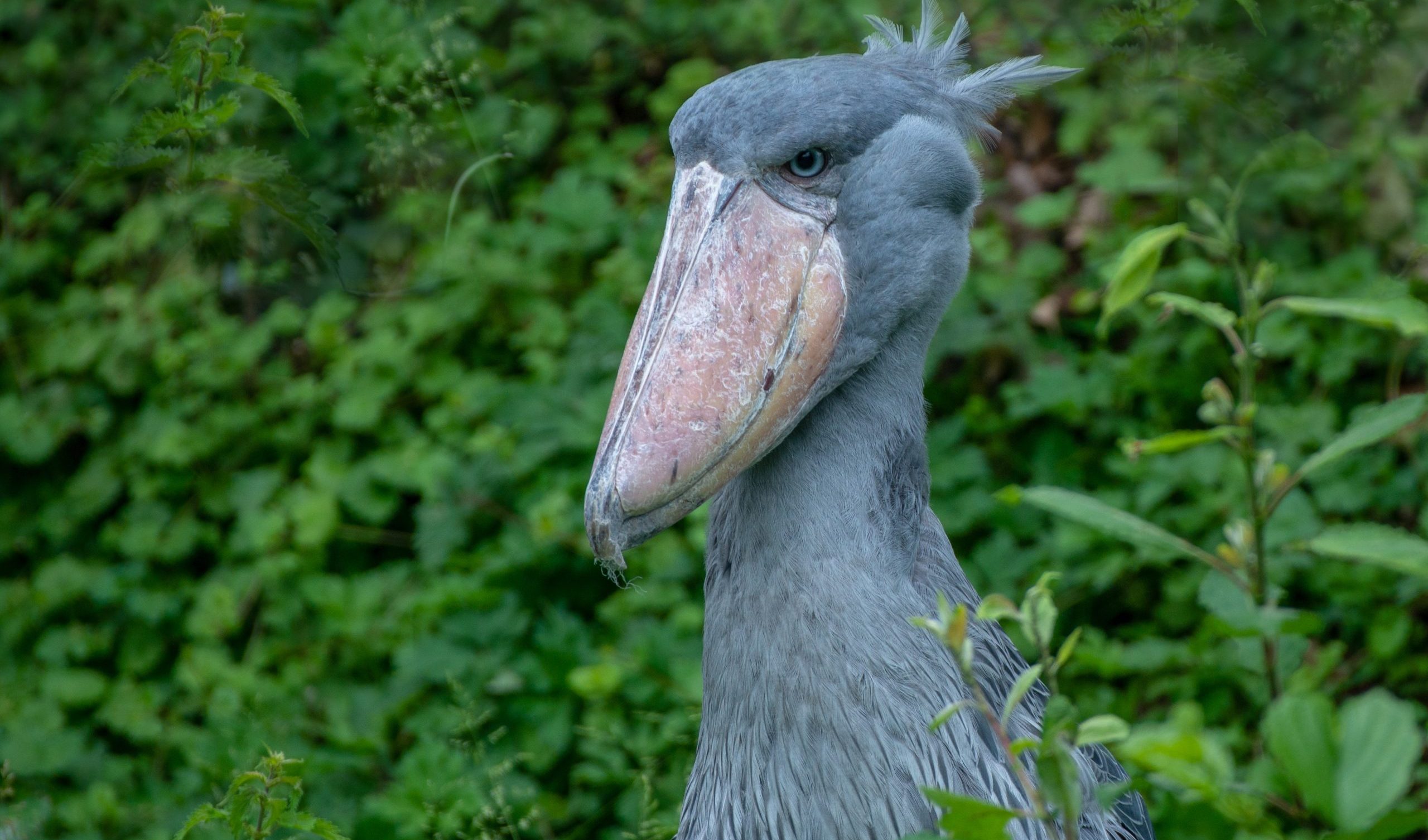
Uganda is often called the “Birding Capital of Africa,” with over 1,100 recorded bird species – more than any other African country. That’s nearly half of all bird species found in Africa in a country smaller than the UK. From the prehistoric-looking Shoebill in papyrus swamps to the dazzling Albertine Rift endemics in montane forests, Uganda offers an unparalleled birding experience.
This 14-day itinerary covers every major birding habitat in Uganda – wetland, savannah, rainforest, montane forest, and the unique Congo Basin – for a target of 600+ species.
| Day | Destination | Key Birding Focus |
|---|---|---|
| 1 | Entebbe | Botanical Gardens & UWEC introduction |
| 2 | Mabamba Swamp | Shoebill stork, papyrus endemics |
| 3 | Kibale Forest | Forest birds, green-breasted pitta |
| 4 | Kibale/Bigodi | Bigodi Wetland, great blue turaco |
| 5 | Queen Elizabeth NP | Savanna & acacia species |
| 6 | Queen Elizabeth NP | Kazinga Channel waterbirds |
| 7 | Semuliki NP | Congo Basin endemics |
| 8 | Semuliki NP | Lowland forest specialists |
| 9 | Bwindi (Ruhija) | Albertine Rift endemics |
| 10 | Bwindi (Ruhija) | Mubwindi Swamp, African green broadbill |
| 11 | Lake Bunyonyi | High-altitude waterbirds |
| 12 | Lake Mburo NP | Acacia woodland & savanna birds |
| 13 | Lake Mburo NP | Boat cruise, African finfoot |
| 14 | Return to Entebbe | Departure |
Detailed Itinerary
Day 1: Arrival in Entebbe – Botanical Gardens Introduction
| Detail | Information |
|---|---|
| Morning | Arrival at Entebbe International Airport |
| Afternoon | Birding at Entebbe Botanical Gardens & Uganda Wildlife Education Centre (UWEC) |
| Evening | Settle in and prepare for the days ahead |
Upon arrival at Entebbe International Airport, you’ll be met by your expert birding guide. After clearing customs, begin your birding adventure with a gentle introduction at the Entebbe Botanical Gardens and the Uganda Wildlife Education Centre (UWEC) .
The botanical gardens are lush and home to a variety of forest and lake shore birds. Target species include:
- Orange Weaver
- Golden-backed Weaver
- Superb Sunbird
- Verreaux’s Eagle-Owl
- Great Blue Turaco
Accommodation Options:
- Luxury: Lake Victoria Serena Golf Resort & Spa, Protea Hotel Entebbe
- Mid-Range: The Boma Hotel, 2 Friends Beach Hotel
- Budget: Entebbe Backpackers, ViaVia Entebbe
Meals: Lunch, Dinner
Day 2: The Shoebill Hunt – Mabamba Swamp
| Detail | Information |
|---|---|
| Morning | Early departure for Mabamba Swamp (6:00 AM) |
| Activity | Motorized canoe birding through papyrus channels |
| Afternoon | Return to Entebbe; prepare for journey west |
Depart Entebbe early in the morning for the Nakiwogo landing site, then take a motorized canoe through the labyrinthine channels of the Mabamba Wetland – a Ramsar Wetland of International Importance. This is arguably the best place in the world to see the Shoebill stork.
Key Species:
- Shoebill stork – the holy grail of African birding
- Papyrus gonolek – a papyrus specialist
- Blue-breasted bee-eater
- Lesser jacana
- African pygmy goose
- Malachite kingfisher
- Swamp flycatcher
Birding Tip: Early morning visits offer the best chance to spot the shoebill hunting for lungfish. The slow-paced canoe rides allow excellent photography opportunities.
Meals: Breakfast, Lunch, Dinner
Day 3: Transfer to Kibale Forest National Park
| Detail | Information |
|---|---|
| Morning | Depart Entebbe for Kibale Forest |
| Drive Time | 5–6 hours (scenic through tea plantations) |
| Afternoon | Arrive at lodge; optional evening birding |
After breakfast, drive southwest to Kibale Forest National Park – home to over 370 bird species and the “Primate Capital of the World.”
The drive itself offers birding opportunities along the way, passing through the stunning crater lake region around Fort Portal.
Arrive at your lodge near Kibale Forest in the late afternoon. If time permits, enjoy an optional evening birding walk around the lodge grounds.
Accommodation Options:
- Luxury: Ndali Lodge, Crater Safari Lodge
- Mid-Range: Kibale Forest Camp, Chimpanzee Guest House
- Budget: Fort Portal Backpackers, Koi Koi Lodge
Meals: Breakfast, Lunch, Dinner
Day 4: Full Day Birding in Kibale Forest & Bigodi Wetland
| Detail | Information |
|---|---|
| Morning | Guided forest birding walk in Kibale |
| Afternoon | Bigodi Wetland Sanctuary birding |
Spend the morning on a guided forest birding walk in Kibale National Park. The park’s tropical rainforest is home to a dazzling array of forest species.
Key Forest Species:
- Green-breasted pitta – a highly sought-after forest jewel
- Great blue turaco – spectacular and unmistakable
- African pitta
- Grey parrot
- Chocolate-backed kingfisher
In the afternoon, visit the Bigodi Wetland Sanctuary, renowned for forest and wetland bird species. Guided walks allow spotting of turacos, kingfishers, hornbills, and many endemics.
Meals: Breakfast, Lunch, Dinner
Day 5: Transfer to Queen Elizabeth National Park
| Detail | Information |
|---|---|
| Morning | Depart Kibale for Queen Elizabeth NP |
| Drive Time | 2–3 hours |
| Afternoon | Game drive with birding focus |
After breakfast, drive to Queen Elizabeth National Park – a birder’s paradise with over 600 bird species and diverse ecosystems including savannah, wetlands, and forest.
Check in at your lodge and enjoy an afternoon game drive with a strong birding focus, spotting savannah species alongside the park’s famous wildlife – elephants, buffaloes, lions, and Uganda kobs.
Accommodation Options:
- Luxury: Mweya Safari Lodge, Ishasha Wilderness Camp
- Mid-Range: Elephant Hab Lodge, Jacana Safari Lodge
- Budget: Queen Elizabeth Bush Lodge, Tembo Safari Lodge
Meals: Breakfast, Lunch, Dinner
Day 6: Kazinga Channel – Waterbird Paradise
| Detail | Information |
|---|---|
| Morning | Birding along the Kazinga Channel |
| Afternoon | Boat cruise on the Kazinga Channel |
Enjoy early morning birding along the Kazinga Channel, home to hippos, crocodiles, and abundant waterbirds.
Waterbirds to Spot:
- African fish eagle – the iconic “voice of Africa”
- Pink-backed pelican
- Great cormorant
- Herons and kingfishers
- African skimmer
In the afternoon, embark on a boat cruise along the Kazinga Channel – one of the most rewarding wildlife experiences in Africa. The channel connects Lake George and Lake Edward and hosts one of the highest concentrations of hippos in Africa, alongside crocodiles, elephants bathing on the shores, and a stunning array of waterbirds.
Meals: Breakfast, Lunch, Dinner
Day 7: Transfer to Semuliki National Park
| Detail | Information |
|---|---|
| Morning | Depart Queen Elizabeth for Semuliki |
| Drive Time | 4–5 hours |
| Afternoon | Arrive; optional afternoon birding |
After breakfast, drive to Semuliki National Park – Uganda’s only lowland tropical rainforest and one of the oldest forests in Africa (over 25,000 years old).
Semuliki is unique because it is more Congo than Uganda – the park is an extension of the vast Ituri Forest in the Democratic Republic of Congo. It harbours 50 bird species found nowhere else in East Africa and is the only place in Uganda where you can find Congo Basin lowland forest species.
Accommodation Options:
- Luxury: Semuliki Safari Lodge
- Mid-Range: Ntoroko Game Lodge
- Budget: Semuliki Bandas
Meals: Breakfast, Lunch, Dinner
Day 8: Full Day Birding in Semuliki – Congo Basin Specials
| Detail | Information |
|---|---|
| Morning | Guided birding walk in Semuliki’s lowland forest |
| Afternoon | Sempaya Hot Springs area birding |
Spend a full day exploring Semuliki’s extraordinary birdlife. This is where you’ll find species that are impossible to see anywhere else in East Africa.
Congo Basin Specials to Target:
- Lyre-tailed honeyguide
- African piculet
- Yellow-throated cuckoo
- African dwarf kingfisher
- Red-billed dwarf hornbill
- Congo serpent eagle
- Nahan’s partridge
- Black dwarf hornbill
- Grauer’s broadbill
Birding Tip: The Sempaya Hot Springs area offers excellent birding opportunities. The “female” spring can shoot boiling water up to 2 metres high, and the surrounding forest is rich with birdlife.
Meals: Breakfast, Lunch, Dinner
Day 9: Transfer to Bwindi – The Birding Highway
| Detail | Information |
|---|---|
| Morning | Depart Semuliki for Bwindi |
| Drive Time | 5–6 hours |
| Afternoon | Arrive at Ruhija sector |
After breakfast, drive through the highlands to Bwindi Impenetrable National Park – a UNESCO World Heritage Site and the jewel in the crown of African birding.
The drive itself is known as the “Birding Highway,” passing through terraced hills and bamboo forests. Depending on your arrival time, you may stop for birding in the patchwork forests along the road.
Arrive at your lodge in the Ruhija sector of Bwindi, one of the park’s premier birding areas.
Accommodation Options:
- Luxury: Gorilla Safari Lodge, Buhoma Lodge
- Mid-Range: Ruhija Gorilla Lodge, Engagi Lodge
- Budget: Broadbill Forest Camp, Bwindi Backpackers
Meals: Breakfast, Lunch, Dinner
Day 10: Ruhija Birdwatching – Albertine Rift Endemics
| Detail | Information |
|---|---|
| Morning | Birding along the Waterfall Trail |
| Afternoon | Mubwindi Swamp birding |
Bwindi harbours over 350 bird species including 23 Albertine Rift endemics that cannot be found outside this region.
Morning: Waterfall Trail
The Waterfall Trail offers access to high-altitude forest. The terrain can be steep and challenging, but the rewards are immense.
Target Albertine Rift Endemics:
- African green broadbill – the holy grail of Bwindi birding
- Grauer’s rush warbler – one of the most localized and difficult Albertine Rift endemics
- Shelley’s crimsonwing – a highly prized species for experienced birders
- Regal sunbird
- Brown-throated wattle-eye
- Black-headed gonolek
Afternoon: Mubwindi Swamp
The Mubwindi Swamp is one of the best birding spots in the entire East African region. It requires a hike down into a valley, but it’s the best place to see the elusive African green broadbill (if not seen earlier) and the Grauer’s rush warbler.
Meals: Breakfast, Lunch, Dinner
Day 11: Transfer to Lake Bunyonyi
| Detail | Information |
|---|---|
| Morning | Optional morning birding in Bwindi |
| Afternoon | Transfer to Lake Bunyonyi |
After a final morning of birding in Bwindi, transfer to Lake Bunyonyi – one of Africa’s deepest lakes and a stunning high-altitude waterbird destination.
Lake Bunyonyi means “place of many little birds” in the local language – a fitting name for this bird-rich paradise. The lake is dotted with 29 islands and surrounded by terraced hills.
Accommodation Options:
- Luxury: Birdnest Resort, Lake Bunyonyi Eco Resort
- Mid-Range: Byoona Amagara Island Retreat, Bunyonyi Overland Resort
- Budget: Lake Bunyonyi Safari Camp
Meals: Breakfast, Lunch, Dinner
Day 12: Transfer to Lake Mburo National Park
| Detail | Information |
|---|---|
| Morning | Depart Lake Bunyonyi for Lake Mburo |
| Drive Time | 4–5 hours |
| Afternoon | Birding in Lake Mburo NP |
After breakfast, drive to Lake Mburo National Park – a small but awesome park with 350 bird species and amazing wetland scenery.
Lake Mburo is the only park in Uganda with an acacia savanna reminiscent of East Africa’s classic parks. The morning walk allows for close-up views of smaller birds.
Key Species:
- African finfoot – rare and elusive
- White-backed night heron – shy and difficult to spot
- Acacia woodland species – excellent raptor viewing
- Papyrus endemics
Accommodation Options:
- Luxury: Mihingo Lodge, Lake Mburo Safari Lodge
- Mid-Range: Rwonyo Rest Camp, Mantana Tented Camp
- Budget: Lake Mburo Backpackers, Nganji Camp
Meals: Breakfast, Lunch, Dinner
Day 13: Full Day Birding in Lake Mburo
| Detail | Information |
|---|---|
| Morning | Walking safari (birding focus) |
| Afternoon | Boat cruise on Lake Mburo |
Spend a full day exploring Lake Mburo’s rich birdlife.
Morning: Walking Safari
The park offers guided walking safaris with a strong birding focus – a rare opportunity to get close to smaller birds that are often missed from a vehicle.
Afternoon: Boat Cruise
A boat cruise on Lake Mburo is essential for spotting the rare African finfoot and the shy white-backed night heron. The lake is also home to hippos, crocodiles, and abundant waterbirds.
Meals: Breakfast, Lunch, Dinner
Day 14: Return to Entebbe & Departure
| Detail | Information |
|---|---|
| Morning | Final morning birding at Lake Mburo |
| Afternoon | Drive to Entebbe International Airport |
Enjoy a final morning of birding at Lake Mburo, then begin your return journey to Entebbe International Airport for your departure flight.
Meals: Breakfast
Key Bird Species by Destination
| Destination | Key Species | Birding Highlights |
|---|---|---|
| Mabamba Swamp | Shoebill, papyrus gonolek, blue-breasted bee-eater, lesser jacana | The world’s best place for the Shoebill |
| Kibale Forest | Green-breasted pitta, great blue turaco, African pitta, grey parrot | 370+ forest species |
| Bigodi Wetland | Turacos, kingfishers, hornbills | Community-run sanctuary |
| Queen Elizabeth NP | African fish eagle, pink-backed pelican, African skimmer | 600+ species, savannah & wetland |
| Kazinga Channel | Waterbirds, kingfishers, herons | Africa’s highest hippo concentration |
| Semuliki NP | Lyre-tailed honeyguide, Congo serpent eagle, African piculet | Congo Basin exclusives |
| Bwindi (Ruhija) | African green broadbill, Grauer’s rush warbler, Shelley’s crimsonwing | 23 Albertine Rift endemics |
| Mubwindi Swamp | African green broadbill, Grauer’s rush warbler | One of East Africa’s best birding spots |
| Lake Mburo NP | African finfoot, white-backed night heron | Acacia woodland & papyrus endemics |
What’s Included & Excluded
Inclusions
| Category | Details |
|---|---|
| Accommodation | Full board (breakfast, lunch, dinner) as per the itinerary |
| Meals | As specified in the itinerary |
| Ground Transportation | 4×4 safari vehicle with pop-up roof for optimal bird viewing, with a professional English-speaking birding guide |
| Park Fees | Entry fees to all national parks and reserves visited |
| Boat Trips | Boat cruises on the Kazinga Channel, Lake Mburo, and canoe trips in Mabamba Swamp |
| Guided Walks | Guided birding walks in all destinations |
| Bottled Water | Drinking water provided during game drives and transfers |
| Airport Transfers | Meet and greet on arrival; transfer to airport on departure |
| Species List | Daily updated running species list maintained by your expert guide |
Exclusions
| Category | Details |
|---|---|
| International Flights | Flights to and from your home country |
| Visas | East African Tourist Visa or Uganda e-visa fees |
| Travel Insurance | Comprehensive travel and medical insurance (mandatory) |
| Optional Activities | Gorilla trekking, chimpanzee trekking, hot air balloon safaris (can be arranged at additional cost) |
| Alcoholic & Soft Drinks | Beverages other than bottled water |
| Personal Items | Souvenirs, laundry, telephone calls, tips, and other personal expenses |
| Meals Not Specified | Any meals not indicated in the itinerary |
| Extra Accommodation | Accommodation before or after the tour |
| Gratuities | Tips for guides, drivers, and porters (customary and appreciated) |
| Camera Fees | Any fees for professional photography equipment in national parks |
Practical Travel Guide
Best Time to Visit
| Season | Months | Birding Highlights |
|---|---|---|
| Dry Season (Best) | June–August | Best overall birding – birds concentrate around water sources, clear skies, comfortable temperatures |
| Dry Season | December–February | Excellent birding – good weather, migratory birds present |
| Wet Season | March–May | Migratory birds, lush greenery, but some roads muddy |
| Wet Season | September–November | Good for migrants, lower prices |
Visas & Entry Requirements
| Requirement | Details |
|---|---|
| East African Tourist Visa | Covers Uganda, Kenya, and Rwanda for multiple entries within 90 days. Apply online before travel. |
| Single-Entry Visa | Uganda-only visa available online or on arrival |
| Passport Validity | At least 6 months beyond your intended departure date |
| Yellow Fever Certificate | Mandatory for entry into Uganda – carry your vaccination card |
| Proof of Onward Travel | Required for entry |
Health & Safety
| Requirement | Details |
|---|---|
| Yellow Fever | Mandatory vaccination certificate required for entry |
| Malaria Prophylaxis | Highly recommended – Uganda is malaria-endemic |
| Travel Insurance | Essential – must cover medical emergencies |
| Safety | Uganda is generally safe for tourists; follow your guide’s instructions |
Packing Essentials for Birders
| Category | Items |
|---|---|
| Optics | A good pair of binoculars you are familiar with – essential |
| Clothing | Light, breathable clothing; long-sleeved shirts for forest walks; waterproof jacket; neutral colours (khaki, olive, green) |
| Footwear | Waterproof hiking boots with ankle support – forest trails can be steep and muddy |
| Accessories | Hat, sunglasses, sunscreen; gardening gloves for forest walks |
| Photography | Camera with zoom lens, spare batteries, memory cards |
| Health | Insect repellent (DEET-based), personal medications, first-aid kit |
| Other | Portable power bank, water bottle, snacks, field guide |
Getting Around
| Transport | Details |
|---|---|
| 4×4 Safari Vehicle | Essential for national park access – provided as part of the tour |
| Road Transfers | Scenic drives between parks – allow ample time for roadside birding |
| Boat Trips | Kazinga Channel, Lake Mburo, and Mabamba Swamp canoe trips |
| Walking | Guided birding walks in forests and wetlands |
Fitness Requirements
Birding in Uganda involves walking on forest trails, often on steep and muddy terrain. Walking fitness is recommended – one does not need to be marathon fit, but you should be comfortable walking for several hours and practising walking up and down stairs.
Birding Etiquette
- Stick to roads and trails to protect fragile habitats
- Stay quiet to avoid disturbing birds
- Follow your guide’s instructions at all times
- Do not use flash photography near birds
- Carry out all rubbish
Frequently Asked Questions
How many bird species can I expect to see on this itinerary?
This comprehensive 14-day tour regularly achieves 580 to 640 species, depending on the season and conditions.
What is the Shoebill and where can I see it?
The Shoebill is Uganda’s most iconic and highly sought-after bird – a prehistoric-looking stork that stands up to 1.5 metres tall. The Mabamba Swamp near Entebbe offers the most reliable sightings in Africa.
Do I need a permit for birding?
No – birding does not require special permits beyond standard national park entry fees. However, if you choose to add gorilla or chimpanzee trekking, those activities require separate permits.
Can I combine birding with gorilla trekking?
Yes. This itinerary can be modified to include a day of gorilla trekking in Bwindi (Day 10 or 11). Gorilla permits must be booked well in advance.
What makes Uganda special for birding?
Uganda boasts around half of the total number of bird species found in Africa – over 1,090 recorded species – across an incredible diversity of habitats: wetlands, savannahs, rainforests, montane forests, and the unique Congo Basin.
Is Uganda safe for birding tourists?
Yes. Uganda is generally safe for tourists. National parks are well-regulated, and birding tours are conducted by experienced guides. Exercise normal precautions and follow your guide’s instructions.
What should I wear for forest birding?
Wear light, breathable clothing in neutral colours (khaki, olive, green). Long-sleeved shirts and trousers protect against insects and stinging nettles. Waterproof hiking boots with ankle support are essential for forest trails.
Final Thoughts
This 14-day Uganda birding itinerary delivers the ultimate African birdwatching experience. From the prehistoric Shoebill in the papyrus swamps of Mabamba to the elusive Albertine Rift endemics in the misty forests of Bwindi – Uganda offers a birding journey like no other.
| Birding Highlight | Why It’s Unforgettable |
|---|---|
| Shoebill Stork | The holy grail of African birding – a prehistoric encounter in the papyrus |
| Albertine Rift Endemics | 23 species found nowhere else on Earth |
| Congo Basin Specials | Central African rainforest birds in East Africa |
| 600+ Species | Nearly half of Africa’s birds in one country |
| Diverse Habitats | Wetland, savannah, rainforest, montane – all in two weeks |
Whether you’re a seasoned lister chasing 600+ species or a passionate amateur seeking the thrill of your first Shoebill sighting, Uganda’s birds will leave you spellbound.
Karibu Uganda! (Welcome to Uganda!)
Note: All park fees and accommodation availability are subject to change. Always check with a registered tour operator for the most up-to-date information and availability.