
Rwanda Formula 1 Grand Prix
F1 Returns to Africa in a Historic 10-Year Deal
Will Rwanda Host Formula 1? Yes — The Deal Is Done
The checkered flag is waving for Rwanda. In a landmark announcement that has electrified the world of motorsport, Formula 1 has confirmed a 10-year agreement to bring the pinnacle of racing back to African soil for the first time in over three decades. The Formula 1 African Grand Prix, presented by Visit Rwanda, will roar to life in the early 2030s, marking a defining moment for both the sport and the East African nation.
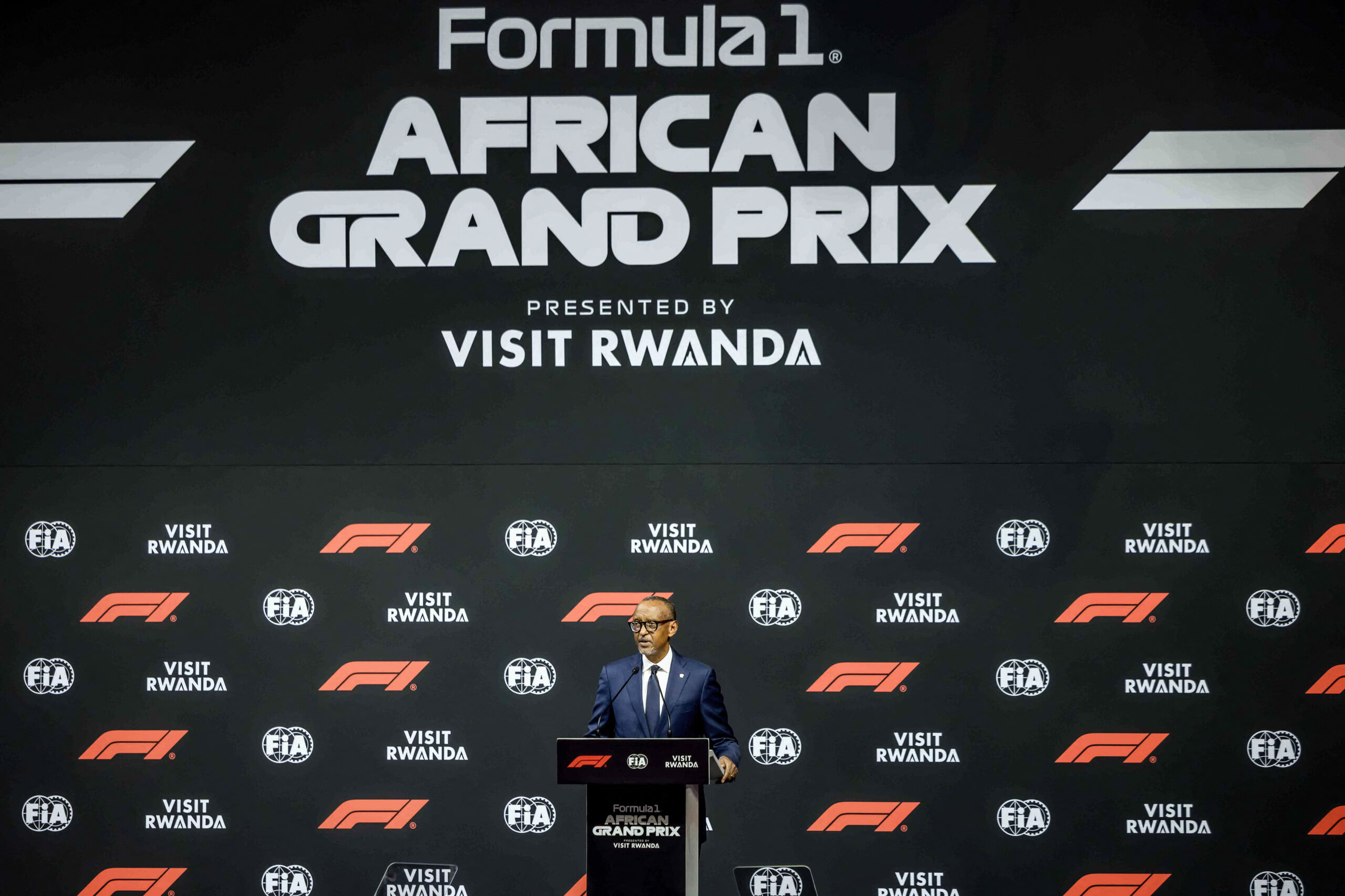
The announcement, made on 13 October 2026, confirms what had been building for months. Sources close to both the Rwandan government and the FIA had told AFP that Rwanda’s bid to host the Formula 1 race had been “greenlit” and an agreement reached, with Qatar playing a supporting role in the project. President Paul Kagame formally announced the country’s intention to bid during the FIA General Assembly in Kigali in December 2024, a clear signal of the nation’s ambition to cement its place on the global sporting stage.
For F1 President and CEO Stefano Domenicali, the deal represents the fulfillment of a long-held goal. “Today is a landmark moment for Formula 1,” he said. “With Rwanda joining the calendar from the next decade, our sport will race in every inhabited continent, bringing the World Championship closer than ever to fans around the globe”. He added: “Africa has always been part of Formula 1’s future, and from the beginning we were determined to return in the right way, with the right partner, a long-term commitment and a clear vision for creating meaningful impact”.
The return to Africa is a particularly poignant moment for seven-time world champion Lewis Hamilton, who has long championed the cause. “It is, for me, the most important continent, to be honest, the most beautiful continent,” Hamilton said ahead of the Singapore Grand Prix. “We’re on all the other continents but that one and there should be no reason for it”. Hamilton has repeatedly publicly encouraged Domenicali to prioritise adding a race in Africa, and the seven-time world champion is pleased with the Italian’s efforts.
The FIA President, Mohammed Ben Sulayem, hailed the agreement as “an historic moment for the sport. This is an important step in the continued global growth of motorsport,” he said. “Rwanda has demonstrated a strong commitment to delivering a world-class event. This is also about creating a lasting legacy, inspiring new generations, developing talent and opening new opportunities for motorsport across Africa and beyond”.
Where Is the Rwanda F1 Circuit? Inside the Bugesera Track
The heart of Rwanda’s F1 project is a brand-new, purpose-built circuit in Bugesera, Eastern Province, located approximately 40 kilometers south of the capital, Kigali, and adjacent to the new Kigali International Airport. The track will be developed to FIA Grade 1 standards—the highest level of certification required to host Formula 1 racing.
Design work is a collaboration between WurzDesign, led by former F1 driver Alexander Wurz, and Tilke Engineers and Architects, the firm behind several iconic circuits including Malaysia’s Sepang. The track’s build process will be overseen by three companies, with long-time F1 track architect Tilke and DAR working alongside WurzDesign as the creator of the circuit.
The layout will leverage Rwanda’s famed topography—the country is known as the “Land of a Thousand Hills”—using natural elevation changes to create a challenging and spectacular racing experience while offering exceptional viewing opportunities for fans. The circuit has been “designed to work in harmony with the natural landscape, using the area’s elevation changes to create a unique and challenging racing experience while delivering exceptional viewing opportunities for fans,” F1 said in a statement. An early render of the circuit indicates a flowing layout that sweeps across the natural contours of the landscape, with medium- and high-speed corners that evoke classic European venues and Brazil’s Interlagos.
This is not merely a race track; it is the centerpiece of a wider sports, tourism, infrastructure, and commercial development project led by the Rwanda Development Board. The venue is designed to operate as a year-round destination, hosting international motorsport events, major conferences, and entertainment, thereby driving long-term economic growth and investment across the region.
A Nation Ready for the World Stage
Rwanda has methodically built a reputation as a capable host of major international events. In 2024, Kigali welcomed the FIA General Assembly and Awards Ceremony, where Max Verstappen collected his fourth World Championship trophy. The country has also successfully staged the UCI Road World Championships, the ICC Women’s Challenge Trophy, the 2023 FIFA Congress, and the Basketball Africa League, demonstrating its organizational capacity and commitment to global sport.
The F1 race is expected to deliver significant economic and social benefits. According to official statements, the project aims to support employment, develop local skills, attract investment, and foster business growth in Rwanda and the wider region. President Kagame described the agreement as “an investment in Rwanda’s future,” adding that the circuit, alongside the new international airport, would bring economic opportunities to the country and the wider region. “The circuit in Bugesera, alongside the new international airport, will bring jobs, skills, tourism and new business to our country and our region for decades to come, because our aim was never a single race weekend, but a lasting benefit for our people”.
The circuit and the new international airport are seen as twin engines for job creation and tourism development, with the potential to transform the Bugesera area into a thriving new hub of activity. Rwanda recorded $685 million in tourism receipts in 2025 and is targeting $1.9 billion in 2026. The Grand Prix is expected to stimulate economic activity across hospitality, travel, and related sectors.
Crucially, F1’s African fanbase is substantial and growing. There are already more than 100 million fans following the sport across the continent, with almost 60% of fans in key Sub-Saharan African markets under the age of 35—a demographic that represents the future of the sport. As Kagame noted: “Rwanda is proud to host the Formula 1 African Grand Prix, and to share this moment with more than 100 million fans across Africa, many of them young people who deserve to see the sport at home and to see themselves in it: as engineers, technicians, entrepreneurs and, one day, drivers”.
F1’s statement emphasised the legacy ambitions: “More than simply bringing F1 back to Africa, the project is designed to create a legacy by supporting tourism, attracting investment, developing local talent and creating new opportunities for communities and businesses”.
The Road Ahead: Challenges and Controversies
While the announcement has been met with widespread excitement, the path to the 2030 grid is not without obstacles. The most immediate challenge is the construction of the circuit itself. As of the agreement’s announcement, construction had not yet begun and the final layout was still being finalized. The financial commitment is substantial, with the investment potentially reaching half a billion dollars—a significant outlay for a country where GDP per capita stands at approximately $1,100. Critics have raised questions about whether such expenditure is justified amid pressing social needs.
The project has also drawn scrutiny from human rights organizations, who accuse the Rwandan government of using high-profile sporting events for “sports-washing” —leveraging glitzy occasions to distract from allegations of political repression and restrictions on dissent. Critics have called this “sports-washing,” pointing to accusations of serious human rights abuses, including a brutal crackdown on any opposition or dissent. Others see that as Western hypocrisy, arguing that no one described the World Cup in the United States as “sports-washing,” despite the country’s rights abuses. Rwanda’s east-central African neighbour, the Democratic Republic of Congo, has filed a case against the country at the International Court of Justice, accusing it of breaching multiple international treaties.
A spokesperson for F1 responded: “We have the opportunity to inspire and bring the passion of F1 to 100 million people across Africa and sport can be a positive force for good”.
Even within Rwanda, there are concerns. A government source acknowledged that unlike previous sports sponsorship deals, the F1 project is being handled more quietly due to a struggling economy and the fact that a quarter of the population lives below the poverty line, with many having seen little benefit from high-profile sports tie-ups. “For the Arsenal deal, government officials went on a media tour talking about it, but this time the temperature in the country is different so they are acting differently. The economy is struggling,” the source said. The government will need to demonstrate that the F1 legacy translates into tangible improvements for ordinary Rwandans.
There are also logistical considerations. F1 is likely to want to avoid holding the race in the main rain season of March to May. There is a shorter, less disruptive rain season from October to November. F1 is committed to keeping the season at no more than 24 races.
More Than a Race: A Continental Milestone
Rwanda’s F1 deal is about far more than a single Grand Prix. It represents the return of Formula 1 to Africa for the first time since the 1993 South African Grand Prix at Kyalami—a hiatus of nearly four decades. For a continent of 55 countries, the symbolism is immense. As South Africa’s sports minister Gayton McKenzie noted, the fact that one country can host multiple races while Africa has none is an imbalance that is finally being addressed. “(Rwanda) have worked on it longer than (South Africa) and deserve it,” McKenzie posted on X. “Remember though that one country, Italy, has had two F1s a year, and some react like a continent of 55 countries can only get one. SA will get F1, even before 2030”.
For Rwanda, the race is the next chapter in a deliberate strategy to position itself as a globally recognized hub for sport, tourism, innovation, and business. It is a bold statement of intent from a nation that has transformed itself since the 1994 genocide and is determined to write a new story on its own terms.
As Domenicali put it: “Today is a landmark moment for Formula 1. With Rwanda joining the calendar from the next decade, our sport will race in every inhabited continent, bringing the World Championship closer than ever to fans around the globe”. Kagame echoed the sentiment: “Today belongs to Africa. For more than three decades, the world’s premier motorsport championship has raced without this continent”.
The Starting Line for a New Era
As the engines of preparation begin to rev, Rwanda stands on the cusp of history. The first F1 African Grand Prix in a generation will not just be a race; it will be a test of vision, a celebration of progress, and a beacon for a continent’s sporting future. The world will be watching when the lights go out in Bugesera. And for Rwanda, the journey to that starting grid has already proven that it is a nation that can dream big—and deliver.
Further details regarding the inaugural race date, circuit development milestones and race weekend plans will be announced in due course. For now, the checkered flag is raised, and the countdown to the 2030s has begun.
Frequently Asked Questions
Will Rwanda host Formula 1?
Yes. F1 has signed a 10-year agreement with Rwanda to host the African Grand Prix, starting in the early 2030s.
When will Rwanda host Formula 1?
The first race is expected in the early 2030s, once the new purpose-built circuit in Bugesera is completed.
Where is the Rwanda F1 circuit?
The track is located in Bugesera, approximately 40 kilometers south of Kigali, adjacent to the new Kigali International Airport.
Is Rwanda building a Grade 1 F1 circuit?
Yes. The Bugesera circuit will be developed to FIA Grade 1 standards, the highest level required to host Formula 1 racing.
What does the Rwanda F1 deal mean for Africa?
It marks the return of Formula 1 to Africa for the first time since the 1993 South African Grand Prix, bringing the sport to over 100 million African fans and opening opportunities for talent development across the continent.