
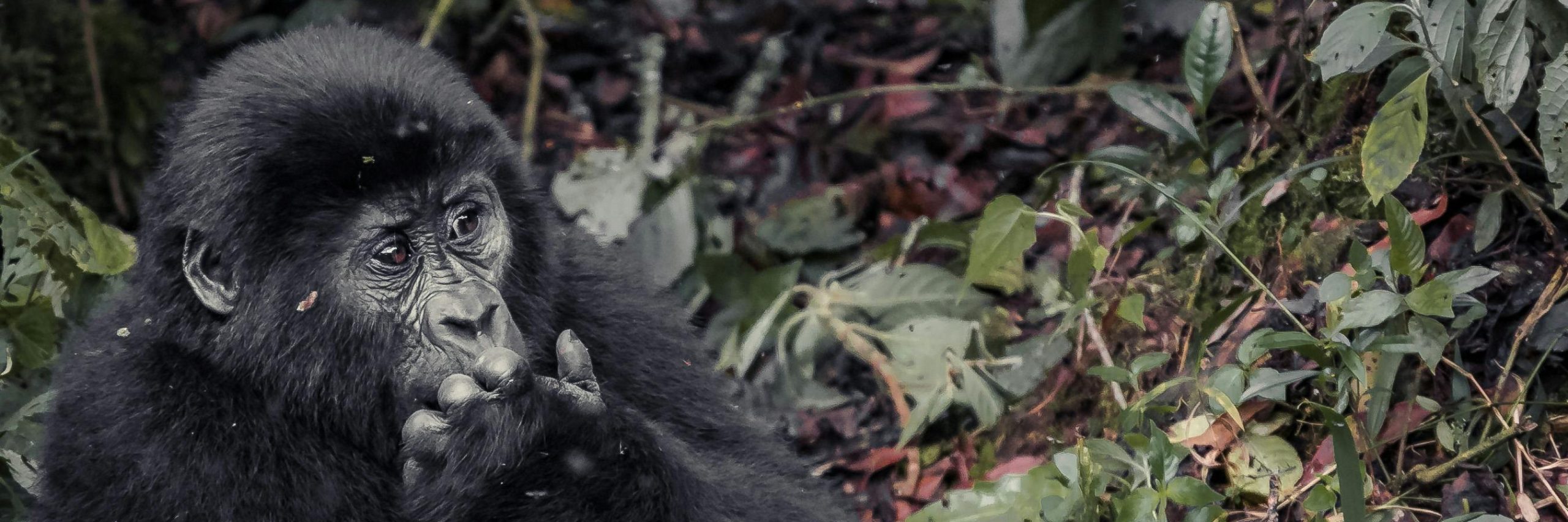
Gorilla Trekking for Older Travelers & Limited Mobility
Gorilla Trekking for Older Travelers & Limited Mobility: What’s Actually Possible?
Introduction
Gorilla trekking has a reputation problem. Search for it online, and you’ll see photos of steep, muddy trails, stories of eight-hour jungle hikes, and warnings that you need to be “reasonably fit.” For older travelers or anyone with mobility challenges, it’s easy to assume this bucket-list experience is out of reach.
It isn’t.
We have personally arranged gorilla treks for travelers in their 70s and 80s—some on foot with a porter’s steady hand, others carried gently through the forest in a sedan chair. Every single one of them spent their full, uninterrupted hour with a mountain gorilla family in Bwindi Impenetrable Forest.
This guide covers everything you need to know about gorilla trekking for seniors and travelers with limited mobility: the official age policies, the honest difficulty level, the support services available, the best sectors of Bwindi, how to prepare, and the answers to every question we get asked regularly.
Quick Answer: Can Older Travelers and Those with Limited Mobility Go Gorilla Trekking?
Yes—and there is no upper age limit. Uganda Wildlife Authority does not restrict gorilla trekking based on a traveler’s age. What matters is general health, a willingness to communicate mobility concerns in advance, and a readiness to use the support services that exist specifically for this purpose.
Senior travel groups, retirement tour operators, and accessible travel organizations regularly report octogenarians completing gorilla treks in both Uganda and Rwanda’s Volcanoes National Park. This is not a rare exception. It happens every trekking season.
The deciding factors are always fitness and mobility, not age on its own.
The Official Age Rules: What the Authorities Actually Say
Minimum Age: Strictly 15 Years Old
Uganda Wildlife Authority sets a minimum age of 15 years for all gorilla trekking. This applies equally in Bwindi Impenetrable National Park and Mgahinga Gorilla National Park, with no exceptions made for maturity or fitness level. The rule exists to protect both visitors and the gorilla families themselves. Rangers check birth dates on passports at the briefing.
Maximum Age: There Is None
UWA does not set an upper limit. A fit 72-year-old can join a standard trek with no special arrangements at all. A less mobile 68-year-old may benefit significantly from porter assistance or a sedan chair. Our oldest guest was 78 years old in Ruhija sector.
The key takeaway: Age alone is never the barrier. What determines your experience is how well you understand the options available, and how early you communicate your needs to your operator.
How Difficult Is Gorilla Trekking, Really?
This is the part most websites skip over, and it is the most important thing for older travelers to understand.
Trek Duration Varies Enormously
Gorilla trekking difficulty is not fixed. It changes every single day depending on where the gorilla family has moved overnight. Trek duration ranges from as little as 30 minutes to as long as 6–8 hours, depending on where the family has moved that morning. The average trek takes 2–4 hours of walking through forest trails.
That unpredictability is the real challenge for older trekkers, not any single fixed difficulty level.
What Actually Makes the Trek Hard
It’s not the altitude or the one hour with the gorillas—both are manageable for most people. It’s the walk itself:
- Trails through Bwindi’s forest can be steep, muddy, and uneven
- Vegetation is dense, and you may need to push through undergrowth
- Altitude in Bwindi ranges from 1,160m to 2,607m above sea level, which can cause mild shortness of breath
- Length depends entirely on where the gorilla family happens to be that day
The Practical Benchmark
The practical benchmark is the ability to walk at a steady pace for one to six hours on steep, muddy, root-strewn trails in humid forest conditions—but there are ways to dramatically reduce this requirement.
The Single Biggest Factor: Choosing the Right Sector
Not all trekking sectors are equally demanding. This is the most important decision you can make as an older or less mobile traveler.
Buhoma: The Easiest and Most Accessible Sector
Buhoma consistently ranks as the easiest gorilla trekking sector in Bwindi. It was the first sector to habituate gorillas in 1993, has the most experienced guides, and offers the flattest, shortest hike—30 minutes to 2 hours to find gorillas.
Why Buhoma works for limited mobility:
- Flattest, shortest hike with well-cut trails and no valley climbs
- Five habituated gorilla families, more than any other sector
- Established tourism infrastructure with a range of accommodation options
- Rangers report more 1–2 hour treks to find gorillas
Mgahinga Gorilla National Park: A Predictable Alternative
Mgahinga has just one gorilla family, but the terrain, while volcanic, is often described as more predictable than Bwindi’s dense forest trails.
Sectors to Avoid
Nkuringo is the most challenging sector due to steep terrain and high elevation. It involves demanding climbs and should be avoided by visitors with significant mobility limitations.
Ruhija is moderately difficult but can be suitable for reasonably fit seniors. Our oldest guest, aged 78, successfully trekked in Ruhija.
Rushaga offers moderate terrain and is best known for the Gorilla Habituation Experience.
Support Services: Your Two Essential Tools
Two support services transform gorilla trekking from challenging to achievable for older travelers and those with limited mobility.
1. Porters: Worth Every Dollar
Hiring a porter is the single most valuable thing you can do to make your trek easier. These local men and women are hired to carry your daypack, walking stick, and most importantly, to provide much-needed assistance and support on slick or steep parts of the trail.
What porters do:
- Carry your backpack and camera gear
- Hold your hand on slippery slopes
- Pull you up steep sections
- Know every root and rock on the trail
- Provide a steady, reassuring presence
Cost: Approximately $20 per trek. Pay cash at the briefing.
Why you should hire a porter regardless of fitness: Even strong hikers benefit from one, and it’s a direct way to support the local community around the park. By paying for porter services, tourists fund jobs for ex-poachers and strengthen community-led conservation.
2. Sedan Chairs: The “African Helicopter”
For trekkers who cannot walk at all or have significant mobility issues, the sedan chair is a genuinely well-established option—not a last resort. It allows people with limited mobility to reach the gorillas without walking the full distance themselves.
What it is: A sturdy metal seat or modified stretcher-seat, carried by a team of 6 to 8 porters. Local operators call it the “African helicopter”.
How it works: You are carried safely through the forest, directly to the location of the gorillas. The porters navigate the terrain while you sit comfortably in the chair.
Cost: Roughly $300 to $500 for a round trip, including the chair and about 4–8 porters. This is booked separately from your gorilla permit and must be arranged in advance since availability is limited.
Where it’s available: Bwindi’s Buhoma sector is the primary location for sedan chair services, though the service can be arranged in other sectors and in Mgahinga with advance notice.
A first-hand perspective: A travel writer for the LA Times described her experience: “You can hire around eight porters to carry you in a sedan chair, also called an ‘African helicopter.’ It’s an option for those who are pregnant, elderly, have disabilities.” She noted that learning the porters’ work supports their families and combats poaching gave her an even better reason to choose to be carried.
Preparing for Your Gorilla Trek: A Practical Guide
Proper preparation can help ensure your trek is pleasant and comfortable, particularly concerning physical readiness and attire.
Physical Preparation
In the case of the toughest treks being avoided, there is still a baseline level of fitness that can be beneficial:
- The walking game: In the months leading up to your trip, get out and walk regularly. Include hills or stairs to build strength and endurance in your legs.
- Stretching and warming up: Incorporate simple stretching or light yoga into your routine over the months before you leave. This enhances flexibility and reduces muscle soreness.
- Altitude awareness: Bwindi is over 1,500 meters. If this is your first time at high elevation, take it easy on the first day or two to let your body acclimate to the thinner air.
What to Wear and Bring
Footwear:
- Good, waterproof walking shoes or boots with ankle support are essential
- Gaiters or socks pulled over your trousers to keep sand and ants out of your boots
Clothing:
- Wear layers, starting with a quick-dry shirt. It can get humid and muggy in the mountains
- A rain jacket or plastic poncho—rain comes and goes intermittently
- Long, lightweight hiking trousers and long-sleeved shirts. There are stinging nettles along the route, and you’ll trek off-track at times
- Bright colours and white are not advisable as they contrast strongly with the forest. Camouflage clothing is also not recommended for travel in African countries
Essential gear:
- A proper walking stick or trekking poles (free walking sticks are provided at all four Bwindi gates, and adjustable poles can be provided on request)
- Gloves can be useful as you may need to push long grass out of your path
- Hat and sunglasses are a must
- Enough water and energy snacks—treks can take a couple of hours
Health and Medical Considerations
Anyone with heart conditions, mobility limitations, or other health concerns should speak with a doctor before booking.
Important rules:
- If you have any illness or contagious disease like flu or cough, you are not allowed to participate. Mountain gorillas are highly vulnerable to human diseases.
- Maintain a minimum distance of 7 meters (about 21 feet) from the gorillas.
- A maximum of 8 people is allowed per gorilla family per day.
Travel Logistics: Making the Journey Easier
Consider a Fly-In Safari
The road transfer from Entebbe to Bwindi takes 8–10 hours. For older travelers, this can be exhausting and drain energy better spent on the trek itself.
A fly-in safari cuts out the long road transfer, leaving more energy for the trek itself rather than spending it on travel days. Light aircraft flights from Entebbe to Bwindi take about an hour.
Book Through a Specialist Operator
Work with a tour operator who understands the needs of older travelers. A good operator will:
- Request placement with a gorilla family known to be nearer to the park headquarters, shortening the distance and reducing the grueling walk
- Write to UWA a day before to assign Buhoma or Ruhija families that are closest—often 1–2 hour walks, not 5 hours
- Arrange sedan chair services in advance
- Discuss your fitness level and personal preferences before assigning you to a gorilla group
Be honest with your operator about your fitness level so they can request accordingly.
Low Season: Fewer Crowds, Lower Prices
Uganda Wildlife Authority has introduced discounted low-season permit rates for April, May, and November. The price drops from $800 to $600 for foreign non-residents.
The trade-off: These are Uganda’s green season months, characterised by rainfall and muddier trails, which can make trekking more physically demanding. For older travelers with mobility concerns, the drier high-season months may be worth the higher permit cost for easier trail conditions.
Accommodation: What to Look For
Accessible accommodation in Bwindi is limited but improving. Several newer properties have ground-floor rooms and level access to main areas. Availability is limited and must be confirmed property by property.
Buhoma sector lodges to consider:
- Buhoma Community Camp (budget)
- Buhoma Havens Lodge (mid-range)
- Bwindi Lodge (luxury)
- Mahogany Springs (luxury)
- Sanctuary Gorilla Forest Camp—offers specially customized sedan chairs with support and harness for less able guests
Important note: Most Ugandan hotels and restaurants are not fully accessible. Few have elevators, ramps, or automatic doors. Staff are generally very helpful, but those with disabilities or mobility issues should expect to encounter unexpected obstacles and plan accordingly.
Always confirm accessibility features directly with the property before booking.
Frequently Asked Questions
Is there an age limit for gorilla trekking?
There is a minimum age of 15 years, strictly enforced in Uganda and Rwanda. There is no maximum age limit. People in their 60s, 70s, and even 80s have successfully completed gorilla treks.
Can I do gorilla trekking if I use a wheelchair?
Standard wheelchairs cannot navigate the forest trails. However, the sedan chair service allows travelers with significant mobility limitations to reach the gorillas. You will be carried by a team of porters through the forest to the gorilla family.
How much does the sedan chair cost?
Approximately $300 to $500 for a round trip, including the chair and 4–8 porters. This is separate from your gorilla permit and must be booked in advance.
What if I can’t complete the trek?
Rangers are used to varied fitness levels and will adjust the pace accordingly. There’s no need to push harder than feels comfortable. If you need to turn back, porters will assist you. However, the goal is always to get you to the gorillas—and with the support services available, most travelers succeed.
Which sector is best for limited mobility?
Buhoma is the easiest sector, with flatter trails and gorilla families often found within 30 minutes to 2 hours. It also has the most established tourism infrastructure.
Do I need a doctor’s note?
No official doctor’s note is required, but anyone with heart conditions, mobility limitations, or other health concerns should speak with a doctor before booking.
How far in advance should I book?
For peak season (June–September and December–February), book 4–9 months ahead. Sedan chair services and accessible lodges have limited availability and should be secured as early as possible.
The Bottom Line
Gorilla trekking is not just for the young and fit. With the right planning, the right sector, and the right support services, older travelers and those with limited mobility can—and do—reach the gorillas every trekking season.
The hour you spend with a mountain gorilla family is the same for everyone, regardless of how you arrived. As one traveler who opted for the sedan chair put it: rather than thinking of it as “taking a shortcut,” it’s better framed around the fact that it supports local communities and conservation, while making mountain gorilla encounters accessible to everyone.
If you’ve been told—or told yourself—that this experience isn’t for you, it’s time to reconsider. The gorillas are waiting.
Have you trekked gorillas as an older traveler or with mobility challenges? Share your experience in the comments below.
SEO Implementation Notes
Schema Markup (Recommended):
- Article Schema for the blog post
- FAQ Schema for the Frequently Asked Questions section
- HowTo Schema for the preparation section
- Breadcrumb Schema for navigation
Internal Linking Opportunities:
- Link “Bwindi Impenetrable National Park” to a dedicated Bwindi guide
- Link “Gorilla Habituation Experience” to a detailed post on that topic
- Link “Buhoma sector” to a sector comparison guide
- Link “Uganda gorilla trekking” to your main Uganda safari content
- Link “Mgahinga Gorilla National Park” to a Mgahinga-specific guide
External Linking (Authoritative Sources):
- Link to Uganda Wildlife Authority for permit bookings and official rules
- Link to FCDO or US State Department travel advisories for Uganda
- Link to IUCN Red List for mountain gorilla conservation status