Rwanda Gorilla Permit Guide
Rwanda Gorilla Permit Guide 2026: Cost, Booking & What to Expect
Key Facts — Rwanda Gorilla Permit 2026
- Standard permit: $1,500 (international visitors)
- Low-season rate: $1,050 (Nov–May, with 2+ nights in Akagera or Nyungwe)
- African residents: $500 | Rwandan/EAC citizens: $200
- Daily permits: 96–100 across 12 habituated families
- Time with gorillas: 1 hour (strictly enforced)
- Minimum age: 15
- Book: 3–6 months ahead for peak season
Rwanda Gorilla Permit Cost 2026: Every Official Rate
A Rwanda gorilla trekking permit costs USD 1,500 per person in 2026 for international visitors. This is the standard rate set by the Rwanda Development Board (RDB) and applies year-round for foreign non-residents.
2026 Permit Prices by Visitor Category
| Visitor Category | Permit Cost | Requirements |
|---|---|---|
| International tourists | $1,500 | Valid passport |
| Other African visitors & African residents | $500 | Valid passport, resident ID, diplomatic card, or visa covering at least 4 consecutive months |
| Rwandan nationals & EAC citizens | $200 | National ID, valid passport, or birth certificate |
Important: The reduced rates for African visitors and citizens are not available from June to October 2026. During those months, standard pricing applies.
Why the price difference? Rwanda deliberately positions gorilla trekking as a premium, low-volume experience. The $1,500 international rate helps fund conservation across the Virunga corridor, with all permit revenue flowing into national park management and community programmes. The promotional rates for African visitors are part of Rwanda’s strategy to boost regional and domestic tourism while maintaining conservation standards.
A note on permit numbers: As of 2026, RDB issues approximately 96–100 permits daily across 12 habituated gorilla families. Expansion to 14 families has been discussed but is not yet confirmed.
The $1,050 Low-Season Discount (Nov–May)
The most significant savings opportunity for international visitors is the low-season promotional rate of $1,050 — a 30% discount on the standard $1,500 fee.
Eligibility requirements:
- Trek must take place between November and May
- You must book a combined trip including at least two nights in either Akagera National Park or Nyungwe National Park
- Alternatively: one night in Akagera and one night in Nyungwe (consecutive) with a paid activity
- Each person is eligible for one discounted permit per 3-day/2-night stay
How to claim it: Book your Akagera or Nyungwe accommodation and activity first, then submit the confirmation receipt when applying for your discounted gorilla permit through the RDB portal.
| Rate Type | Price | Availability | Conditions |
|---|---|---|---|
| Standard international | $1,500 | Year-round | None |
| Low-season international | $1,050 | Nov–May | 2+ nights in Akagera or Nyungwe |
| African residents/citizens | $500 | Year-round (not Jun–Oct) | Proof of residency |
| Rwandan/EAC citizens | $200 | Year-round (not Jun–Oct) | Valid ID |
How to Book a Rwanda Gorilla Permit
All permits are issued exclusively by the Rwanda Development Board (RDB). You have two options: book directly or use a licensed tour operator.
Option 1: Book Directly with the RDB
The RDB accepts direct bookings through its official portal at visitrwandabookings.rdb.rw.
The process:
- Check availability for your preferred dates on the RDB portal
- Fill in the application with your full name and passport details exactly as printed
- Upload supporting documents (passport copy, residency proof if applicable)
- Pay in full — permits are issued only after complete payment
- Receive your confirmation — a system-generated permit is issued automatically upon completion
Key details:
- Your permit is linked to your passport — accuracy matters
- Permits are non-refundable once issued
- The RDB may permit rescheduling in limited documented circumstances, such as illness
- Cash payment at the park is not permitted
- Bookings are first-come, first-served
Important warning from RDB: Tourists who submit erroneous, incomplete, or false applications will be denied entry to the park regardless of payment. Verification of documents is done at park entry gates.
Option 2: Book Through a Tour Operator
Most international travellers choose this route. A registered operator can:
- Check real-time availability across multiple dates
- Secure the permit in your name
- Arrange transport, accommodation, and guiding
- Provide a single point of contact for your entire trip
- Communicate your fitness level and preferences to rangers before trek day
There is no markup on the permit itself when booking through an operator — you pay the same $1,500. The operator’s service fee covers logistics and planning.
When to Book: Lead Times by Season
| Season | Months | Lead Time Needed |
|---|---|---|
| Peak dry season | June–September | 4–6 months |
| Short dry season | December–February | 3–4 months |
| Shoulder season | October–November | 1–2 months |
| Long rains | March–May | 2–4 weeks |
For July or August treks, book by January at the latest. Peak season permits sell out months in advance.
Best Time to Trek Gorillas in Rwanda
Gorilla trekking is available year-round in Volcanoes National Park, but your experience will vary significantly depending on the season.
| Season | Months | Conditions | Crowds | Permit Availability |
|---|---|---|---|---|
| Long dry season | June–September | Best weather, firm trails | Peak | Sells out months ahead |
| Short dry season | December–February | Good conditions | High | Book 3–4 months ahead |
| Long rains | March–May | Muddy, harder hiking | Low | Good availability |
| Shoulder season | October–November | Good value, some rain | Low–Moderate | Excellent availability |
Best weather: June–September. Trails are dry and firm, and photography conditions are excellent.
Best value: October–November. Morning weather is generally good, lodge prices are lower, and permit availability is excellent. November also marks the start of the low-season discount window.
A note on the rains: March–May brings the heaviest rainfall, with April averaging around 186mm. Trails become slippery and hiking is more challenging — but you’ll have far fewer people around and significantly lower accommodation rates.
What Your Rwanda Gorilla Permit Includes
- Entry to Volcanoes National Park
- A professional ranger guide and trackers
- One hour with a gorilla family (strictly enforced)
- Gorilla conservation fees
- Park security and support
- Access to the Kinigi headquarters briefing
What It Doesn’t Include
- Transport to and from the park
- Accommodation
- Meals and drinks
- Porter service ($10–15, highly recommended)
- Tips for your guide ($20–30 recommended)
- Travel insurance (essential)
- Rwanda visa fees
The Gorilla Families of Volcanoes National Park
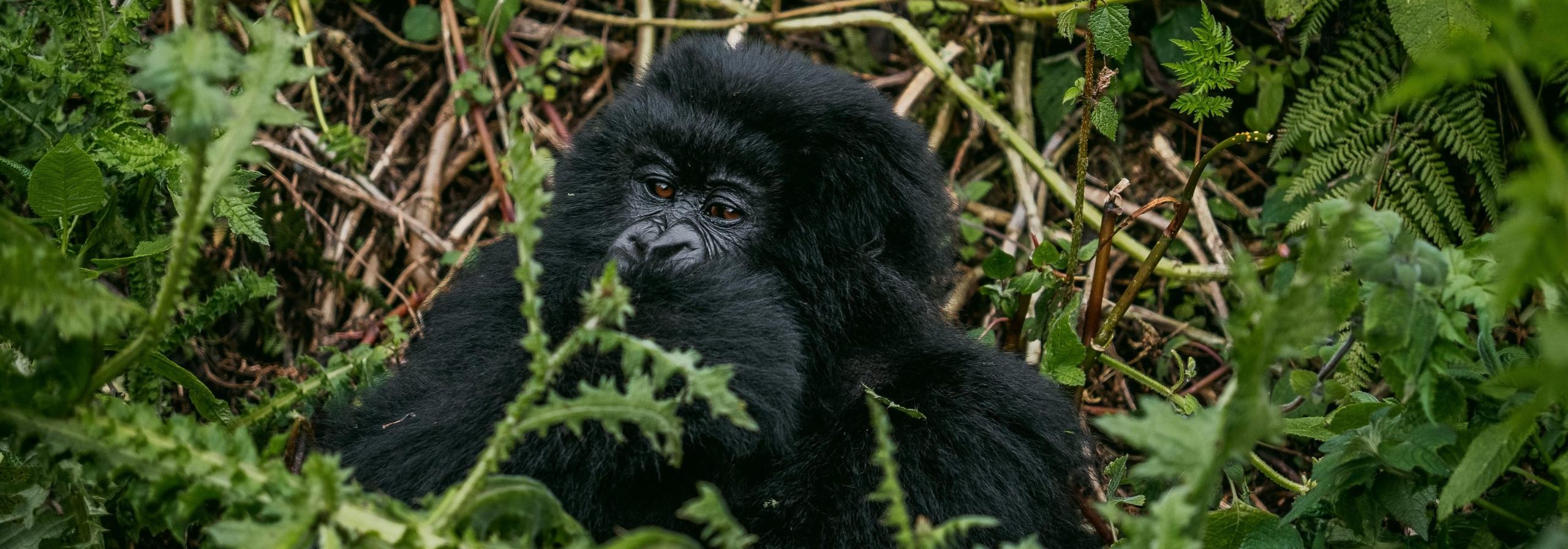
Volcanoes National Park has 12 habituated mountain gorilla families available for trekking as of 2026. Each family receives a maximum of 8 visitors per day.
How Family Assignments Work
You cannot request a specific gorilla family in advance for standard permit bookings. All trekking groups assemble at Kinigi park headquarters at 7:00 AM, where RDB rangers assign each group to a family based on:
- That morning’s tracker reports
- Group fitness assessments
- Daily permit allocation across all 12 families
This process ensures no family receives more human contact than gorilla welfare guidelines permit.
A practical tip: While direct family requests aren’t accepted, tour operators can communicate your preferences and physical fitness information to rangers before trek day. Clients with limited mobility often receive assignments to families at lower elevations, and photography-focused clients can be flagged for families in more open terrain.
Notable Families
Susa Group — Rwanda’s most historically significant family. This is the group Dian Fossey studied most extensively during her 18 years at Karisoke Research Centre. At its peak, Susa numbered over 40 individuals. It has since split into two sub-groups: Susa A and Karisimbi.
Agashya Group — Gained international attention in 2008 when a silverback named Nyakamwe led a coup against the previous dominant silverback, taking leadership of what was then called Group 13.
Umubano Group — Splits its time between Rwanda and the DRC, occasionally crossing the volcanic border ridge into Congolese territory before returning to Rwandan habituation zones.
Igisha Group — The largest habituated group in Volcanoes National Park recently divided in early 2026. With 40 individuals, it split into two groups: one remaining under dominant silverback Igisha (15 members) and a new group led by silverback Humura with 24 individuals.
The Platinum Gorilla Experience
For travellers who want more than the standard one hour, the Platinum Gorilla Experience offers extended time with the gorilla family.
| Cost | $1,500 extra on top of the standard permit fee |
| Total cost | Approximately $3,000 |
| Time with gorillas | Beyond the standard 1 hour |
| Availability | Highly limited — sells out far in advance |
This experience is designed for serious photographers, researchers, and travellers who want a deeper encounter.
Golden Monkey Trekking in Rwanda
Rwanda’s second habituated primate experience takes place in the bamboo forests at the park’s lower elevations.
| Cost | $100 per person |
| Groups | 2 habituated golden monkey groups |
| Max visitors per group | 8 |
| Best combined with | Gorilla trekking on a separate day |
Golden monkeys are Albertine Rift endemics with vivid orange-gold colouring, making them exceptionally photogenic. Many visitors combine gorilla trekking on day one with golden monkey trekking on day two — the two activities use different trailheads and different elevation zones within the same park.
Why Demand Is Higher in 2026: The Attenborough Effect
Demand for Rwanda gorilla permits has surged in 2026 following the release of David Attenborough’s Netflix documentary “A Gorilla Story” in April 2026.
The documentary follows Pablo, a mountain gorilla first filmed by Attenborough in 1978, tracking the silverback and the generations after him now living in Rwanda’s Volcanoes National Park.
What this means for travellers:
- Operators report a shift from 2–3 in 10 guests booking a second trek to around 5 in 10 today
- Bookings are coming earlier, with stronger intent and a broader mix of demographics
- The permit system does not stretch to meet demand — the cap of 96–100 daily permits remains fixed
As operator Lydia Eva Mpanga told Euronews Travel: “When global interest rises, the permit system does not suddenly stretch to meet it. Gorilla trekking remains tightly controlled.”
What Trek Day Looks Like
7:00 AM — Kinigi Headquarters
All trekkers assemble at the park headquarters for a briefing. Rangers explain the rules, assign groups to families, and share the latest tracker reports. This is also where you can hire a porter.
7:30–8:00 AM — Departure
Groups depart for their assigned trailheads. The drive from Kinigi to the trailhead can take 20–45 minutes depending on which family you’re assigned.
The Hike
Trekking can involve 2 to 5 hours of walking up and down hills through dense forest, bamboo, and open meadows. The terrain varies significantly depending on your family’s location that day.
What to expect:
- Altitudes between 2,500 and 3,000 metres
- Muddy, uneven trails (especially in the rainy season)
- Dense vegetation that your guide will help you navigate
- Porters available to carry your bag and assist you
The Encounter
Your lead ranger signals the start of your one-hour encounter when you reach the gorilla family’s position. Rangers position your group in a semicircle facing the gorillas at the 7-metre minimum distance as required by RDB guidelines.
Silverbacks typically continue feeding, resting, or moving through the vegetation with complete indifference to human presence — a result of years of careful habituation work.
After the Trek
You’ll hike back to the trailhead, where your driver will be waiting. Most trekkers return to their lodge by early afternoon. Many lodges offer late check-out or day rooms for trekkers to freshen up before the drive back to Kigali.
Getting to Volcanoes National Park
From Kigali by Private Transfer
Most gorilla trekking visitors travel from Kigali in a private 4×4 safari vehicle organized through their tour operator.
| Distance | ~120 km |
| Duration | 2 hours 20 minutes to 2 hours 45 minutes |
| Route | National Road 3 north through Rulindo and Gakenke districts |
| Cost | $100–$150 one way (driver, fuel, tolls included) |
Morning departure is essential — the park briefing begins at 7:00 AM sharp, which means leaving Kigali hotels by 4:30–5:00 AM.
From Kigali by Public Bus
Public buses run regularly from Kigali’s Nyabugogo bus terminal to Musanze town. The journey takes 2–3 hours and costs approximately 1,500–2,000 Rwandan francs (around $1.50 USD) per person. From Musanze, you’ll need to arrange a taxi or moto-taxi to reach Kinigi.
By Helicopter
Chartered helicopter transfers from Kigali International Airport to the Musanze airstrip take approximately 30 minutes. This is the most expensive but fastest option.
Where to Stay Near Volcanoes National Park
Accommodation ranges from budget guesthouses to ultra-luxury lodges. Here’s a quick overview:
| Category | Example Lodges | Distance to Park |
|---|---|---|
| Ultra-luxury | Bisate Lodge, Singita Kwitonda, One&Only Gorilla’s Nest | 10–15 min |
| Mid-range | Five Volcanoes Boutique Hotel, The Bishop’s House | 25 min |
| Budget | La Palme Hotel, Gorillas Volcanoes Hotel | 25–30 min |
Five Volcanoes Boutique Hotel is consistently recommended as the go-to option for budget-conscious travellers, with good food, service, and a pool.
Ultra-luxury lodges like Bisate and Singita Kwitonda offer full-board rates and include activities, but note that gorilla permits are paid separately.
What to Pack for Gorilla Trekking
Essential
- Sturdy hiking boots — waterproof if possible
- Long trousers — protects against nettles and insects
- Long-sleeved shirt — layering is key
- Rain jacket — even in the dry season
- Gardening gloves — for grabbing vegetation on steep sections
- Plenty of water — at least 2 litres
- Camera with no flash (flash is prohibited)
Recommended
- Gaiters (for muddy trails)
- Sunscreen and hat
- Insect repellent
- Binoculars
- Snacks (energy bars, nuts)
- A dry bag for electronics
- Trekking poles (can be hired locally)
What to Wear
Dress in layers. Mornings at Kinigi can be cold (10–15°C), while the hike will warm you up quickly. By the time you reach the gorillas, you may be in a t-shirt — but rain can appear at any moment.
Rwanda vs. Uganda: Which Is Right for You?
| Rwanda | Uganda | |
|---|---|---|
| Permit cost | $1,500 (or $1,050 low season) | $800 |
| Trek difficulty | Moderate | Can be more strenuous |
| Access from capital | 2.5 hours from Kigali | 8–9 hours from Entebbe |
| Luxury lodges | Extensive | Limited |
| Permit availability | More competitive | Generally more available |
| Conservation model | High-value, low-volume | Higher volume |
Rwanda’s higher permit price reflects its premium positioning and the convenience of a short transfer from Kigali. Uganda offers a more affordable option but requires a longer journey to reach the gorilla habitats.
Conservation Impact of Your Permit
Your permit is more than a ticket — it’s a direct contribution to one of conservation’s greatest success stories.
Mountain gorillas are the only great ape population on the rise. The Virunga Massif population has grown from fewer than 300 in the 1970s to over 1,000 today.
How tourism revenue helps:
- Community revenue-sharing: The RDB reinvested $2 million into local projects in 2024 alone
- Water access: Over 1,000 rainwater tanks have been built, serving more than 6,000 community members
- Reduced park encroachment: Rangers have observed a steady decline in people entering the park to collect natural resources
- Park expansion: Plans are underway to expand Volcanoes National Park to accommodate a growing gorilla population
The Kwita Izina ceremony — Rwanda’s annual gorilla naming event — celebrates these gains. The 21st edition was held on September 4, 2026, in Kinigi, with 22 baby mountain gorillas named.
Rwanda’s conservation model has been recognised internationally as a driver of both biodiversity protection and economic development. The country’s gorilla tourism sector generated $647 million in tourism revenues in 2024, with a government target of $1 billion by 2029.
Rwanda Gorilla Permit FAQ
How much is a Rwanda gorilla permit in 2026?
A Rwanda gorilla permit costs $1,500 for international visitors in 2026. African residents and citizens pay $500, while Rwandan and EAC citizens pay $200. A low-season discount of $1,050 is available from November to May when combined with 2+ nights in Akagera or Nyungwe National Park.
How far in advance should I book a Rwanda gorilla permit?
Book 3–6 months ahead for peak season (June–September and December–February). For July or August treks, book by January. Shoulder season (March, April, November) can sometimes be secured with 2–4 weeks’ notice.
What is the minimum age for gorilla trekking in Rwanda?
The minimum age is 15 years, strictly enforced by park authorities. You must show proof of age (passport) at the briefing. There is no upper age limit, and porters can support older or less mobile trekkers.
Can I request a specific gorilla family in Rwanda?
No. Family assignments are made on the morning of your trek at Kinigi headquarters, based on tracker reports, group fitness levels, and permit allocation. Your tour operator can communicate preferences in advance, but nothing is guaranteed.
What happens if I cancel my gorilla permit?
Permits are generally non-refundable. The RDB may permit rescheduling in limited documented circumstances (e.g., illness). Travel insurance that covers permit cancellation is essential.
Can I spend more than one hour with the gorillas?
Yes — the Platinum Gorilla Experience costs $1,500 extra ($3,000 total) and allows extended time. It sells out very early.
Can I also see golden monkeys?
Yes. Golden monkey trekking costs $100 per person and is best done on a separate day.
Is the trek hard?
It can be. Treks range from 2 to 5 hours of hiking at altitude. Porters are available (~$10–15) and are highly recommended — they’ll carry your bag and help you on steep sections.
What if I have limited mobility?
Inform your tour operator in advance. Rangers can assign you to a family at a lower elevation, and porters can assist with the hike.
What’s the success rate of seeing gorillas?
Very high — over 98% on a standard trek. Trackers locate the families each morning before trekkers arrive.
Do I need a visa for Rwanda?
Most nationalities can get a visa on arrival or an East Africa Tourist Visa (covering Rwanda, Uganda, and Kenya). Check with your local Rwandan embassy for current requirements.
Can I get a refund if I don’t see gorillas?
Yes. Visitors who fail to track gorillas the whole day as a result of the gorilla group’s movement shall be given another chance or receive a full refund on their permit.
Final Tips for Your 2026 Gorilla Trek
Book early. With the Attenborough effect driving demand and permits capped at 96–100 per day, peak season dates sell out months ahead.
Know your permit rate. If you qualify for the $1,050 low-season discount, plan your trip around November–May and include a stay in Akagera or Nyungwe.
Pick your season wisely. June–September offers the best weather. October–November offers the best value.
Hire a porter. For $10–15, you’ll get help on steep sections and support a local livelihood.
Bring layers. Mountain weather changes fast. A rain jacket and sturdy boots are non-negotiable.
Arrive a day early. Stay in Musanze or Kinigi the night before your trek. The 7:00 AM briefing at Kinigi means a very early start from Kigali.
Ready to Book Your 2026 Rwanda Gorilla Permit?
Contact Kuku Safaris for real-time availability checks, full itinerary planning, and permit securing. We respond within 24 hours.