
Tsavo National Park Safari Guide: Tsavo East & Tsavo West Explained
Few places capture the raw scale of the African wilderness like Tsavo. Spread across south-eastern Kenya between Nairobi and the coast, Tsavo East and Tsavo West National Parks together protect one of the largest wildlife areas on the continent. This is a land of red-dusted elephants, maneless lions, ancient lava flows, crystal-clear springs and sweeping plains that stretch to the horizon. Tsavo sees far fewer visitors than the Maasai Mara or Amboseli, which means quieter game drives and a real sense of wilderness.
This complete guide explains the differences between Tsavo East and Tsavo West, what wildlife you can expect to see, the top attractions in each park, the best time to visit, how to get there and how to fit Tsavo into a Kenya safari.
Tsavo at a Glance
- Location: South-eastern Kenya, between Nairobi and Mombasa.
- Size: Together, Tsavo East and Tsavo West cover roughly 22,000 square kilometres, making Tsavo the largest protected area in Kenya.
- Established: 1948, later divided for administration into two parks, separated by the Nairobi–Mombasa highway and railway.
- Known for: Red elephants, maneless lions, the Yatta Plateau, Lugard Falls, Mzima Springs, Shetani lava flow and the Ngulia Rhino Sanctuary.
- Managed by: the Kenya Wildlife Service.
The Story of Tsavo
Tsavo first became famous in 1898, when the Uganda Railway was being built from Mombasa towards Lake Victoria. During construction of a bridge over the Tsavo River, two lions attacked and killed railway workers over several months, halting work until the engineer Lieutenant Colonel John Henry Patterson finally shot them. The story of the “Man-Eaters of Tsavo” became world famous through Patterson’s book and later films, and the lions themselves are now displayed at the Field Museum in Chicago.
Tsavo was gazetted as a national park in 1948. In the 1970s and 1980s, its elephants and rhinos were devastated by drought and poaching, but decades of conservation work by the Kenya Wildlife Service and partners have helped the elephant population recover, and Tsavo now holds one of Kenya’s largest elephant populations.
Tsavo East vs Tsavo West: What Is the Difference?
Although they share a name and an ecosystem, the two parks feel quite different.
Tsavo East is the larger of the two and is mostly flat, open and semi-arid, with wide plains of grass and scattered thorn trees. The open terrain makes wildlife relatively easy to spot, and the park is known for big herds of red elephants, lions, buffalo and plains game. It is easily reached from Mombasa and the coast, which makes it popular for short safaris from the beach.
Tsavo West is more varied and scenic, with volcanic hills, lava flows, rocky outcrops, springs and woodland. Wildlife can be harder to spot in the thicker vegetation, but the landscapes are spectacular and the park has several unique attractions, including Mzima Springs and the Ngulia Rhino Sanctuary. On clear days, Mount Kilimanjaro rises in the distance.
Many travellers visit both parks, spending a night or two in each, to enjoy the contrast between Tsavo East’s open plains and Tsavo West’s dramatic scenery.
Wildlife in Tsavo
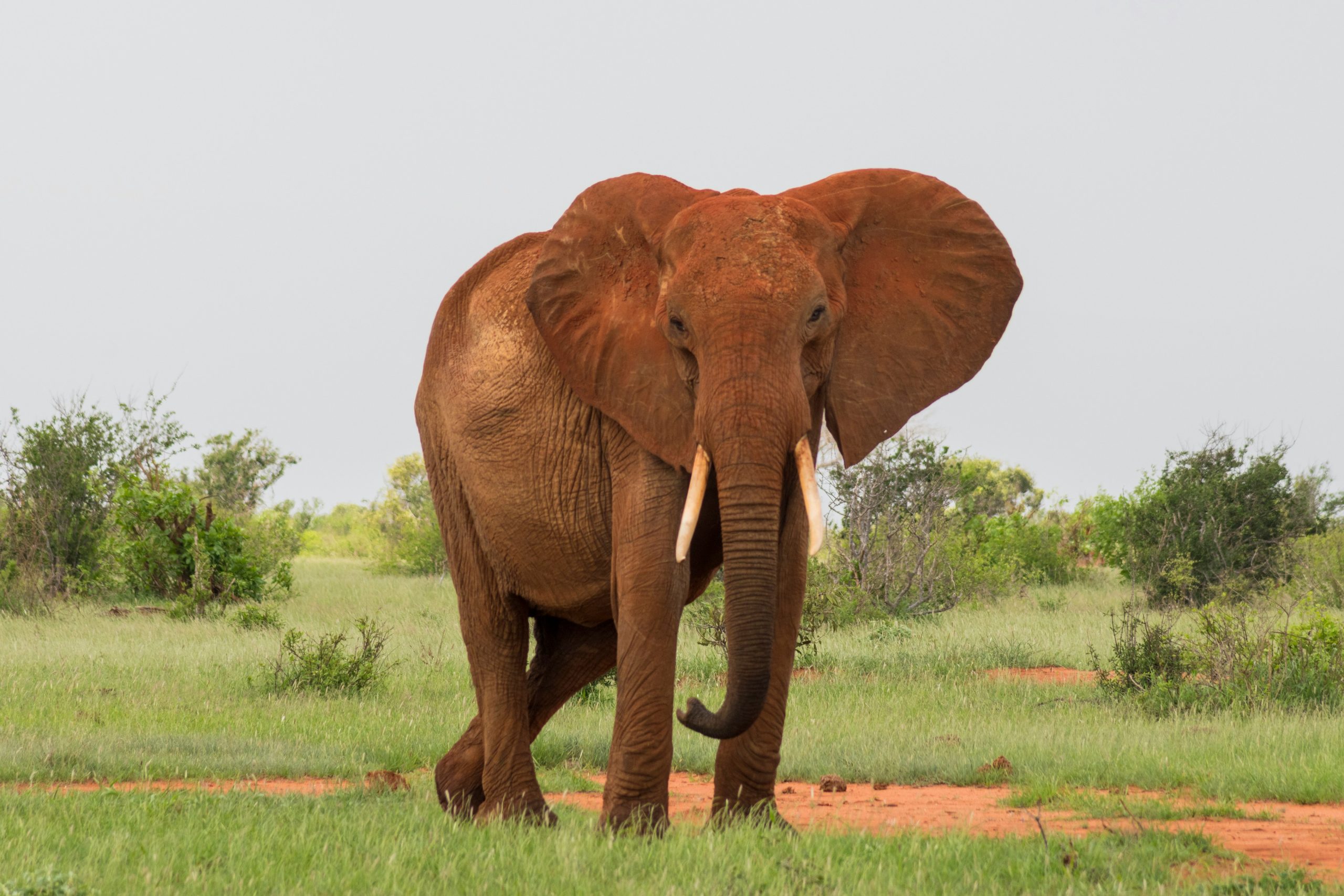
Red elephants. Tsavo’s most iconic sight is its elephants, which appear red because they dust themselves with the area’s iron-rich red soil to protect their skin from the sun and insects. Seeing a herd of red elephants crossing the plains or drinking at a waterhole is one of the great safari moments in Kenya.
Lions. Tsavo’s male lions often have short manes or almost none at all, a trait thought to be linked to the hot, dry climate and dense thorny bush. Lions are found in both parks and are often seen in Tsavo East.
Other predators. Leopards, cheetahs, striped and spotted hyenas, and black-backed jackals live in Tsavo, and the parks are among the places in Kenya where African wild dogs are occasionally seen.
Rhinos. Black rhinos are protected in the Ngulia Rhino Sanctuary in Tsavo West and in sanctuary areas in Tsavo East. They are shy and difficult to see, but sightings are possible.
Plains game and dry-country species. Buffalo, Masai giraffe, zebra, eland, impala, waterbuck and Kongoni (Coke’s hartebeest) are common. Tsavo is also home to dry-country specialists, including the long-necked gerenuk, lesser kudu, fringe-eared oryx and, in Tsavo East, the rare hirola, one of the world’s most endangered antelopes, which has been relocated to a sanctuary there.
Birds. More than 500 bird species have been recorded across the Tsavo ecosystem, including ostriches, secretary birds, kori bustards, hornbills, starlings, weavers and many birds of prey. In November and December, Ngulia Hills in Tsavo West is famous for the mass ringing of migrating Palearctic birds that pass through on misty nights.
Top Attractions in Tsavo East
The Yatta Plateau. Running along the park’s western side, the Yatta Plateau is one of the longest lava flows in the world, stretching for close to 300 kilometres. It forms a striking ridge above the plains of the Athi and Galana Rivers.
Lugard Falls. On the Galana River, Lugard Falls is a series of rapids where the water rushes through channels carved into striped rock. Crocodiles are often seen in the calmer pools downstream at Crocodile Point.
Mudanda Rock. This long rock outcrop collects rainwater in a natural dam at its base, attracting elephants and other wildlife during the dry season. Climbing to the top gives a superb view over the waterhole.
Aruba Dam. Built on the Voi River, Aruba Dam forms a reservoir that draws large numbers of animals and birds, especially in the dry months.
The Galana River. The river is a lifeline through the park, with doum palms, hippos, crocodiles and plenty of animals coming down to drink.
Top Attractions in Tsavo West
Mzima Springs. Fed by rainwater filtering through the volcanic Chyulu Hills, Mzima Springs produces millions of litres of clear water every day. Hippos and crocodiles live in the pools, and an underwater viewing chamber lets you watch hippos and fish beneath the surface. Mzima also supplies water to the city of Mombasa.
Shetani Lava Flow. A vast field of black lava formed by a volcanic eruption a few hundred years ago. The name means “devil” in Swahili, a reference to local stories about the eruption. Nearby are the Shetani caves.
Ngulia Rhino Sanctuary. A fenced sanctuary at the foot of the Ngulia Hills protects black rhinos. Waterholes inside the sanctuary give visitors a chance to spot them, particularly in the early morning and late afternoon.
Chaimu Crater and Roaring Rocks. Chaimu is a volcanic cone that can be climbed for wide views, while Roaring Rocks is a viewpoint named after the sound of the wind and the cicadas, offering panoramic views over the plains.
Lake Jipe. On the border with Tanzania, Lake Jipe is a quiet lake with good birdlife and views across to the Pare Mountains and Kilimanjaro.
Beyond the Parks: Taita Hills and Chyulu Hills
Tsavo is surrounded by other interesting areas. The private Taita Hills Wildlife Sanctuary, between the two Tsavo parks, offers game drives and lodges in a smaller, well-managed area, and the nearby Taita Hills have unique cloud forests with endemic birds. To the north-west, the Chyulu Hills National Park protects green volcanic hills with lava tubes and sweeping views towards Kilimanjaro. Our 10-day Tsavo East, Tsavo West and Taita Hills safari combines these areas in one trip.
Best Time to Visit Tsavo
Tsavo can be visited throughout the year, but conditions vary with the seasons:
- June to October (long dry season): the best time for game viewing. Vegetation thins out and animals gather around rivers, springs and waterholes, making them easier to find.
- January to February (short dry season): another good time, with hot, dry weather and good wildlife viewing.
- November to December (short rains): brief showers turn the landscape green, migrating birds arrive and there are fewer visitors.
- March to May (long rains): the wettest period. Some roads can become difficult, and some lodges may close, but prices are lower and the scenery is lush.
For a full overview of seasons across the region, see our guide to the best time to visit East Africa.
How to Get to Tsavo
By road. Tsavo lies along the Nairobi–Mombasa highway. Tsavo West’s Mtito Andei Gate is roughly four to five hours’ drive from Nairobi, while Tsavo East’s Voi Gate is around two to three hours from Mombasa. Most safaris travel by 4×4 vehicle with a driver-guide.
By train. The Standard Gauge Railway between Nairobi and Mombasa stops at Voi and Mtito Andei, close to the park gates. Many visitors take the train and are met by their safari vehicle at the station, a comfortable and scenic option. You may even see wildlife from the train.
By air. Several airstrips serve lodges in both parks, and charter flights can be arranged from Nairobi or the coast.
Before you travel, make sure you have the right entry documents; our guide to the Kenya eTA for tourists explains the process.
How Many Days Do You Need in Tsavo?
Because of its size, Tsavo rewards time. A two-day, one-night trip to Tsavo East from Mombasa or Diani is possible, but three days allows you to visit both parks and see the highlights, such as Lugard Falls, Mudanda Rock and Mzima Springs. Four or five days lets you explore at a slower pace and add the Taita Hills or Chyulu Hills. Our 3-day Tsavo East and West safari from Mombasa is a popular short option.
Where to Stay
Tsavo has accommodation for every budget, from public and special campsites to tented camps, classic safari lodges built around waterholes and upmarket camps along rivers and in the hills. Some lodges overlook floodlit waterholes where elephants and other animals come to drink after dark. Lodges inside the parks save driving time, while camps just outside the gates can offer better value.
How Much Does a Tsavo Safari Cost?
The cost of a Tsavo safari depends on the length of your trip, your accommodation, your transport and the season. Your main costs will be park entry fees set by the Kenya Wildlife Service, accommodation, vehicle and guide, and any extras such as train tickets or flights. Tsavo is often better value than the Maasai Mara, particularly from the coast. For a breakdown of safari budgets, see our guide to East Africa safari costs and our advice on how to choose a Kenya safari package.
Combining Tsavo With Other Kenya Destinations
- Tsavo and the beach: Combine a few days in Tsavo with Diani, Watamu or Malindi for a classic “bush and beach” holiday; see our Big Five safari and Diani beach holiday.
- Tsavo and Amboseli: Tsavo West is a short drive from Amboseli, where elephants roam beneath Kilimanjaro; read our Amboseli safari guide.
- Nairobi to the coast: Start in Nairobi National Park, drive or take the train through Tsavo and finish on the coast.
- Kenya and Tanzania: Tsavo West’s proximity to the Tanzanian border makes it a gateway for combined trips; see our comparison of Kenya vs Tanzania safaris.
Tips for Your Tsavo Safari
- Expect heat and dust: bring a hat, sunglasses, sunscreen and a scarf or buff to cover your face on dusty roads.
- Distances are large, so plan your days around one or two key areas rather than trying to see everything.
- Start early: wildlife is most active in the cool hours after sunrise and before sunset.
- Pack neutral-coloured clothing and binoculars; see our first-time safari tips for more.
- Tsavo is in a malaria area; take medical advice before you travel and read our guide to East Africa vaccinations and malaria.
Frequently Asked Questions
Is Tsavo East or Tsavo West better? Tsavo East is better for open-plain game viewing and big elephant herds, and is easier to reach from Mombasa. Tsavo West is better for scenery and unique attractions such as Mzima Springs. If you have time, visit both.
Can you see the Big Five in Tsavo? Yes. Lion, leopard, elephant, buffalo and black rhino all live in Tsavo, though rhinos are shy and mostly found in sanctuaries.
Why are the elephants in Tsavo red? They dust and wallow in the region’s red, iron-rich soil, which coats their skin and protects it from the sun and insects.
Can I visit Tsavo on a day trip from Mombasa? A day trip to Tsavo East is possible but involves a lot of driving. An overnight stay makes for a much better experience.
Is Tsavo good for families? Yes, especially when combined with the coast. Lodges with waterholes keep children entertained, and the train journey is an adventure in itself; see our guide to family safaris in East Africa.
Plan Your Tsavo Safari
Tsavo offers a wilder, quieter side of Kenya, with huge landscapes, red elephants and the kind of space that is increasingly rare. Whether you are adding a short safari to a beach holiday or exploring both parks in depth, Kuku Safaris can plan your trip with experienced local guides, carefully chosen lodges and smooth transfers by road, rail or air. Get in touch to start planning your Tsavo adventure.