
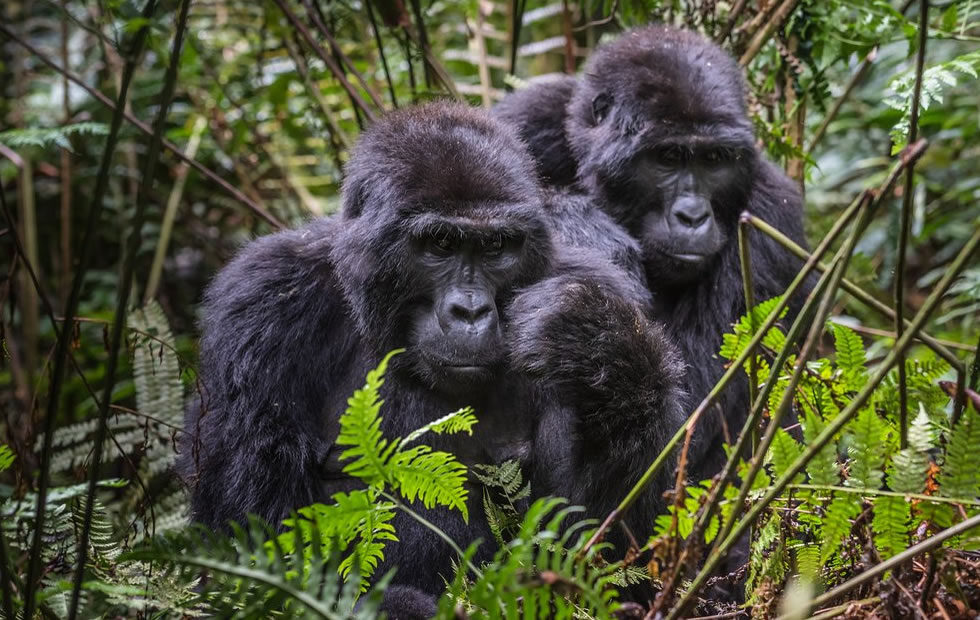
Uganda gorilla trekking is one of the great wildlife experiences in Africa. Uganda is home to around half of the world’s mountain gorillas. This guide covers where you can trek, what a permit costs, the best time to go and what a trek is like.
Last updated: November 2026.
Where you can trek gorillas in Uganda
Gorilla trekking in Uganda takes place in two national parks in the south-west of the country. Both are managed by the Uganda Wildlife Authority.
- Bwindi Impenetrable National Park is the main gorilla destination. Treks start from four sectors: Buhoma, Ruhija, Rushaga and Nkuringo.
- Mgahinga Gorilla National Park is a smaller park on the border with Rwanda and the Democratic Republic of the Congo.
How much does a gorilla permit cost?
Every trekker needs a permit from the Uganda Wildlife Authority (UWA). Current prices per person are:
| Visitor type | Standard permit |
|---|---|
| Foreign non-resident | USD 800 |
| Foreign resident | USD 700 |
| East African citizen | UGX 300,000 |
A discounted low-season rate applies to trekking in April, May and November. It is USD 600 for foreign non-residents and USD 500 for foreign residents.
Please note: UWA publishes these prices in its tariff, which keeps the standard foreign non-resident permit at USD 800 from 1 January 2027, while the gorilla habituation experience rises to USD 1,800. See our Uganda gorilla permit cost 2027 post for details. Ask us to confirm the price for your travel dates before you book.
What is a gorilla trek like?
- Trekkers are placed in small groups, with a maximum of eight people per gorilla family.
- Rangers and trackers lead you into the forest. A trek can take anywhere from one hour to most of a day, depending on where the gorillas spent the night.
- Once you find the gorillas, you spend one hour with them.
- The terrain can be steep, muddy and slippery, so good fitness and sturdy boots help.
Gorilla trekking rules
- Trekkers must be at least 15 years old.
- Keep a distance of about seven metres from the gorillas.
- Do not trek if you have a cold, flu or other illness that could pass to the gorillas.
- Do not use flash photography, and keep your voice low.
Best time for Uganda gorilla trekking
Trekking takes place all year. Many travellers prefer the drier months, June to September and December to February, because forest trails are easier to walk. The wetter months of March to May and October to November mean muddier trails. However, there are fewer visitors, and permits can be easier to secure.
How to book a gorilla trek
Permits are limited, and the most popular dates sell out. Plan ahead, especially for June to September and December to February. You can read more about Uganda’s rules on the UWA Bwindi page.
- Send us your travel dates, group size and budget.
- We check permit availability for your dates.
- You confirm, and we arrange the rest of your safari around the trek.
Request a free quote or call +256 793 136 789.
More Uganda gorilla trekking guides
Go deeper with our detailed guides:
- Bwindi gorilla trekking: the four sectors and how to choose
- Mgahinga gorilla trekking: the Nyakagezi family and golden monkeys
- Gorilla habituation experience in Uganda
- How hard is gorilla trekking?
- What to expect on a gorilla trek
- The best time for gorilla trekking in Uganda, month by month
- Chimpanzee tracking in Kibale
- Gorilla trekking packages compared
Gorilla safaris you can book
- 5-Day Queen Elizabeth NP and Bwindi Gorilla Trekking Safari
- 6-Day Ultimate Gorilla and Golden Monkey Trekking
- 7-Day Rwanda Uganda Gorilla Safari
- 10-Day Uganda Wildlife and Gorilla Safari
- See all gorilla trekking tours
Planning your trip
Frequently asked questions
How long do you spend with the gorillas?
You spend one hour with the gorillas once the group is found.
Can children go gorilla trekking?
No. The minimum age for gorilla trekking in Uganda is 15.
How many days do I need?
A focused gorilla trek can be done in three days. Many travellers add chimpanzee tracking or a game park, and longer safaris are more relaxed.
Is it better to trek gorillas in Uganda or Rwanda?
Both offer excellent trekking. Uganda’s permits cost less and its forests are larger and wilder, while Rwanda’s trekking is closer to Kigali. Read our Uganda vs Rwanda gorilla trekking comparison for the details. We can also combine both in one safari, or help you choose.