
Katavi National Park: The Complete Guide to Tanzania’s Wildest Safari
There are still places in Africa where you can spend an entire day on safari without seeing another vehicle, where buffalo herds stretch to the horizon and the only sounds are the grunts of hippos and the calls of birds. Katavi National Park, in the remote far west of Tanzania, is one of them. It is a park of extremes: in the dry season, wildlife crowds around the last remaining water in staggering numbers, and in the wet season, the floodplains turn into lakes and the park all but closes to visitors.
Katavi receives only a tiny fraction of the visitors who flock to the Serengeti, yet for many seasoned safari-goers it is one of the most rewarding parks in Africa. This complete guide explains what makes Katavi special, the wildlife you can expect, when to go, how to get there, what it costs and how to combine it with nearby destinations such as the chimpanzee forests of Mahale.
Where Is Katavi National Park?
Katavi lies in south-western Tanzania, near the town of Mpanda and roughly between Lake Tanganyika to the west and Lake Rukwa to the south-east. Covering more than 4,400 square kilometres, it is one of Tanzania’s largest national parks, and it forms part of a much wider wilderness of game reserves and forests. Its distance from major towns and the main tourist circuits means it remains genuinely remote, and most visitors arrive by light aircraft.
Why Visit Katavi?
- True wilderness. With only a handful of camps and very few visitors, Katavi offers a sense of solitude that is increasingly rare.
- Spectacular concentrations of wildlife. In the late dry season, the remaining water draws extraordinary gatherings of hippos, crocodiles, buffalo and elephants.
- Dramatic predator action. Lions, leopards and spotted hyenas follow the buffalo herds, and hunts are a real possibility.
- Raw, old-style safari. Walking safaris, fly camping and simple bush camps capture the feel of safaris as they used to be.
- Perfect pairing with Mahale. Katavi’s big-game drama combines beautifully with chimpanzee trekking on Lake Tanganyika.
Landscapes of Katavi
Most of Katavi is covered in dense miombo woodland, but the heart of the park for wildlife viewing is a series of open floodplains and seasonal lakes. The Katisunga Plain is a vast, open grassland that acts as the park’s centrepiece, while Lake Katavi in the north and Lake Chada in the south-east swell into shallow lakes and wetlands during the rains and shrink to muddy pans in the dry season. The Katuma River winds between them, and as the dry season advances, it shrinks to a chain of pools that become the lifeline for the park’s wildlife.
These changing waters define the rhythm of life in Katavi. In the wet months, the plains flood and animals disperse widely. As the land dries out from around June onwards, wildlife is drawn ever closer to the river and its pools, creating some of the most intense wildlife concentrations in Africa by the end of the dry season.
The Hippos of Katavi
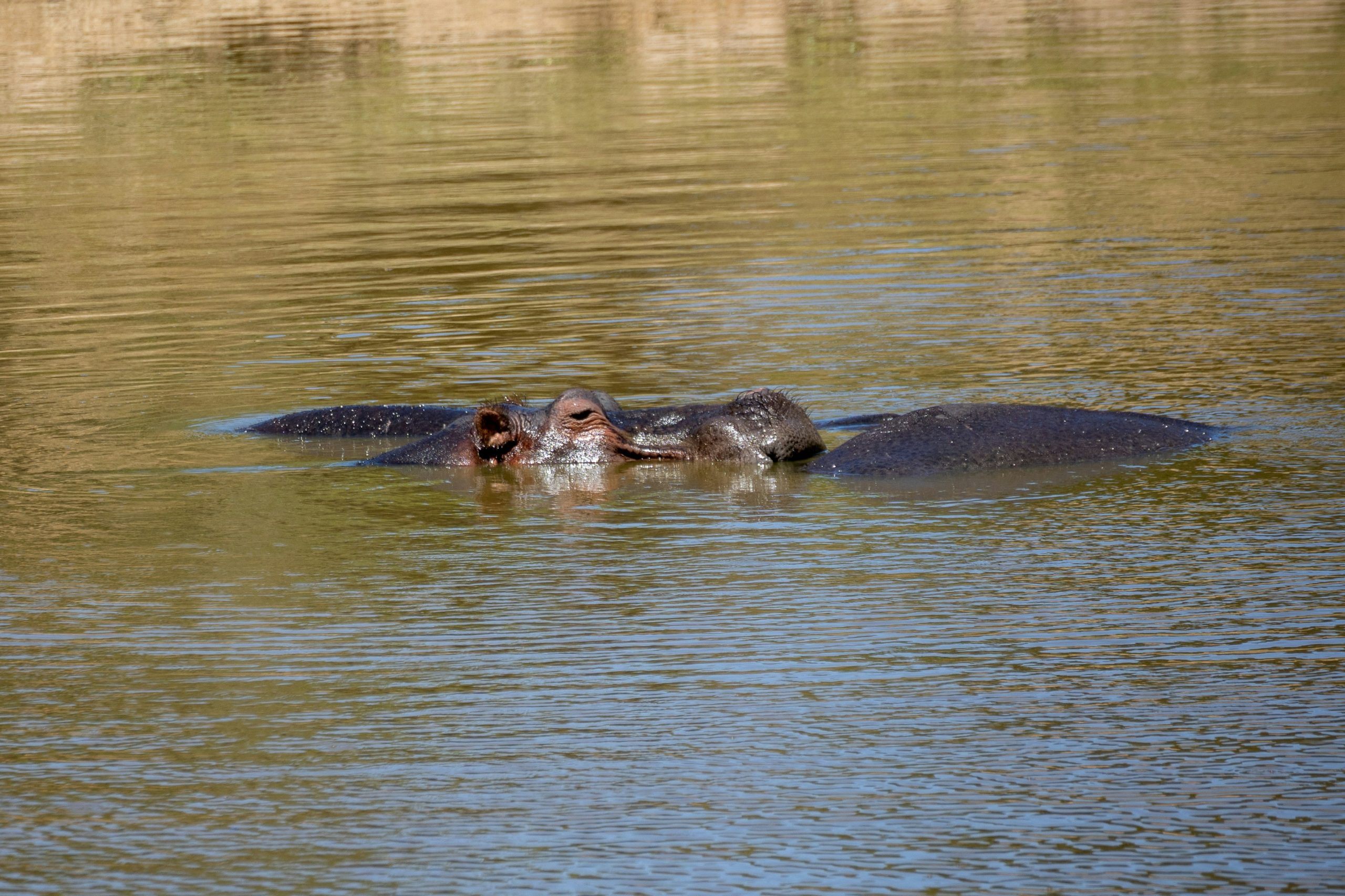
Katavi is famous for its hippos. Towards the end of the dry season, as the Katuma River dries into isolated pools, hundreds of hippos may crowd into a single stretch of shrinking water and mud. Packed tightly together, they jostle, grunt and fight for space, with territorial males clashing in dramatic displays. It is a noisy, smelly and utterly unforgettable sight, and one that shows wildlife survival at its rawest. Large Nile crocodiles share these pools, and in the driest periods some retreat into caves dug into the riverbanks to wait for the rains.
Buffalo Herds and Big Predators
Katavi is home to some of the largest buffalo herds in East Africa, with groups numbering in the hundreds and sometimes well over a thousand animals moving together across the plains in clouds of dust. These herds are followed closely by lions, and Katavi’s prides are known for tackling buffalo, leading to tense and dramatic encounters. Spotted hyenas are common, and leopards are regularly seen in the woodland and along the river. Wild dogs and cheetahs are present in the wider ecosystem, though sightings are rarer.
Other Wildlife
Elephants are common, especially in the dry season when they come to drink along the river and dig for water. Giraffe, zebra, topi, impala, waterbuck, reedbuck and eland graze the plains, and Katavi is also a good place to look for less common antelope such as roan and sable in the woodland. Puku, a type of antelope more typical of southern Africa, can be found in some wetland areas. Birdlife is excellent, with more than 400 species recorded, including large numbers of storks, herons, pelicans and raptors gathering around the drying waters.
The Legend of Katabi
Katavi takes its name from Katabi, a legendary hunter whose spirit is believed by local communities to live in a large tamarind tree within the park. Local people have long visited the tree to leave offerings and ask for blessings, and guides often point it out on game drives. The story is a reminder that Katavi’s landscape holds cultural as well as ecological significance.
Safari Activities in Katavi
Game drives. Open-sided vehicles explore the Katisunga Plain, the Katuma River and the lakes, often on long full-day outings with picnic lunches. With so few vehicles in the park, you can spend as long as you like at a sighting without any crowding.
Walking safaris. Guided walks with an armed ranger are one of Katavi’s great experiences. On foot, you learn to read tracks, appreciate the smaller details of the bush and feel the thrill of approaching big game at ground level.
Fly camping. Some camps offer overnight fly camping, where you walk to a simple camp in a remote part of the park and sleep under a mosquito net beneath the stars, listening to lions and hyenas calling through the night.
Best Time to Visit Katavi
Dry season (June to October). This is the best time to visit, and the only time most camps are open. Wildlife viewing improves steadily as the season progresses, with August to October offering the most dramatic hippo pools, the biggest buffalo herds and the best predator activity. It is hot, especially in October, but the sightings are extraordinary.
Early wet season (November to December). The first rains bring relief from the heat and green growth, but roads quickly become difficult and many camps begin to close.
Main wet season (January to May). Heavy rains flood the plains and most of the park becomes inaccessible. Almost all camps close during this time.
For an overview of seasons across the region, see our guide to the best time to visit East Africa.
How to Get to Katavi
The easiest way to reach Katavi is by light aircraft. During the dry season, scheduled flights operate a circuit linking Arusha and other hubs with Katavi and Mahale, usually a few times a week. Private charters are also available from Arusha, Dar es Salaam or other parks. Flights land at airstrips within or near the park, where camp vehicles meet you.
Overland travel is possible but demanding. Katavi can be reached by road from Mpanda or as part of a long overland journey through southern and western Tanzania, but distances are great and roads can be rough, so this option suits adventurous travellers with plenty of time.
How Long to Stay
Three to four nights is ideal for Katavi. It gives you time to explore the different areas of the park, enjoy a walking safari and perhaps a night of fly camping, and to settle into the rhythm of this wild place. Because the scheduled flight circuit runs on set days, your stay will often be planned around flight timings, typically combining three or four nights in Katavi with three or four nights at Mahale.
Where to Stay
Accommodation in Katavi is limited to a small number of seasonal tented camps and a few simpler options, including park bandas. The tented camps are typically set in shade overlooking the plains or river, with comfortable tents, en-suite bathrooms and fully inclusive rates covering meals, drinks, game drives and walks. Because there are so few beds, early booking is essential for the peak months of July to October.
How Much Does a Katavi Safari Cost?
Katavi is a premium destination, mainly because of the flights and remote camps. The main costs to plan for are:
- Flights on the light-aircraft circuit or a private charter.
- Park conservation fees, charged per person per day by Tanzania National Parks.
- Accommodation, usually on a fully inclusive basis in the tented camps.
- Optional extras such as fly camping or private vehicles.
Combining Katavi with Mahale on the same flight circuit offers the best value, as you share the cost of reaching western Tanzania across two outstanding parks. For a broader look at pricing, see our guide to East Africa safari costs.
Combining Katavi With Other Destinations
Mahale Mountains National Park. The perfect partner for Katavi. After days of big game on the plains, Mahale’s chimpanzee treks, forested mountains and white-sand beaches on Lake Tanganyika offer a completely different experience. Read our complete Mahale Mountains guide.
Gombe Stream National Park. Travellers with more time can continue north along the lake to Gombe, where Jane Goodall’s chimpanzee research began; see our Gombe Stream guide.
Ruaha and Nyerere. Katavi also fits into a grand southern and western Tanzania journey with Ruaha National Park and Nyerere National Park, ending with beach time on Zanzibar.
The northern circuit. Many visitors arrive in Katavi after a classic northern safari to the Serengeti and Ngorongoro. If you are planning that route, see our Serengeti migration calendar to time your trip.
For a ready-made itinerary, take a look at our 6-day Katavi remote wilderness safari.
Katavi vs the Serengeti
The Serengeti is world famous for the Great Migration and offers superb wildlife viewing with good infrastructure, but popular areas can be busy with vehicles. Katavi offers a very different experience: fewer species overall, but huge concentrations of buffalo, hippos and crocodiles, intense predator action and almost total solitude. Many travellers find that Katavi feels like the Africa of decades past. If you have already done a northern circuit safari, Katavi is an outstanding next step; if it is your first safari, you may prefer to start with the classics and save Katavi for a return trip.
What to Pack for Katavi
- Lightweight, breathable clothing in neutral colours such as khaki, olive and beige.
- Avoid dark blue and black, which attract tsetse flies in wooded areas.
- A wide-brimmed hat, sunglasses and high-factor sunscreen for the intense heat.
- Comfortable closed walking shoes for walking safaris.
- A warm layer for early mornings and evenings.
- Binoculars and a camera with a good telephoto lens.
- Insect repellent and any personal medication.
- Soft-sided luggage within the light-aircraft weight limit.
Katavi is in a malaria area, so consult a travel health professional before you go. Our guide to East Africa vaccinations and malaria advice covers the basics.
Conservation in Katavi
Katavi is managed by Tanzania National Parks (TANAPA). Its remoteness has helped protect it, but it also faces pressures from poaching, growing human populations around its borders and changes in water flow. Park fees and tourism revenue help fund rangers and conservation work, so visiting Katavi directly supports the protection of one of Tanzania’s most important wild areas.
Frequently Asked Questions
Is Katavi good for first-time safari-goers? It can be, but most people find it most rewarding after a more classic safari. If this is your first trip, our first-time safari tips are a good place to start.
Can I see the Big Five in Katavi? You can see lions, leopards, elephants and buffalo, but rhinos are not found in the park.
Is Katavi safe? Yes. Safaris are run by experienced guides, and walking safaris are always accompanied by armed rangers. As with any wild area, following your guide’s instructions is essential.
Why is Katavi so expensive? Its remoteness means most visitors fly in on light aircraft, and the small seasonal camps have high operating costs. Combining Katavi with Mahale makes the journey more cost-effective.
When are the hippo pools at their best? Usually from around August to October, when the Katuma River has shrunk to isolated pools and hundreds of hippos gather together.
Plan Your Katavi Safari
Katavi is for travellers who want wild Africa without the crowds, and who are willing to make the journey to find it. Kuku Safaris can arrange every part of your trip, from flight circuits and camp bookings to combinations with Mahale, Gombe and southern Tanzania. Contact us to start planning your Katavi adventure, or read our guide to choosing a Tanzania safari package to explore your options.