
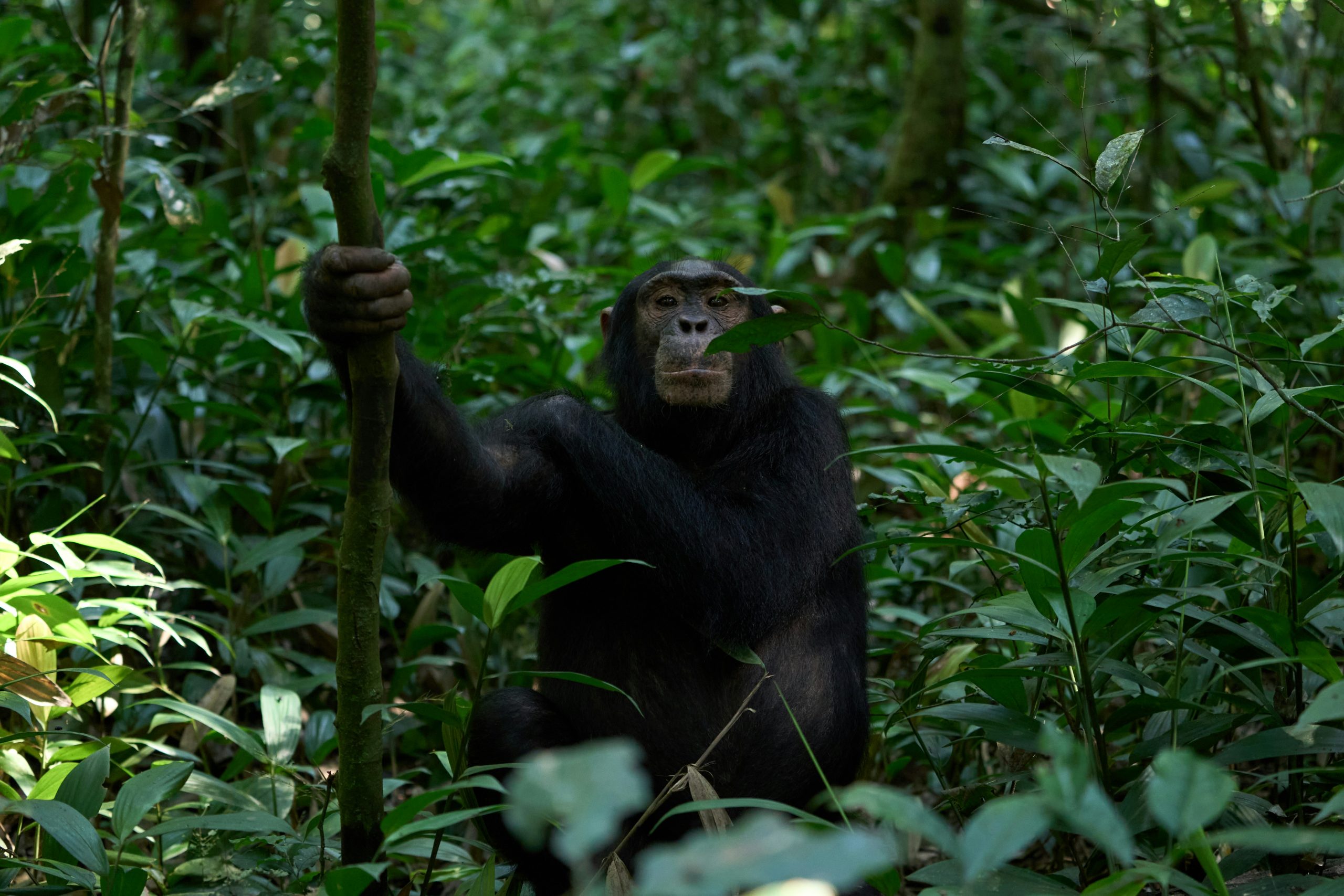
Where to See Chimpanzees in Uganda: 7 Best Places Compared
Chimpanzees share around 98 percent of our DNA, and watching them in the wild, as they call, groom, play and forage through the forest, is one of the most thrilling wildlife experiences in Africa. Uganda is one of the best countries in the world to see them, with an estimated population of around 5,000 wild chimpanzees spread across forests in the west of the country. Several of these forests offer guided chimpanzee tracking with habituated communities, each with its own character, success rate and setting.
This guide compares the best places to see chimpanzees in Uganda, so you can choose the right one for your itinerary, budget and interests.
1. Kibale Forest National Park
Kibale is widely regarded as the best place to see chimpanzees in Uganda, and one of the best in Africa. Its moist tropical forest near Fort Portal is home to a large chimpanzee population, and several communities have been habituated for tourism and research. Sighting success rates are very high. Kibale also has 12 other primate species, including red colobus, L’Hoest’s monkeys and grey-cheeked mangabeys, making it the primate capital of the world.
- Experiences: standard chimpanzee tracking with one hour with the chimps, and the full-day chimpanzee habituation experience.
- Terrain: relatively flat forest trails.
- Combine with: Fort Portal crater lakes, Bigodi Wetland Sanctuary, Queen Elizabeth National Park.
- Best for: almost everyone, especially first-time visitors.
Read our guide to chimpanzee tracking in Kibale and luxury lodges in Kibale and Fort Portal.
2. Budongo Forest Reserve
Budongo, on the southern edge of Murchison Falls National Park, is one of East Africa’s largest natural forests, famous for its towering mahogany trees. It is home to a significant chimpanzee population, and tracking takes place in the Kaniyo Pabidi area. Budongo is a great choice if you are visiting Murchison Falls, as it lets you add chimpanzees to a northern itinerary. The forest is also excellent for birding.
- Experiences: chimpanzee tracking and habituation, forest walks and birding.
- Combine with: Murchison Falls and Ziwa Rhino Sanctuary.
- Best for: travellers on a northern Uganda itinerary.
Read our Budongo Forest guide.
3. Kyambura Gorge, Queen Elizabeth National Park
Kyambura Gorge is a dramatic, forested valley sunk into the savannah of Queen Elizabeth National Park. It is home to a small, isolated community of chimpanzees, and tracking them through this hidden forest is an adventure. Because the community is small, sightings are less reliable than in Kibale, but the setting is spectacular, and the gorge is also home to other primates and birds. It is a good option if you are staying in Queen Elizabeth and want to add a primate experience without visiting Kibale.
- Terrain: steep descent into and climb out of the gorge.
- Combine with: Queen Elizabeth game drives and the Kazinga Channel.
- Best for: adventurous travellers who value scenery as much as sightings.
4. Kalinzu Forest Reserve
Kalinzu is a forest reserve near Queen Elizabeth National Park, on the road between the park and Bwindi. Its habituated chimpanzee community offers good sighting rates, and permits are typically more affordable than in Kibale. It is a quieter, less-visited alternative, and a convenient stop between Queen Elizabeth and Bwindi.
- Combine with: Queen Elizabeth and Bwindi.
- Best for: budget-conscious travellers and those seeking fewer visitors.
Read our Kalinzu Forest guide.
5. Toro-Semliki Wildlife Reserve
The Toro-Semliki Wildlife Reserve, in the far west near the Semuliki Valley, is home to chimpanzees that live in a mix of savannah and riverine forest. These chimpanzees are being studied by researchers, and their behaviour in a more open habitat is of particular scientific interest. Chimpanzee tracking here is a more adventurous, off-the-beaten-track experience with fewer visitors. Read our Semuliki guide.
6. Bwindi Impenetrable National Park
Bwindi is famous for gorillas, but it is also home to chimpanzees. They are not habituated for tourism, so chimpanzee tracking is not offered as an activity, but you may hear them calling or see signs of them on forest walks. Bwindi is one of the few places where chimpanzees and gorillas share the same forest.
7. Ngamba Island Chimpanzee Sanctuary
For a guaranteed sighting, Ngamba Island on Lake Victoria, near Entebbe, is a sanctuary for orphaned and rescued chimpanzees. Visitors watch the chimpanzees at feeding times from a viewing platform. It is not a wild experience, but it is easy to reach, suitable for children and supports conservation. Read our Ngamba Island guide.
Comparison Summary
- Highest success rate: Kibale (wild), Ngamba (sanctuary).
- Best for a northern itinerary: Budongo.
- Most dramatic setting: Kyambura Gorge.
- Best value: Kalinzu.
- Most off the beaten track: Toro-Semliki.
- Best for families with young children: Ngamba Island.
What to Expect on a Chimpanzee Trek
Chimpanzee tracking usually begins with a morning or afternoon briefing by a ranger, who explains the rules and the community’s history. Small groups then set off into the forest. Chimpanzees are often heard before they are seen: listen for loud pant-hoots and the drumming of hands and feet on tree buttresses. They move quickly and often feed high in fruiting trees, so tracking can involve some fast walking and leaving the trail. Once found, you spend about one hour with them, watching them feed, groom, rest and interact. Treks typically take two to four hours in total.
Chimpanzee Habituation Experience
In Kibale and Budongo, the chimpanzee habituation experience lets you spend much longer with a community that is being habituated to people. You join researchers and trackers, often from early morning, as the chimpanzees leave their nests, and follow them through the day. It offers a deeper understanding of chimpanzee behaviour and excellent photographic opportunities. Permits are limited and cost more than standard tracking. Read our article comparing gorilla trekking and chimpanzee tracking.
Permits and Rules
Chimpanzee tracking permits in national parks are issued by the Uganda Wildlife Authority; forest reserves such as Budongo and Kalinzu are managed with other partners. Prices vary by location, with Kibale generally the most expensive. The minimum age is generally 12. Visitors who are unwell may not track, to protect the chimpanzees. Keep a distance of at least eight metres, do not use flash photography, and do not eat or drink near the chimpanzees. Book in advance, especially in peak season.
Best Time to See Chimpanzees
Chimpanzee tracking is possible year-round. The dry seasons, June to September and December to February, offer easier trails. During the wetter months, fruiting trees can concentrate chimpanzees in certain areas, sometimes making them easier to find. Morning treks often coincide with active feeding. See our guide to the best time to visit Uganda.
What to Bring
- Waterproof walking boots and long socks.
- Long trousers and long-sleeved tops to protect against insects and nettles.
- A light rain jacket.
- Binoculars and a camera with a zoom lens.
- Insect repellent, water and a snack.
Combining Chimpanzees and Gorillas
Most travellers combine chimpanzee tracking with gorilla trekking. A classic route starts with Kibale’s chimpanzees, continues to Queen Elizabeth for game drives and the Kazinga Channel, and ends with gorillas in Bwindi. See our 6-day Uganda primate safari, our luxury gorilla and chimpanzee safari and our guide to primate safaris in East Africa.
Chimpanzee Conservation
Chimpanzees are endangered, threatened by habitat loss, snares set for other animals, disease and the illegal wildlife trade. In Uganda, forests outside protected areas are under pressure from agriculture and logging. Tourism helps by funding protection and research and by showing local communities the value of living chimpanzees. Responsible tracking, following the rules and supporting community projects all help. Read our guide to eco-tourism in Uganda and visit the Jane Goodall Institute to learn more about chimpanzee conservation.
Understanding Chimpanzee Society
Chimpanzees live in communities that can number from around 20 to well over 100 individuals. Unlike gorillas, which live in cohesive family groups, chimpanzee communities split into smaller parties that change in size and composition throughout the day, depending on food availability and social relationships. This is known as a fission-fusion society. Males usually stay in the community where they were born and form strong alliances, while females often move to a neighbouring community when they mature. A dominant alpha male holds his position through strength, alliances and displays, but status can change over time.
Chimpanzees are highly intelligent and use tools, such as sticks to fish for termites, stones to crack nuts and leaves as sponges to collect water. They communicate with a wide range of calls, facial expressions and gestures. Grooming is central to their social lives, strengthening bonds and reducing tension. Watching these behaviours in the wild is fascinating, and your ranger will help you interpret what you see.
Tips for a Successful Chimpanzee Trek
- Choose a morning trek, when chimpanzees are often most active and vocal.
- Be prepared to move quickly when the ranger hears the chimpanzees.
- Look up: chimpanzees often feed high in the canopy.
- Bring binoculars for viewing chimps in tall trees.
- Stay quiet and patient; chimps may descend to the ground if you wait.
- Wear long trousers tucked into socks to avoid biting ants.
Sample Itineraries With Chimpanzees
Three days, Kibale: drive from Kampala to Fort Portal, track chimpanzees in Kibale and visit Bigodi Wetland, then return. Seven days, chimps and gorillas: Kibale chimpanzees, Queen Elizabeth game drives and the Kazinga Channel, Ishasha lions and Bwindi gorillas. Four days, northern route: Ziwa rhinos, Murchison Falls and Budongo chimpanzees. Read our 4-day chimpanzee tracking safari and 7-day Uganda itinerary.
Chimpanzees Beyond Uganda
If you are travelling more widely in East Africa, chimpanzees can also be seen in Rwanda’s Nyungwe Forest and in Tanzania’s Gombe Stream and Mahale Mountains national parks, the latter two famous for their remote lakeside settings on Lake Tanganyika. Uganda, however, offers the most accessible and reliable chimpanzee tracking in the region. Read our guides to Nyungwe chimpanzee trekking and Gombe Stream.
How to Choose the Right Location
Choosing where to see chimpanzees depends largely on the rest of your itinerary. If you are following the classic western circuit to Queen Elizabeth and Bwindi, Kibale is the natural choice and offers the best chances. If you are heading north to Murchison Falls, Budongo adds chimpanzees without a long detour. If you are short on time and staying in Queen Elizabeth, Kyambura Gorge or Kalinzu can be added easily. Budget travellers may prefer Kalinzu for its lower permit prices. Families with young children, or travellers with limited mobility, may enjoy Ngamba Island near Entebbe. And if you are an experienced primate enthusiast seeking something different, Toro-Semliki offers a unique experience with savannah-dwelling chimpanzees.
Whatever you choose, travelling with an experienced guide and booking permits in advance will help you make the most of your encounter with our closest living relatives.
Good to know: chimpanzee permits, particularly for Kibale’s morning sessions and the habituation experience, can sell out in peak months, so book alongside your gorilla permits. Afternoon tracking sessions are a good alternative if mornings are full, and they combine well with a travel day. If you are visiting several forests, ask your safari company about combining different chimpanzee experiences, for example tracking wild chimpanzees in Kibale and visiting Ngamba Island near Entebbe, to see these remarkable apes from two very different perspectives.
Every chimpanzee encounter is different, so even returning visitors often find something new to marvel at each time they track these intelligent, social apes in Uganda’s forests.
Frequently Asked Questions
Where is the best place to see chimpanzees in Uganda? Kibale Forest National Park, which has the highest success rates.
Is chimpanzee tracking guaranteed? No, but success rates in Kibale are very high. Ngamba Island offers guaranteed viewing of sanctuary chimpanzees.
Is chimpanzee tracking hard? It is usually easier than gorilla trekking, though you may need to move quickly to keep up with the chimpanzees.
Can children go chimpanzee tracking? The minimum age is generally 12. Younger children can visit Ngamba Island.
Plan Your Chimpanzee Encounter
Kuku Safaris can arrange chimpanzee permits and build the right location into your itinerary. Read our 3-day chimpanzee tracking safari, visit the Uganda Tourism Board and see how to book with Kuku Safaris.