
Uganda vs Rwanda vs DRC: Which Gorilla Trekking Experience Is Right for You?
Introduction
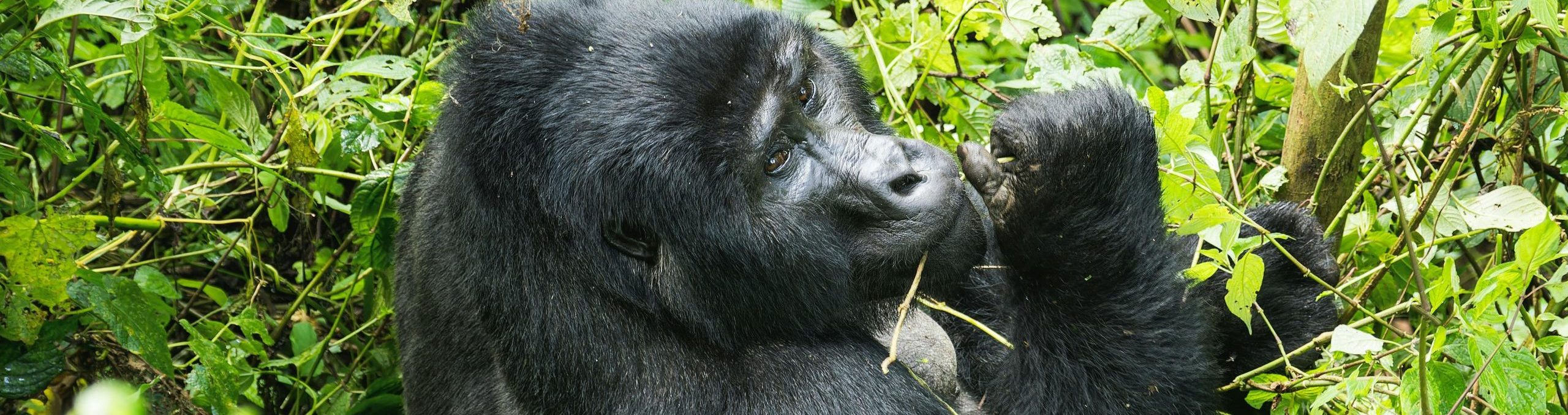
There are fewer than 1,100 mountain gorillas left on Earth. They live in just two places: the Virunga Massif, a volcanic mountain chain spanning Rwanda, Uganda, and the DRC, and Uganda’s Bwindi Impenetrable National Park. Trekking to see them is one of the most profound wildlife experiences you can have—but choosing where to do it is where things get complicated.
Each country offers a genuinely different version of the same encounter. Rwanda is the polished, luxurious option. Uganda is the value play with more gorilla families and wilder terrain. The DRC is the cheapest and most adventurous—but also the most complicated right now.
This guide compares gorilla trekking in Uganda, Rwanda, and the DRC across every factor that matters: permit costs, safety, trekking difficulty, logistics, and the overall experience. By the end, you’ll know exactly which destination fits your budget, timeline, and travel style.
Quick Comparison: Gorilla Trekking at a Glance
| Factor | 🇺🇬 Uganda | 🇷🇼 Rwanda | 🇨🇩 DRC |
|---|---|---|---|
| Park(s) | Bwindi Impenetrable NP & Mgahinga Gorilla NP | Volcanoes National Park | Virunga NP (mountain gorillas) & Kahuzi-Biega NP (lowland gorillas) |
| Gorilla Species | Mountain gorillas | Mountain gorillas | Mountain gorillas + Eastern lowland (Grauer’s) gorillas |
| Permit Cost (2026) | $800 (foreign non-resident); $600 low season | $1,500 (no discounts) | $400 |
| Habituated Families | 19+ (16 in Bwindi, 1+ in Mgahinga) | ~12 | Limited; Virunga currently closed |
| Daily Permits | ~128 | 96 | N/A (Virunga closed) |
| Drive from Airport | 8–10 hrs from Entebbe (or 4–5 hrs from Kigali) | 2.5 hrs from Kigali | 1–2 hrs from Goma (but park closed) |
| Trek Difficulty | Moderate to challenging | Moderate | Moderate |
| Terrain | Dense, steep rainforest | Open bamboo and volcanic hills | Montane forest and volcanic slopes |
| Time with Gorillas | 1 hour (or 4 hours with habituation permit) | 1 hour | 1 hour |
| Safety | Stable | Stable | Active conflict risk; Virunga closed since 2025 |
| Best For | Value, longer safaris, more gorilla families | Luxury, convenience, short trips | Adventurous travelers (when safe) |
*Sources: *
Uganda: The Best Value for Gorilla Trekking
Uganda is often described as the “Pearl of Africa,” and for gorilla trekking, it hits a sweet spot that neither of its neighbors can match. Permits are $800 for foreign non-residents—$700 cheaper than Rwanda—yet the experience itself is virtually identical. You spend one hour with a habituated gorilla family, just as you would in Rwanda.
What sets Uganda apart is the sheer scale of its gorilla population. Bwindi Impenetrable National Park alone is home to roughly half the world’s remaining mountain gorillas, with more than 16 habituated families. That means more permits available, more flexibility on dates, and a better chance of securing a trek even during peak season.
Uganda also offers something no other country does: the Gorilla Habituation Experience. For $1,500, you spend four hours with a semi-habituated gorilla family alongside researchers, in a group of just four people. It’s the most immersive gorilla encounter available anywhere on the planet.
The trade-off? Logistics. Getting to Bwindi from Entebbe takes 8–10 hours by road, or you can take a light aircraft in about an hour. The terrain is also the most demanding of the three: dense, steep rainforest where gorillas can be anywhere from 1,500 to 2,600 meters above sea level. Treks can last anywhere from two to eight hours depending on where the family has moved.
Best for: Budget-conscious travelers, adventure seekers, anyone wanting to combine gorilla trekking with chimpanzees, savannah safaris, and a longer East African itinerary.
Rwanda: The Luxury and Convenience Option
Rwanda has positioned itself as the premium gorilla trekking destination, and it delivers on that promise. Volcanoes National Park is just a 2.5-hour drive from Kigali International Airport—the shortest airport-to-gorillas journey anywhere in Africa. The roads are paved, the lodges are world-class (think Singita and Bisate), and the entire operation runs with Swiss-watch precision.
But that convenience comes at a price. A Rwanda gorilla permit costs $1,500 for foreign non-residents—nearly double Uganda’s rate, with no low-season discounts available.
The trekking experience itself is also somewhat easier. Volcanoes National Park sits at a higher altitude (2,500–3,500 meters), but the vegetation is more open bamboo forest, making gorillas easier to spot and photograph. Treks typically last 30 minutes to 4 hours, compared to Uganda’s 2–8 hours. For travelers short on time or concerned about fitness, Rwanda is the gentler option.
The trade-off? Cost. Rwanda is the most expensive gorilla destination by a significant margin. If you’re traveling solo or as a couple on a tight itinerary, the total logistics might still work out cheaper than Uganda—but if budget is your primary concern, Rwanda simply isn’t the answer.
Best for: Luxury travelers, first-timers, anyone with limited time, photography-focused travelers who want clearer sightlines, and those combining gorillas with a short East African trip.
The DRC: The Cheapest Option—With Major Caveats
On paper, the Democratic Republic of Congo offers the most affordable gorilla trekking in the world. A permit in Virunga National Park costs just $400, and the DRC is the only country where you can track both mountain gorillas and Eastern lowland (Grauer’s) gorillas—the world’s largest primates. The experience is also the most exclusive, with far fewer crowds than Uganda or Rwanda.
But here’s the critical issue: Virunga National Park has been closed to tourism since 2025 due to the M23 conflict and remains closed as of mid-2026. The park has a dedicated security corridor and an excellent safety record when operational, but the security situation in North Kivu is simply too unstable for tourism right now.
There is one alternative. Kahuzi-Biega National Park near Bukavu, in South Kivu, remains open and is currently the only place in the DRC where gorilla trekking is possible. It’s home to the habituated Eastern lowland gorillas, and permits are also around $400. However, most travelers reach Kahuzi-Biega by flying into Kigali and crossing the border into the DRC—a route that requires careful planning and a licensed operator.
Best for: Experienced travelers comfortable with expedition-style logistics, those specifically interested in Eastern lowland gorillas, and anyone willing to accept a higher degree of uncertainty. Not recommended for first-time Africa travelers or anyone prioritizing safety and predictability.
The Gorilla Habituation Experience: Uganda’s Unique Offering
If you want more than the standard one-hour visit, Uganda is your only option. The Gorilla Habituation Experience in Bwindi’s Rushaga sector allows you to spend four hours with a semi-habituated gorilla family, accompanied by researchers and a group of just four people—half the size of a standard trekking group.
The permit costs $1,500 for foreign non-residents—the same price as a standard Rwanda permit, but for four times the time with the gorillas. You’ll observe behavioral research in action, watch the gorillas go about their daily lives, and gain a far deeper understanding of their social dynamics.
For many who have done both, the additional cost is entirely justified by the depth of the experience.
Trekking Difficulty and Fitness: What to Expect
Gorilla trekking is not a walk in the park—literally. All three destinations involve hiking through dense vegetation, often on steep and muddy trails. But there are meaningful differences in difficulty.
Uganda (Bwindi) offers the widest range of trekking options. The Buhoma sector, at 1,500–1,600 meters, is the easiest and best suited to older travelers or those with limited mobility. Other sectors like Nkuringo and Ruhija are more challenging, with steep climbs and dense undergrowth. Treks can last anywhere from two to eight hours.
Rwanda (Volcanoes NP) sits at a higher altitude (2,500–3,500 meters), which means thinner air and more fatigue even on shorter treks. However, the vegetation is more open, and the gorilla families are often found more quickly. Treks typically last 30 minutes to 4 hours.
DRC (Virunga/Kahuzi-Biega) offers moderate terrain at 2,000–3,000 meters, with treks lasting 30 minutes to 4 hours when the parks are open.
The key takeaway: If you have concerns about fitness or altitude, Rwanda’s shorter treks and Uganda’s Buhoma sector are your best options. If you’re reasonably fit and want a wilder, more challenging adventure, Bwindi’s other sectors deliver.
Safety: A Critical Consideration
Safety is the single biggest differentiator between these three destinations—and the reason the DRC is currently off the table for most travelers.
Uganda and Rwanda are both stable and safe for tourists. Gorilla trekking is carefully managed, habituated families are monitored daily, and strict rules (minimum 10-meter distance, no trekking while sick) protect both visitors and animals.
The DRC is a different story. Virunga National Park, which operates a dedicated security corridor with armed ICCN ranger escorts, has an excellent safety record when open. But the park has been closed since 2025 due to the M23 conflict, and both the British FCDO and US State Department advise against travel to the region. Kahuzi-Biega remains open, but it requires flying into a region with ongoing security concerns and traveling with a licensed operator who can navigate the logistics.
If safety and predictability are priorities, stick with Uganda or Rwanda.
How to Choose: A Decision Guide
Choose Uganda if:
- You want the best value for money ($800 permit, $600 in low season)
- You want access to the most gorilla families (19+) and the best permit availability
- You’re interested in the 4-hour Gorilla Habituation Experience
- You want to combine gorilla trekking with chimpanzees, savannah safaris, and a longer East African adventure
- You’re reasonably fit and don’t mind a more challenging trek
Choose Rwanda if:
- Convenience and time-efficiency are your top priorities
- You want the shortest airport-to-gorillas journey (2.5 hours from Kigali)
- You’re looking for luxury lodges and a polished, high-end experience
- You have a shorter window (2–3 days) for your gorilla trek
- You prioritize clearer photography conditions
Consider the DRC only if:
- You are an experienced traveler comfortable with expedition-style logistics
- You specifically want to see Eastern lowland gorillas (Kahuzi-Biega)
- You are willing to accept a higher degree of uncertainty and want to work with a specialist operator
- You should not consider Virunga until the park officially reopens and travel advisories are lifted
The Verdict
There is no single “best” country for gorilla trekking—only the best country for you. The hour you spend with the gorillas is remarkably similar across all three destinations. The differences lie in everything around that hour: the cost, the journey, the terrain, the level of luxury, and the sense of adventure.
Uganda offers the best overall value, the most gorilla families, and the richest overall safari experience. Rwanda offers the easiest logistics and the most polished luxury. The DRC offers the cheapest permits and the most exclusive wilderness—but only when it’s safe to visit.
For most travelers in 2026, the choice comes down to Uganda vs Rwanda. And for most, Uganda wins on value while Rwanda wins on convenience. Whichever you choose, you’ll be contributing directly to the conservation of one of the rarest primates on Earth—and that alone makes the journey worthwhile.
Frequently Asked Questions
How far in advance should I book a gorilla permit?
For peak season (June–September and December–February), book 4–9 months ahead. Uganda’s low season (April, May, November) offers more availability and discounted permits.
What is the minimum age for gorilla trekking?
15 years old, strictly enforced in both Uganda and Rwanda.
How close do you get to the gorillas?
The minimum distance is 10 meters, though habituated gorillas often approach closer on their own.
Can I combine gorilla trekking with other safari activities?
Absolutely. Uganda is the best choice for this—you can pair gorillas with chimpanzee tracking in Kibale, tree-climbing lions in Ishasha, and classic savannah game drives in Queen Elizabeth National Park. Rwanda pairs well with Akagera (Big Five) and Nyungwe (chimpanzees).
Is gorilla trekking ethical?
Yes, when done through official channels. Permits are limited, groups are small (maximum 8 trekkers per family), and strict health and distance rules protect the gorillas. Permit fees directly fund anti-poaching patrols and community development.
.