
Mikumi National Park Safari Guide: Tanzania’s Easiest Safari From Dar es Salaam
When travellers think of Tanzania safaris, they usually picture the Serengeti and the Ngorongoro Crater in the north. But just a few hours’ drive inland from Dar es Salaam lies Mikumi National Park, a wide, open landscape of grassy floodplains, acacia woodland and distant mountains where elephants, lions, giraffes, zebras and buffalo roam. Mikumi is the most accessible national park from Tanzania’s largest city, which makes it perfect for a short safari, a first taste of the bush or an add-on to a beach holiday in Zanzibar.
This complete guide covers Mikumi’s wildlife and landscapes, the best time to visit, how to get there, where to stay and how to combine Mikumi with Tanzania’s other southern parks.
Mikumi at a Glance
- Location: Morogoro Region, south-central Tanzania, roughly 280 kilometres west of Dar es Salaam.
- Size: Around 3,230 square kilometres, making it one of Tanzania’s larger national parks.
- Ecosystem: Part of a much larger wilderness that includes Nyerere National Park (formerly part of the Selous Game Reserve) to the south and the Udzungwa Mountains to the south-west.
- Known for: Easy access, the open Mkata floodplain, elephants, lions, giraffes, hippo pools and big skies.
- Managed by: Tanzania National Parks (TANAPA).
Why Visit Mikumi?
- Accessibility: no internal flights needed. You can drive from Dar es Salaam in about four to five hours, or travel part of the way by train.
- Short safaris: ideal for travellers with only two or three days to spare.
- Open game viewing: the Mkata floodplain is often compared to the Serengeti, with wide grasslands where animals are easy to spot.
- Value: Mikumi is generally more affordable than the northern circuit parks.
- Few crowds: you will share sightings with far fewer vehicles than in the more famous parks.
Landscapes of Mikumi
Mikumi’s heart is the Mkata floodplain, a broad expanse of grassland dotted with acacia trees, baobabs and palms, surrounded by mountains: the Uluguru Mountains to the north-east and the Rubeho and Udzungwa ranges to the west and south. In the wet season, parts of the floodplain become marshy and attract water birds, while in the dry season, animals concentrate around the remaining water sources.
The southern part of the park is covered in miombo woodland, a type of deciduous woodland typical of southern Tanzania, which supports species such as sable antelope and greater kudu. The park is crossed by the main highway between Dar es Salaam and Zambia, so you may see trucks in the distance, but most game drives take place on tracks well away from the road.
Wildlife in Mikumi National Park
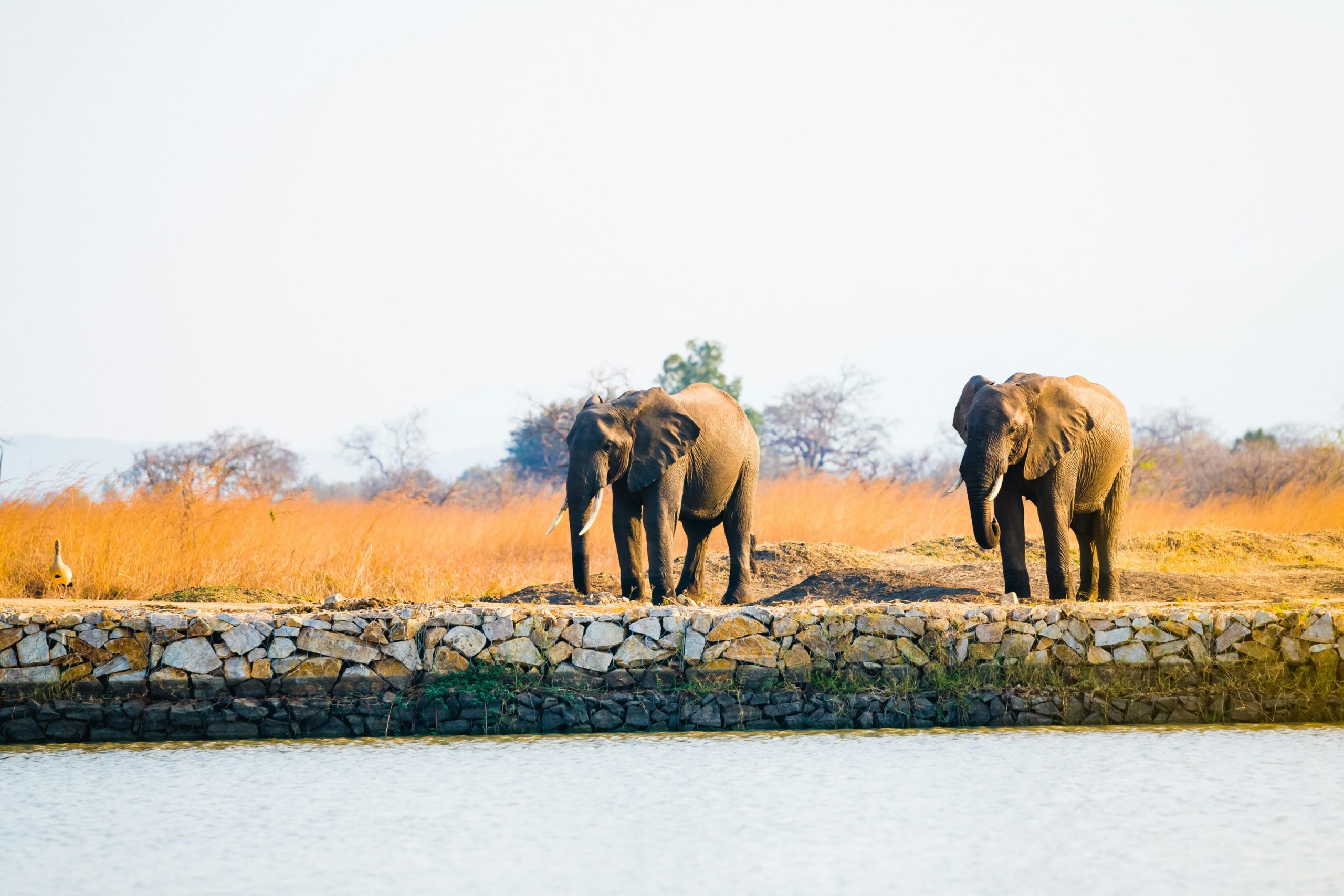
Elephants. Mikumi has a healthy elephant population, and herds are frequently seen feeding on the floodplain and in the woodland.
Lions and other predators. Lions are regularly seen on the floodplain, sometimes resting in trees. Leopards are present but elusive, and spotted hyenas, black-backed jackals and occasionally African wild dogs, which range across the wider ecosystem, can also be seen.
Giraffes, zebras and wildebeest. Masai giraffes are a common and photogenic sight, along with herds of plains zebras and wildebeest grazing the grasslands.
Buffalo and antelopes. Large herds of buffalo roam the park, and antelopes include impala, eland (the world’s largest antelope), waterbuck, Lichtenstein’s hartebeest, greater kudu and sable antelope in the woodland areas.
Hippos. The famous Hippo Pools, a few kilometres from the main gate, are home to groups of hippos that wallow, grunt and argue, often accompanied by crocodiles and water birds. There is a viewing area where visitors can stretch their legs.
Primates. Yellow baboons and vervet monkeys are common throughout the park.
Birds. More than 400 bird species have been recorded, including lilac-breasted rollers, bateleur eagles, yellow-throated longclaws, saddle-billed storks, marabou storks and many migrant species during the wet season.
Things to Do in Mikumi
Game drives. Morning and afternoon game drives across the Mkata floodplain are the main activity, with full-day drives possible for those wanting to explore further.
Walking safaris. Guided walks with an armed ranger can be arranged in some areas, offering a closer look at tracks, plants and smaller creatures.
Hippo Pools and viewpoints. Stop at the Hippo Pools and enjoy sundowners at viewpoints overlooking the floodplain and mountains.
Cultural visits. Nearby villages offer opportunities to learn about local life, farming and crafts.
Udzungwa Mountains: A Perfect Add-On
About an hour or two south-west of Mikumi, the Udzungwa Mountains National Park protects part of the Eastern Arc Mountains, an ancient range of forested mountains known for its high number of endemic species. Unlike Mikumi, Udzungwa is explored on foot. Hiking trails lead through rainforest to waterfalls, most famously the Sanje Falls, which plunge down the mountainside with views over the Kilombero Valley. The forests are home to rare primates found nowhere else, including the Udzungwa red colobus and the Sanje crested mangabey, as well as endemic birds. A visit to Udzungwa adds a completely different experience to a Mikumi safari.
Best Time to Visit Mikumi
Mikumi is open all year, but conditions change with the seasons:
- June to October (dry season): the best time for game viewing. Grass is shorter, vegetation thins out and animals gather near water, making them easier to find.
- November to December: the short rains bring green landscapes and migrant birds, and game viewing remains good.
- January to February: generally warm with some rain, and a good time for birding and newborn animals.
- March to May (long rains): heavy rain can make some tracks difficult, but the park is lush and quiet, and rates are often lower.
See our guide to the best time to visit East Africa for more on the region’s seasons.
How to Get to Mikumi
By road. Most visitors drive from Dar es Salaam, a journey of around four to five hours via Morogoro, depending on traffic. Safari operators provide a vehicle and guide for the journey and game drives.
By train. Tanzania’s Standard Gauge Railway connects Dar es Salaam with Morogoro, cutting the travel time for the first part of the journey. From Morogoro, a road transfer completes the trip to Mikumi.
By air. Charter flights can land at the park’s airstrip, which is useful when combining Mikumi with Ruaha or Nyerere.
Most visitors need a Tanzanian visa, which can usually be obtained online; see our guide to the Uganda and Tanzania eVisa application.
How Long to Stay
A two-day, one-night safari from Dar es Salaam is possible, with an afternoon game drive on arrival and a morning drive before returning. Three days and two nights is more relaxed and allows a full day of game viewing. Adding one or two nights for Udzungwa makes for a rich four- or five-day trip.
Where to Stay
Mikumi has a range of accommodation inside and just outside the park, including tented camps overlooking waterholes, mid-range lodges and simple campsites. Staying inside the park lets you start game drives at first light and enjoy the sounds of the bush at night, while lodges near Mikumi town and the park gate offer good value.
How Much Does a Mikumi Safari Cost?
Mikumi is one of the more affordable safari destinations in Tanzania, largely because you can reach it by road. Costs include TANAPA park fees, accommodation, vehicle and guide, and meals. Short road safaris from Dar es Salaam are among the best-value ways to experience Tanzanian wildlife. For help budgeting, see our guide to East Africa safari costs and our advice on how to choose a Tanzania safari package.
Combining Mikumi With Other Destinations
- Zanzibar: fly or take the ferry to Zanzibar after your safari for a classic bush-and-beach holiday; see our guide to Zanzibar and safari.
- Nyerere National Park: add boat safaris on the Rufiji River and walking safaris; read our Nyerere (Selous) safari guide.
- Ruaha National Park: continue west to one of Tanzania’s wildest parks, famous for its lions and elephants; see our Ruaha safari guide.
- The full southern circuit: our 12-day southern Tanzania safari brings together the region’s best parks, and adventurous travellers can head further west to Katavi.
Tips for Your Mikumi Safari
- Leave Dar es Salaam early to avoid traffic and arrive in time for an afternoon game drive.
- Pack neutral-coloured clothes, a hat, sunscreen and binoculars; our first-time safari tips have more.
- Tsetse flies can be present in wooded areas; wear light-coloured clothing and use repellent.
- Mikumi is in a malaria area; see our guide to East Africa vaccinations and malaria.
Frequently Asked Questions
Can you see the Big Five in Mikumi? You can see lions, leopards, elephants and buffalo, but there are no rhinos in the park, so the full Big Five is not possible.
Can I do a day trip to Mikumi from Dar es Salaam? It is possible but involves around nine to ten hours of travel. An overnight stay is strongly recommended.
Is Mikumi worth visiting compared with the Serengeti? Mikumi is smaller and less dramatic than the Serengeti, but it offers rewarding wildlife viewing, fewer crowds and easy access from Dar es Salaam, making it ideal for short trips.
Is Mikumi good for families? Yes. Short travel times, open game viewing and the Hippo Pools make it a good choice for families; see our guide to family safaris in East Africa.
Plan Your Mikumi Safari
Mikumi National Park proves you do not need long flights to enjoy a rewarding Tanzanian safari. Whether you have a few days to spare in Dar es Salaam, want to add wildlife to a Zanzibar holiday or are planning a full southern circuit, Kuku Safaris can arrange your transport, guide and accommodation. Get in touch to start planning your Mikumi adventure.