
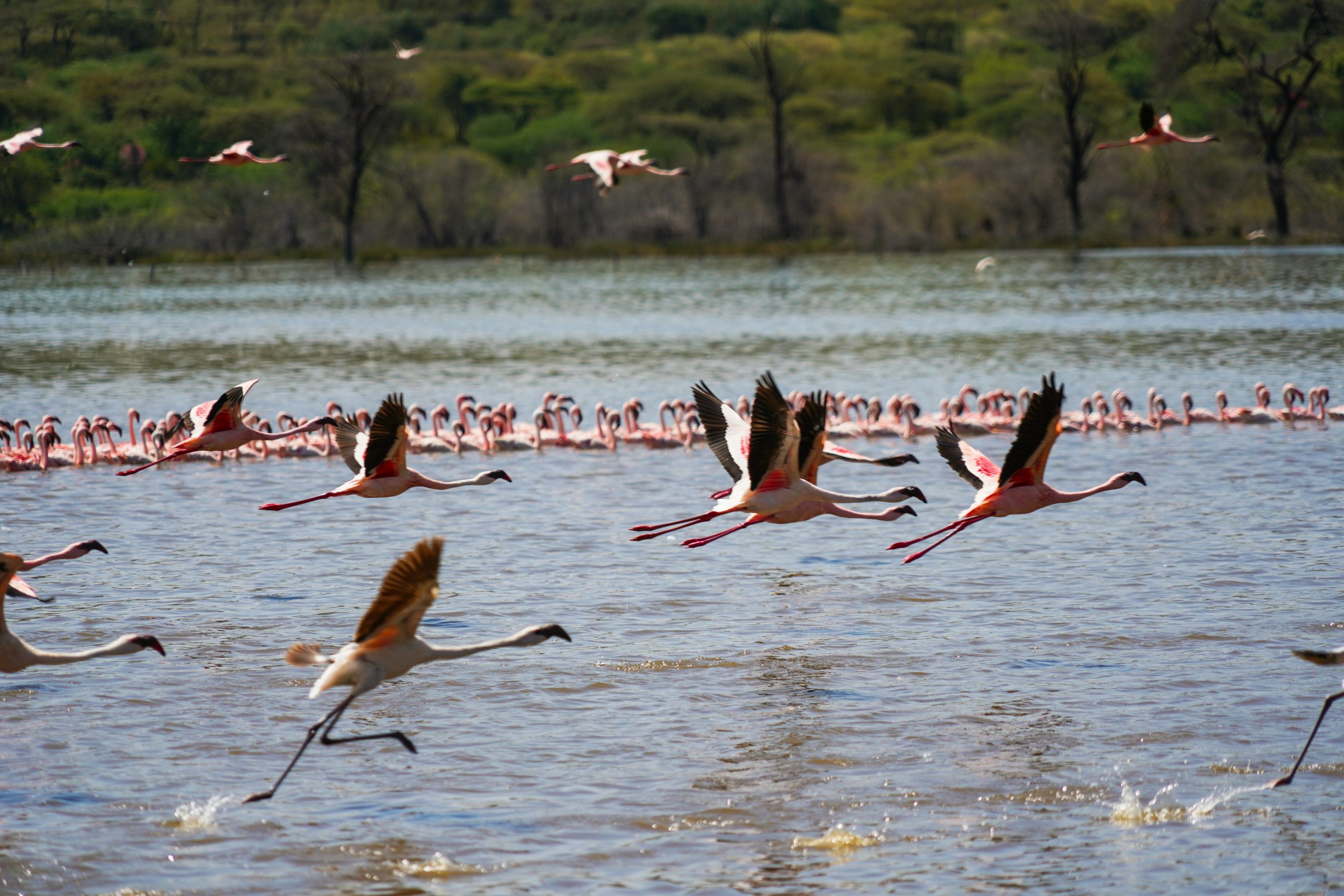
Lake Bogoria and Lake Baringo Guide: Hot Springs, Flamingos and Birding in Kenya’s Rift Valley
North of Lake Nakuru, the floor of Kenya’s Great Rift Valley becomes hotter, drier and wilder. Here lie two lakes that could hardly be more different. Lake Bogoria is a salty, alkaline lake where boiling geysers hiss from the shore and, at times, huge flocks of flamingos turn the water pink. Just a short drive away, Lake Baringo is a freshwater lake full of hippos and crocodiles, fringed by reeds and acacias and famous among birdwatchers worldwide. Together, they make a rewarding detour for travellers who want to see a different side of Kenya, away from the crowds.
This complete guide covers both lakes, what to see and do, the best time to visit, how to get there and how to combine them with a Kenya safari.
At a Glance
- Location: Baringo County, in the northern central Rift Valley, roughly 1.5 to 2.5 hours north of Nakuru.
- Lake Bogoria: a saline, alkaline lake inside Lake Bogoria National Reserve, known for hot springs, geysers, flamingos and greater kudu.
- Lake Baringo: one of only two freshwater lakes in the Kenyan Rift Valley (the other is Naivasha), known for birds, hippos, crocodiles and island stays.
- Status: Lake Bogoria is part of the Kenya Lake System in the Great Rift Valley, a UNESCO World Heritage Site, and both lakes are recognised wetlands of international importance.
Lake Bogoria: Geysers and Flamingos
Lake Bogoria lies in a narrow, steep-sided basin beneath the Siracho escarpment, and its shores are one of the most geothermally active places in Kenya. More than 200 hot springs and several geysers bubble, steam and spout along the western shore, some shooting boiling water into the air. The air smells faintly of sulphur, the ground is hot underfoot in places, and the steam rising against the blue water creates an otherworldly scene. Local people traditionally boiled eggs in the springs, and visitors sometimes do the same today, with care.
Lake Bogoria’s alkaline water supports blue-green algae, the main food of the lesser flamingo. When conditions are right, Bogoria hosts some of the largest concentrations of flamingos in East Africa, with tens or even hundreds of thousands feeding along the shallows. Flamingo numbers vary with water levels and food availability, as the birds move between Rift Valley lakes such as Bogoria, Nakuru, Elementaita and Natron. In recent years, Bogoria has often been a more reliable place to see large flocks than Lake Nakuru.
Wildlife. Lake Bogoria National Reserve is one of the best places in Kenya to see the greater kudu, a large antelope with spiral horns, which lives in the bushland around the lake. Zebras, impala, dik-diks, warthogs and baboons are also present, along with many birds of prey that hunt the flamingos.
Things to do. Visit the hot springs and geysers, walk or cycle along parts of the shore, watch the flamingos, and enjoy a picnic at Fig Tree Camp, a shady spot at the southern end of the lake beside a freshwater stream. Always stay on marked paths near the springs, as the ground and water can be dangerously hot.
Lake Baringo: A Birdwatcher’s Paradise
Lake Baringo is a freshwater lake surrounded by volcanic hills, acacia scrub and small villages. Its water is often brown from sediment, but it supports a rich ecosystem of fish, hippos, crocodiles and birds. More than 450 bird species have been recorded around the lake, making it one of the top birding destinations in Kenya.
Boat trips. A boat trip on the lake is the highlight of any visit. You will see hippos and crocodiles at close range, and watch African fish eagles swoop down to snatch fish thrown by your guide, one of the most dramatic bird photography opportunities in Africa. Boat trips also visit islands and fishing villages.
Guided bird walks. Local bird guides are experts at finding specialities such as the Verreaux’s eagle-owl, northern red bishop, Jackson’s hornbill, Hemprich’s hornbill, bristle-crowned starling and many species of weaver. Early-morning walks around the cliffs and bushland are particularly productive. For more birding ideas, see our 10-day Rift Valley lakes birdwatching safari.
Islands and giraffes. Several islands in the lake can be visited by boat, and some offer accommodation. Rothschild’s giraffes have been introduced to a protected area near the lake as part of community conservation efforts, and visits can sometimes be arranged.
Culture. The Il Chamus (also known as Njemps), Pokot and Tugen peoples live around the lake. Community visits introduce traditional fishing methods, including boats made from ambatch wood, as well as crafts and daily life. For more on cultural tourism in the region, see our guide to Maasai culture and village visits.
Rising Water Levels
Like several other Rift Valley lakes, both Bogoria and Baringo have risen significantly over the past decade. Rising water has flooded some shoreline buildings, roads and facilities, submerged some hot springs and displaced people living by the lakes. Lake Baringo has expanded so much that, in places, it has moved closer to Lake Bogoria. Conditions continue to change, so it is worth asking your guide about current access to specific sites before you travel.
Best Time to Visit
The lakes can be visited all year. The dry seasons, from June to October and December to February, offer easier travel and comfortable conditions, though it can be very hot in the middle of the day. The rainy seasons, around March to May and November, bring greener landscapes and migratory birds from Europe and Asia, which is excellent for birding, roughly from October to April. Flamingo numbers at Bogoria depend on conditions rather than season, so ask locally for the latest situation. See our guide to the best time to visit East Africa.
How to Get There
Both lakes are reached by road. From Nairobi, the drive takes around four to five hours via Nakuru. Lake Bogoria’s main gate is about 1.5 to 2 hours north of Nakuru, and Lake Baringo is about an hour further north, with Kampi ya Samaki as the main base on its western shore. Charter flights can also be arranged to nearby airstrips. Check your entry requirements before travel with our guide to the Kenya eTA for tourists.
How Long to Stay
One night is enough to visit Lake Bogoria’s hot springs and take a boat trip on Lake Baringo, but two nights allows a relaxed pace, an early-morning bird walk and time to enjoy the lakes’ atmosphere. Keen birders may want to stay longer.
Where to Stay
Around Lake Bogoria, there are lodges and campsites near the reserve’s gates, some with hot spring–fed pools. On Lake Baringo, accommodation ranges from simple campsites and lodges at Kampi ya Samaki to island camps reached by boat, offering peaceful views and excellent birding right from your room.
How Much Does a Visit Cost?
Costs include reserve entry fees for Lake Bogoria, boat trips and bird guides at Baringo, accommodation and transport. Both lakes are relatively affordable compared with Kenya’s major safari parks. For broader budgeting help, see our guides to East Africa safari costs and how to choose a Kenya safari package.
Combining the Lakes With a Kenya Safari
- Rift Valley lakes circuit: combine Bogoria and Baringo with Lake Nakuru and Lake Naivasha and Hell’s Gate.
- Northern Kenya: continue to Samburu National Reserve or Laikipia’s Ol Pejeta Conservancy.
- The Maasai Mara: add the lakes to a classic Mara safari for extra variety and birdlife.
- Uganda: Baringo and the western Rift Valley lie on routes towards western Kenya and Uganda, making them a good stop on a cross-border trip.
Tips for Visiting
- Stay on marked paths at the hot springs and keep children close.
- Do not swim in either lake: Bogoria’s springs are scalding, and Baringo has hippos and crocodiles.
- Carry plenty of water, a hat and sunscreen, as temperatures can be very high.
- Bring binoculars and a zoom lens for birds.
- Check health advice before travelling; see our guide to East Africa vaccinations and malaria.
Frequently Asked Questions
Are there flamingos at Lake Bogoria all year? Flamingos are often present but numbers vary greatly depending on water levels and food. Ask your guide for current conditions.
Can I visit both lakes in one day? Yes, they are close enough to visit both in a day, though an overnight stay is more relaxing.
Is Lake Baringo good for beginners at birdwatching? Absolutely. Local guides make it easy to see many colourful and impressive species, even for first-time birders.
Is the area suitable for families? Yes, with care around the hot springs. Children usually love the geysers, hippos and fish eagles; see our guide to family safaris in East Africa.
Plan Your Visit
Lake Bogoria and Lake Baringo offer a fascinating mix of geology, birdlife and culture that few visitors to Kenya experience. Kuku Safaris can include both lakes in a Rift Valley or northern Kenya safari, with expert guides, comfortable accommodation and smooth logistics. Get in touch to start planning.