
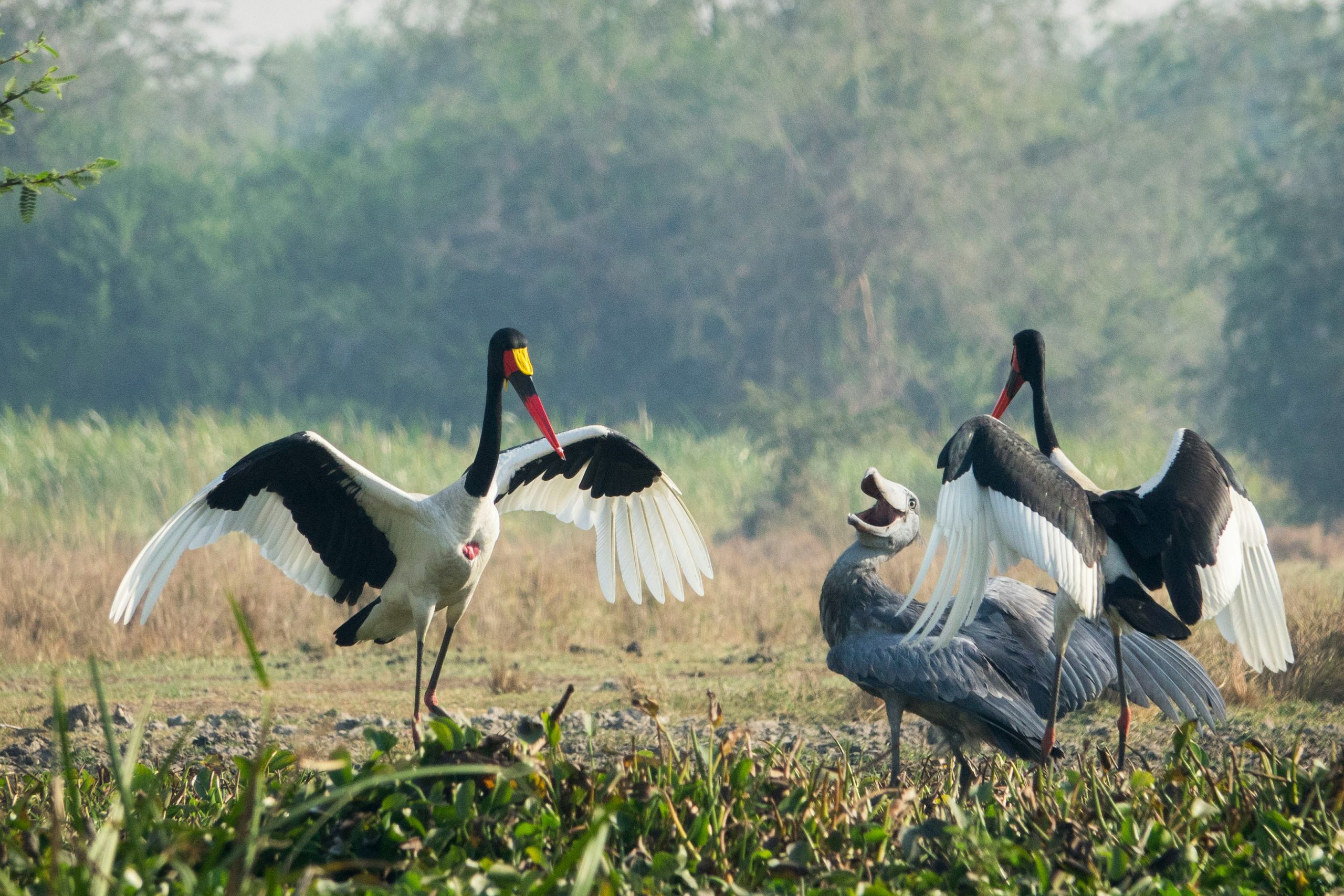
Where to See the Shoebill Stork in Uganda: The Complete Birder’s Guide
Standing as tall as a child, with a massive clog-shaped bill, piercing yellow eyes and a stillness that seems almost prehistoric, the shoebill is unlike any other bird on Earth. It is high on the wish list of birders and wildlife photographers worldwide, and even travellers with no particular interest in birds are captivated when they see one. Uganda is one of the best and most accessible places in the world to find this extraordinary bird, with reliable sites just an hour from Entebbe and in several national parks.
This complete guide explains what makes the shoebill so special, where to see it in Uganda, the best time to go and how to make the most of your sighting.
Meet the Shoebill
- Scientific name: Balaeniceps rex, the only member of its family.
- Size: Typically 1.1 to 1.4 metres tall, with a wingspan of well over two metres.
- Habitat: Large, permanent papyrus swamps and wetlands in east-central Africa.
- Diet: Mainly lungfish and catfish, as well as frogs, water snakes and even young crocodiles.
- Status: Classified as vulnerable, with a global population estimated in the low thousands.
Shoebills are masters of patience. They stand motionless for long periods in shallow water or on floating vegetation, waiting for a fish to surface. When one does, the bird lunges forward with astonishing speed, collapsing onto its prey and scooping it up with its enormous bill, along with water and vegetation, which it then shakes free. Shoebills are generally solitary and quiet, though they communicate by loud bill-clattering, especially around the nest.
The species was once thought to be a stork, and is still widely called the shoebill stork, but studies have shown that it is more closely related to pelicans and herons. Its main threats are the loss and disturbance of wetlands, fires, and the capture of chicks for the illegal wildlife trade. Ecotourism helps by giving local communities a reason to protect shoebill habitats.
Best Places to See the Shoebill in Uganda
1. Mabamba Bay Wetland (near Entebbe). Mabamba Bay, a papyrus wetland on the shore of Lake Victoria, is the most popular and accessible place to see shoebills in Uganda. It is about an hour’s drive from Entebbe, plus a short ferry or boat ride in some cases. Local guides, many from the surrounding fishing community, paddle or motor canoes through the channels in search of shoebills, and sightings are frequent, often at close range. The wetland is also home to many other birds, including African jacanas, pygmy geese, malachite kingfishers, papyrus gonoleks and blue-breasted bee-eaters. Mabamba is ideal on the first or last day of a trip; see our Entebbe travel guide.
2. Murchison Falls National Park (Nile Delta). Where the Victoria Nile flows into Lake Albert, a maze of papyrus channels forms the Nile Delta. Boat trips from Paraa to the delta offer a good chance of seeing shoebills, together with elephants, hippos, crocodiles and a wealth of other birds. This is one of the most scenic places to see a shoebill in the wild. See our Murchison Falls safari guide.
3. Ziwa Rhino Sanctuary. On the way to Murchison Falls, Ziwa’s swamps are home to shoebills, and the sanctuary offers guided shoebill walks and canoe trips in addition to rhino tracking on foot. See our Ziwa Rhino Sanctuary guide.
4. Lake Mburo National Park. The papyrus swamps around the park’s lakes occasionally host shoebills, and boat trips on Lake Mburo offer a chance to look for them, along with hippos and the elusive African finfoot. See our Lake Mburo safari guide.
5. Semuliki Wildlife Reserve and Lake Albert. The shores of Lake Albert in the Semuliki area have wide wetlands where shoebills are found, particularly on boat trips along the lakeshore. See our Semuliki guide.
6. Queen Elizabeth National Park. Shoebills are occasionally seen in the swamps around Lake George and the Ishasha area, though they are less reliable here than at Mabamba. See our Queen Elizabeth safari guide.
7. Other wetlands. Shoebills also occur in other large wetlands, including parts of the Lake Kyoga system and Lake Opeta in eastern Uganda, which are best visited with a specialist bird guide.
Outside Uganda, shoebills can be seen in Rwanda’s Akagera National Park, as well as in wetlands in South Sudan, Zambia, Tanzania and the Democratic Republic of the Congo, though Uganda remains the most accessible destination.
Seeing a Shoebill in Captivity
If you cannot visit a wetland, the Uganda Wildlife Conservation Education Centre in Entebbe has shoebills that can be seen up close. While nothing beats seeing one in the wild, it is a good option for travellers with limited time.
What to Expect on a Shoebill Trip
Most shoebill excursions start early in the morning, when the birds are most active and the light is best. At Mabamba, you board a wooden canoe with a guide and paddle or motor slowly through narrow channels in the papyrus. Guides communicate with local fishermen who often know where shoebills have been seen recently. Once a shoebill is found, the canoe approaches quietly and stays at a respectful distance so as not to disturb the bird. Trips usually last two to four hours.
In Murchison Falls, shoebill searches take place on a larger boat heading to the Nile Delta, usually as a half-day morning excursion. Sightings are good but never guaranteed in the wild, as shoebills move between feeding areas.
Best Time to See the Shoebill
Shoebills are resident in Uganda and can be seen all year round. The dry seasons, from June to August and December to February, are often considered the best, as lower water levels concentrate fish in smaller areas and make shoebills easier to find. In the wet seasons, water levels rise and shoebills can spread out over a wider area, but sightings are still common at Mabamba. Early morning is always the best time of day. For broader planning, see our guide to the best time to visit Uganda.
Photography Tips
- Bring a telephoto lens (300 mm or longer is ideal) to capture detail without disturbing the bird.
- Use a fast shutter speed to freeze the shoebill’s lightning-fast strike.
- Be patient: shoebills can stand motionless for long periods before striking or taking flight.
- Protect your camera with a waterproof bag in the canoe.
- Keep movement and noise to a minimum to avoid flushing the bird.
What to Bring
- Binoculars.
- A hat, sunscreen and sunglasses, as there is little shade on the water.
- A light rain jacket and insect repellent.
- Shoes you do not mind getting wet or muddy.
- Water and snacks.
Combining a Shoebill Search With Your Safari
A shoebill excursion fits easily into almost any Uganda itinerary. Visit Mabamba on your arrival or departure day, combine Ziwa and Murchison Falls on a northern circuit, or add Lake Mburo on the way to gorilla trekking in Bwindi. Keen birders can build an entire birding safari around Uganda’s more than 1,000 bird species; see our guide to birdwatching in Uganda and our 10-day Uganda safari itinerary.
Frequently Asked Questions
Where is the best place to see a shoebill in Uganda? Mabamba Bay, near Entebbe, offers the most reliable and accessible sightings, while the Nile Delta in Murchison Falls is the most scenic.
Are shoebill sightings guaranteed? No sighting of a wild animal is guaranteed, but success rates at Mabamba are high, especially in the dry seasons.
Are shoebills dangerous? No. Shoebills are shy and pose no threat to people. They are known for being remarkably calm and tolerant of quiet observers.
How long is a shoebill trip at Mabamba? Usually half a day, including the drive from Entebbe and two to three hours on the water.
Is a shoebill trip suitable for children? Yes, with supervision in the canoe. Children are often fascinated by the shoebill’s size and unusual look; see our guide to family safaris.
Plan Your Shoebill Adventure
Seeing a shoebill in the wild is one of the great wildlife moments in Africa. Kuku Safaris can arrange shoebill excursions at Mabamba, Murchison Falls and Ziwa with experienced local guides, and combine them with gorilla trekking, chimpanzees and classic safaris. For park information, visit the Uganda Wildlife Authority, then get in touch to start planning your Uganda birding trip.