
Bigodi Wetland Sanctuary Guide: Primates, Birds and Community Tourism Near Kibale
Just outside Kibale Forest National Park, in western Uganda, lies a small wetland that has become one of the country’s most celebrated community tourism projects. Bigodi Wetland Sanctuary offers a gentle, guided walk along boardwalks and trails through papyrus swamp and forest, where monkeys leap overhead, colourful birds flash through the reeds and local guides share their deep knowledge of the ecosystem. Best of all, the money you spend here goes directly to the surrounding community. For anyone visiting Kibale for chimpanzee tracking, a Bigodi swamp walk is the perfect complement.
This complete guide covers what to expect on the swamp walk, the wildlife you may see, the community behind the sanctuary, the best time to visit and how to fit Bigodi into your Uganda itinerary.
Bigodi at a Glance
- Location: Bigodi village, Kamwenge District, on the southern edge of Kibale Forest National Park, roughly 30 kilometres from Fort Portal.
- Habitat: The Magombe Swamp, a papyrus wetland fringed by forest and farmland.
- Managed by: The Kibale Association for Rural and Environmental Development (KAFRED), a community organisation founded in the early 1990s.
- Known for: Primates, especially red colobus, more than 200 bird species and community-based tourism.
- Main activity: A guided walk of around three to four kilometres, taking two to three hours.
A Community Conservation Success
Bigodi’s story is one of the most inspiring in Ugandan tourism. In the early 1990s, local people noticed that visitors to Kibale were interested in the swamp’s wildlife, while the wetland itself was under pressure from farming and other uses. A group of residents formed KAFRED to protect the swamp and earn income from tourism. Over the years, revenue from the swamp walks has helped build and support a secondary school, fund health and water projects, and support women’s groups and other local initiatives. The project has received international recognition for showing how conservation and community development can work together.
Because the community benefits directly, local people have a strong incentive to protect the wetland and its wildlife, which in turn supports the wider Kibale ecosystem. For more on community-led experiences, see our guide to cultural tourism in Uganda and eco-tourism in Uganda.
The Swamp Walk
The guided swamp walk is the heart of a visit to Bigodi. Walks usually start at the KAFRED office in Bigodi village, where you meet your guide, pay your fees and borrow rubber boots if needed. The trail follows the edge of the swamp, crosses it on wooden boardwalks and bridges, and passes through patches of forest and farmland. Viewing platforms give you a chance to scan the papyrus and treetops for birds and monkeys.
Guides are local experts, many of whom have worked at the sanctuary for years. They identify birds by call, point out tracks and medicinal plants, and explain how the swamp functions as a filter and water source for the community. The pace is relaxed, making the walk suitable for most ages and fitness levels, though parts of the trail can be muddy after rain.
Primates of Bigodi
Bigodi is one of the best places in Uganda to see a variety of monkeys at close range. Species regularly seen include:
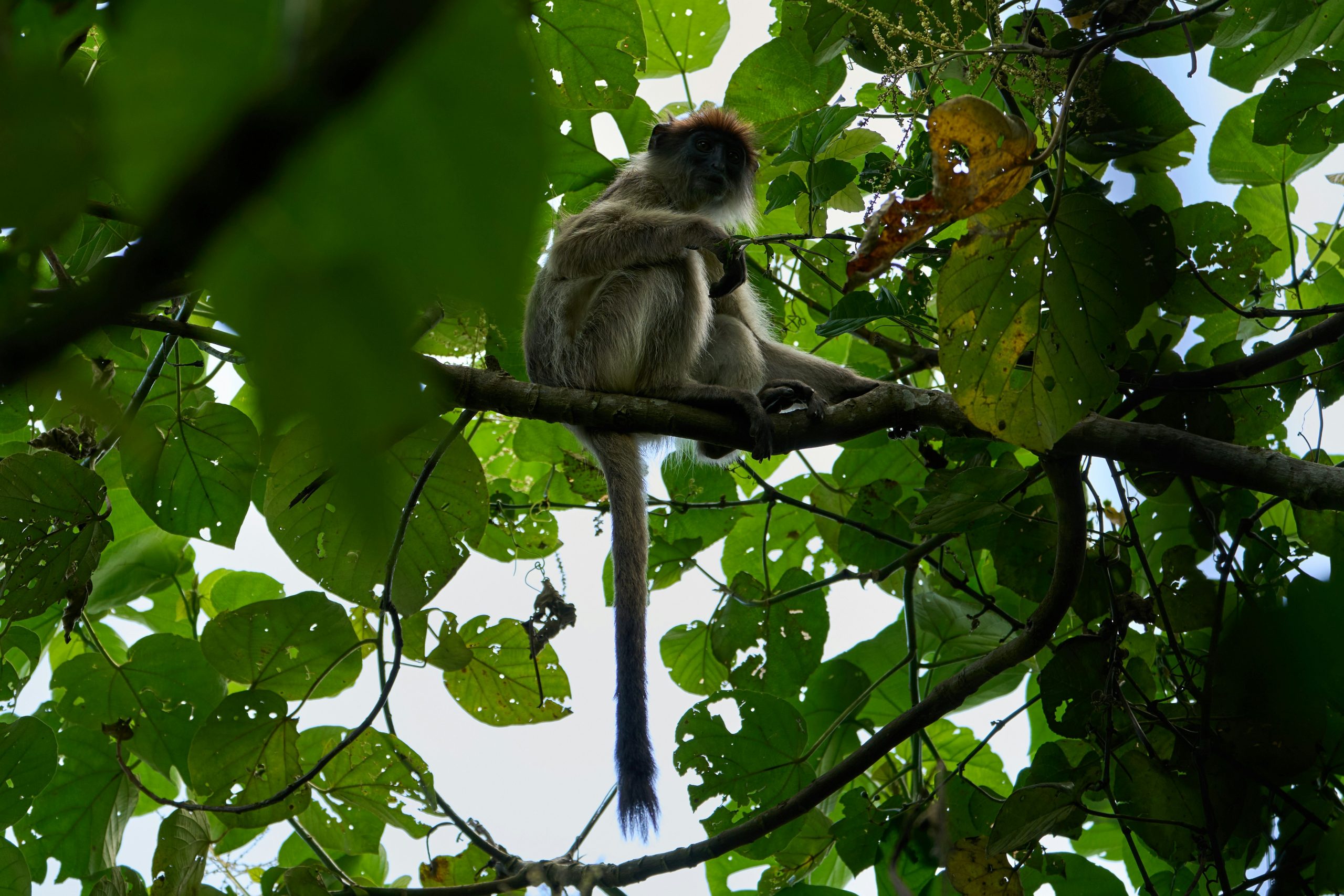
- Ugandan red colobus: an endangered monkey with a rusty-red cap, often seen in noisy groups feeding in the trees.
- Black-and-white colobus: elegant monkeys with long white tails.
- Grey-cheeked mangabey: a dark, shaggy monkey usually found in the forest canopy.
- Red-tailed monkey: with a distinctive white nose spot and red tail.
- L’Hoest’s monkey, blue monkey, vervet monkey and olive baboon.
Chimpanzees occasionally pass through the area from Kibale, though they are not regularly seen at Bigodi. For guaranteed chimp encounters, combine your swamp walk with chimpanzee tracking in Kibale.
Birds of Bigodi
More than 200 bird species have been recorded at Bigodi, making it a favourite stop for birders. The star attraction for many is the great blue turaco, a large, spectacular blue, green and yellow bird often seen gliding between trees. Other highlights include the papyrus gonolek, white-winged warbler, black-and-white-casqued hornbill, white-spotted flufftail, yellow-billed barbet, African pied wagtail, Ross’s turaco and many species of sunbirds, weavers and kingfishers. Early-morning walks are best for birding, and specialist birding walks can be arranged. For more birding sites, see our guide to birdwatching in Uganda and our 14-day Uganda birding itinerary.
Other Wildlife
The swamp is also home to the shy sitatunga, a semi-aquatic antelope adapted to life in wetlands, though it is rarely seen. Bushbucks, mongooses, otters and a wide variety of butterflies, dragonflies, frogs and reptiles add to the diversity.
Bigodi Village Walk
In addition to the swamp walk, KAFRED offers guided village walks that introduce visitors to daily life in Bigodi. You may visit a traditional healer, learn how local banana beer and gin are made, see a coffee farm, stop at the community school and meet a women’s group that produces handmade crafts such as baskets and jewellery. It is a warm and authentic way to learn about rural life in western Uganda, and purchases directly support local families.
Best Time to Visit Bigodi
Bigodi can be visited all year. The drier months, from June to September and December to February, have less mud on the trail. During the wet seasons, from March to May and October to November, the swamp is lush and birdlife is excellent, but boots are essential. Early mornings are best for birds and primates, while afternoon walks fit well after a morning chimpanzee trek. See our guide to the best time to visit Uganda.
How to Get There
Bigodi is a short drive from the Kanyanchu visitor centre in Kibale Forest National Park, where chimpanzee tracking begins. From Fort Portal, the drive takes around 45 minutes to an hour. From Kampala, Fort Portal is roughly five to six hours by road, and domestic flights can also be arranged to nearby airstrips. Bigodi lies on the road between Kibale and Queen Elizabeth National Park, so it is easy to visit on the way south.
Where to Stay
There are lodges and guesthouses in and around Bigodi village and along the edge of Kibale Forest, ranging from simple budget options to comfortable eco-lodges and upmarket properties overlooking crater lakes. Many visitors stay in the Fort Portal crater lakes area, which offers beautiful scenery; see our Fort Portal crater lakes guide.
How Much Does a Bigodi Swamp Walk Cost?
The swamp walk is one of the most affordable activities in the Kibale area. Fees are paid to KAFRED and go directly to community projects and conservation. Village walks and birding walks are priced separately. Prices can change, so check current rates when booking. For help budgeting a wider trip, see our guide to Uganda safari costs.
Fitting Bigodi Into Your Itinerary
- Morning: chimpanzee tracking in Kibale Forest.
- Afternoon: Bigodi swamp walk and village visit.
- Next day: explore the crater lakes around Fort Portal, then continue to Queen Elizabeth National Park and on to Bwindi for gorillas.
See our 10-day Uganda safari itinerary and our guide to primate safaris in East Africa for more ideas.
What to Bring
- Waterproof boots or wellingtons (often available to borrow on site).
- Long trousers and long sleeves.
- Binoculars and a camera with a zoom lens.
- Insect repellent and a light rain jacket.
- Water and a small snack.
Primate Safari Itineraries in Uganda and Rwanda
- Beyond the gorillas: creating the ultimate primate safari
- 8-day Uganda and Rwanda primate safari
- 11-day Rwanda and Uganda primate and birding safari
- 10-day Uganda and Rwanda classic wildlife safari
- 10-day Uganda and Rwanda luxury safari
- 8-day Rwanda and Uganda wildlife photography safari
- 14-day Uganda and Rwanda grand safari
- 12-day Uganda and Rwanda great lakes and highlands discovery
Frequently Asked Questions
Is the Bigodi swamp walk worth it? Yes. It offers excellent primate and bird sightings, is easy to combine with Kibale and directly supports the local community.
How long is the swamp walk? Usually two to three hours, covering around three to four kilometres.
Will I see chimpanzees at Bigodi? Rarely. For chimpanzees, book a tracking permit in Kibale Forest.
Is Bigodi suitable for children? Yes. The walk is gentle, and children enjoy the monkeys and boardwalks; see our guide to family safaris in East Africa.
Plan Your Visit
Bigodi Wetland Sanctuary shows how tourism can protect nature and improve lives at the same time. Kuku Safaris can arrange your swamp walk alongside chimpanzee tracking, crater lake exploration and gorilla trekking. For park information, visit the Uganda Wildlife Authority, and get in touch to start planning your western Uganda adventure.