Tanzania Mount Kilimanjaro Climb & Cultural Safari – 14 Days
Introduction: Conquer Africa’s Highest Mountain and Discover Chagga Culture
Experience the adventure of a lifetime on this 14-day Mount Kilimanjaro Climb and Cultural Safari with Kuku Safaris.
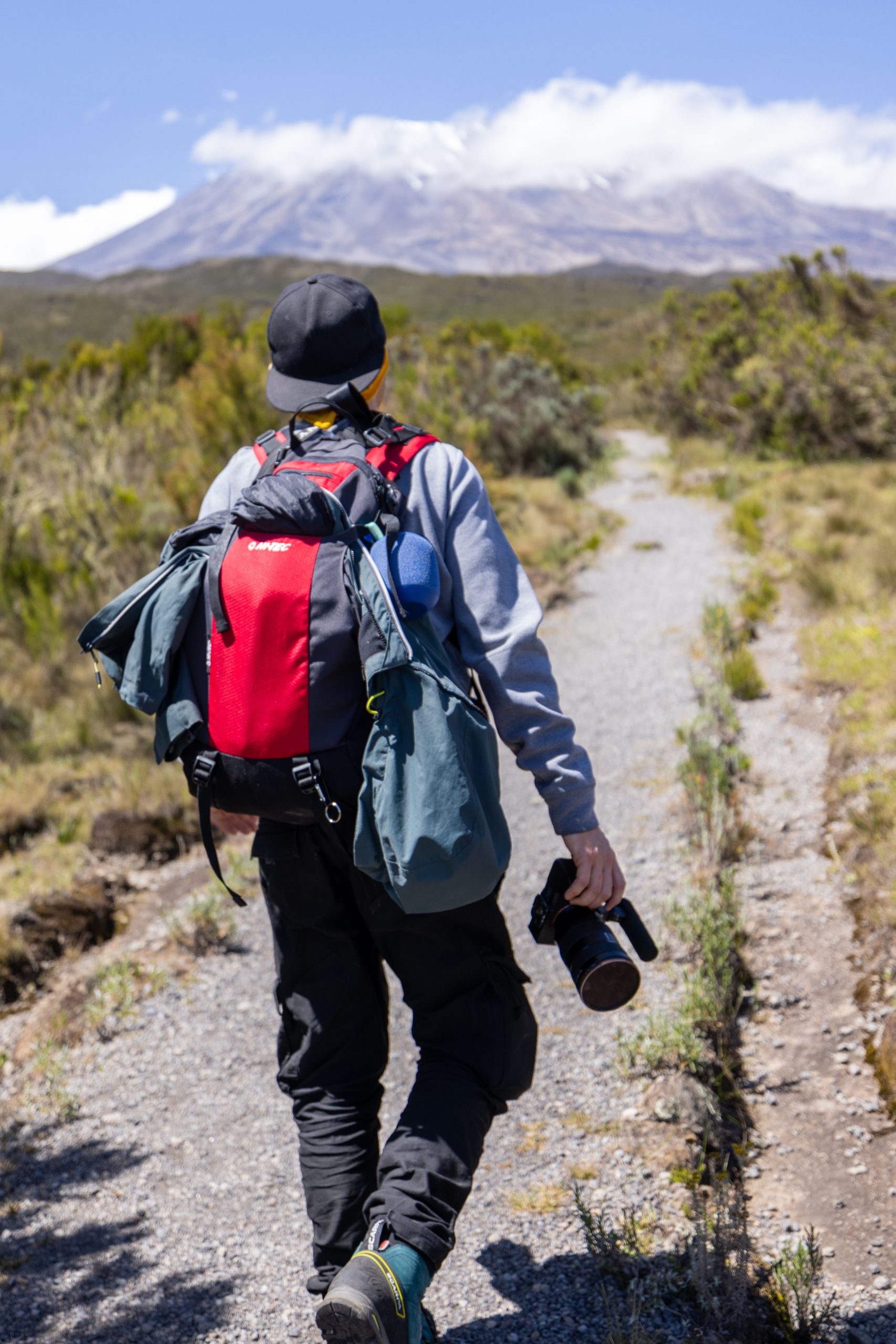
Standing at 5,895 metres above sea level, Mount Kilimanjaro is Africa’s highest mountain and one of the world’s most iconic trekking destinations. Its spectacular landscapes range from lush tropical rainforest and giant heather-covered moorlands to alpine deserts, glaciers and the snow-capped summit of Uhuru Peak.
This journey combines an unforgettable mountain climb with meaningful cultural experiences around the foothills of Kilimanjaro.
The adventure begins in Moshi, where you will meet your mountain guide, complete your equipment checks and prepare for the climb. You will then approach the mountain through the scenic Lemosho Route, one of the most rewarding routes for trekkers seeking beautiful landscapes and a gradual ascent.
Over eight days on the mountain, the route passes through rainforest, the Shira Plateau, the dramatic Barranco Wall and high-altitude alpine landscapes before reaching Uhuru Peak.
After descending, enjoy time to recover before exploring the cultural heritage of the Chagga people. Visit Materuni Village, experience traditional coffee preparation, discover the beautiful Materuni Waterfall and explore the historic Chagga caves in Marangu.
This combination creates more than a mountain climbing holiday. It provides an opportunity to understand the communities, traditions and landscapes surrounding Tanzania’s most famous mountain.
Whether you are a first-time high-altitude trekker, an adventurous couple, a group of friends or a traveller interested in African mountain culture, this itinerary offers an exciting combination of challenge, discovery and relaxation.
Tour Highlights
- Climb Mount Kilimanjaro through the scenic 8-day Lemosho Route.
- Reach Uhuru Peak at 5,895 metres, weather and health permitting.
- Experience all five ecological zones of Mount Kilimanjaro.
- Explore the spectacular Shira Plateau.
- Trek through the famous Barranco Wall.
- Enjoy an acclimatisation day featuring the Lava Tower climb-high, sleep-low approach.
- Experience an overnight summit attempt under the stars.
- Explore Materuni Village and its beautiful waterfall.
- Participate in a traditional Chagga coffee-making experience.
- Discover the history of the Chagga people in Marangu.
- Explore traditional underground Chagga caves with a local guide.
- Enjoy authentic Chagga cuisine and local hospitality.
- Learn about responsible mountain tourism and porter welfare.
Detailed 14-Day Tanzania Itinerary
Day 1: Arrival at Kilimanjaro International Airport – Welcome to Tanzania
Upon arrival at Kilimanjaro International Airport, you will be welcomed by a representative from Kuku Safaris and transferred to your hotel in Moshi.
Moshi is an excellent starting point for a Kilimanjaro adventure because of its proximity to the mountain’s main climbing routes.
Depending on your arrival time, spend the afternoon relaxing at your hotel or enjoying views of the surrounding landscapes. On clear days, Mount Kilimanjaro may be visible from different parts of the town.
In the evening, meet your safari representative for an introduction to the trip.
Your team will explain the mountain itinerary, accommodation arrangements, climbing requirements and cultural experiences planned after the trek.
Enjoy dinner and rest before the preparation day.
Accommodation: Moshi
Meal plan: Dinner, depending on arrival time
Day 2: Moshi – Climbing Preparation, Equipment Check and Mountain Briefing
Today is dedicated to preparing for your Mount Kilimanjaro climb.
After breakfast, meet your mountain guide and climbing team for a detailed briefing about the Lemosho Route.
Your guide will explain the mountain’s different ecological zones, daily walking routines, altitude challenges and safety procedures.
You will also complete an equipment check to ensure that you have the necessary clothing and gear.
Important equipment includes:
- Waterproof hiking boots.
- Warm thermal clothing.
- Insulated jacket and waterproof outer layers.
- Hiking trousers and moisture-wicking base layers.
- Sleeping bag suitable for sub-zero temperatures.
- Trekking poles.
- Headlamp with spare batteries.
- Gloves, warm hat and balaclava.
- Sunglasses and high-protection sunscreen.
- Reusable water bottles.
- Personal medication and essential toiletries.
- A small daypack for daily mountain activities.
Any missing equipment can be discussed with your operator before departure.
You will also receive guidance on altitude awareness, hydration, nutrition and the importance of walking slowly.
Kilimanjaro guides commonly use the Swahili expression pole pole, meaning slowly, slowly. Maintaining a comfortable pace is an important part of mountain preparation.
Spend the afternoon relaxing, enjoying an early dinner and preparing your personal daypack.
Accommodation: Moshi
Meal plan: Breakfast, lunch and dinner
Day 3: Moshi to Londorossi Gate – Trek to Mti Mkubwa Camp
After an early breakfast, depart Moshi and travel towards Londorossi Gate, the western entrance used for the Lemosho climbing route.
The journey passes through local villages, agricultural landscapes and the lower slopes of Mount Kilimanjaro.
On arrival, complete park registration and the required climbing formalities.
Meet the mountain crew, including your guides and porters, before beginning the trek.
The initial section follows a trail through beautiful montane rainforest.
This is one of the mountain’s most atmospheric environments, with tall trees, thick vegetation, mosses and various forest birds.
Keep an eye out for blue monkeys and black-and-white colobus monkeys in the canopy.
The walking pace is deliberately gentle, allowing your body to begin adjusting to the altitude.
After approximately 3–4 hours of walking, depending on trail conditions and group pace, arrive at Mti Mkubwa Camp, also known as Big Tree Camp, at approximately 2,650 metres.
Your camp crew will have prepared the tents and meals.
Enjoy dinner and settle in for your first night on the mountain.
Accommodation: Mti Mkubwa Camp
Meal plan: Breakfast, lunch and dinner
Day 4: Mti Mkubwa Camp to Shira 1 Camp – Enter the Moorland Zone
Wake up to breakfast in the forest before beginning the next stage of the climb.
Today’s trek takes you out of the rainforest and into the heath and moorland vegetation zone.
As the elevation increases, the forest gradually becomes thinner and the landscape opens up.
The trail includes sections of rolling hills, rocky paths and volcanic terrain.
You will enjoy increasingly impressive views of Mount Kilimanjaro’s high-altitude landscape.
Depending on weather conditions, you may also catch glimpses of the Kibo summit area.
Today’s walk generally takes approximately 5–6 hours, although actual times vary according to the group’s pace and conditions.
Arrive at Shira 1 Camp, approximately 3,610 metres above sea level.
After arriving, enjoy refreshments and a warm meal.
Spend the remainder of the afternoon relaxing and drinking water as advised by your mountain guide.
The higher altitude may affect sleep and appetite, so report any unusual symptoms to your guide.
Accommodation: Shira 1 Camp
Meal plan: Breakfast, lunch and dinner
Day 5: Shira 1 Camp to Shira 2 Camp – Explore the Shira Plateau
After breakfast, continue towards Shira 2 Camp.
Today’s route crosses part of the beautiful Shira Plateau, an extensive high-altitude volcanic landscape offering impressive mountain views.
The trail is generally more open than the previous forest sections, allowing you to appreciate the scale of Kilimanjaro.
During the walk, you may encounter giant groundsels, heathers and other distinctive high-altitude plants.
Your guide will explain how vegetation changes with increasing altitude and how the mountain’s different ecological zones support unique plant communities.
The walk generally takes approximately 4–5 hours, depending on conditions.
On arrival at Shira 2 Camp, at approximately 3,850 metres, enjoy lunch and some rest.
Depending on your guide’s assessment and the group’s condition, an optional acclimatisation walk may be arranged towards a higher point before returning to camp.
This additional activity is designed to encourage gradual adjustment to the altitude, not to test your speed or endurance.
Enjoy dinner and prepare for the next day’s important acclimatisation stage.
Accommodation: Shira 2 Camp
Meal plan: Breakfast, lunch and dinner
Day 6: Shira 2 Camp to Lava Tower to Barranco Camp – Acclimatisation Day
Today is one of the most important stages of your Kilimanjaro climb.
After breakfast, leave Shira 2 Camp and begin ascending towards the impressive Lava Tower area.
The trail crosses an increasingly rocky alpine landscape, with giant groundsels and dramatic volcanic formations.
As you climb, the temperature becomes cooler and the vegetation increasingly sparse.
The highest point of today’s walk is approximately 4,600 metres at Lava Tower.
You will enjoy a rest and lunch stop here, allowing your body to experience a higher altitude before descending.
After the break, begin the descent towards Barranco Valley.
This is an excellent illustration of the climb-high, sleep-low approach used to support acclimatisation.
The descent takes you towards the beautiful Barranco Valley, where giant groundsels and dramatic cliffs create one of Kilimanjaro’s most recognisable landscapes.
Arrive at Barranco Camp, approximately 3,900 metres above sea level.
Enjoy dinner, relax and prepare for the following day’s ascent of the Barranco Wall.
Accommodation: Barranco Camp
Meal plan: Breakfast, lunch and dinner
Day 7: Barranco Camp to Karanga Camp – Climb the Famous Barranco Wall
After breakfast, begin one of the most memorable sections of the Lemosho Route.
The day starts with the ascent of the famous Barranco Wall, a steep rocky section that provides an exciting mountain trekking experience.
Although parts of the route are exposed and require careful footing, it is generally a trekking scramble rather than a technical climbing route using ropes.
Your guides will assist the group through the steeper sections, helping everyone move carefully and comfortably.
As you climb higher, enjoy beautiful views of the surrounding mountains, valleys and glaciers.
After reaching the upper section of the wall, the trail continues through a series of ridges and valleys towards Karanga.
The route includes several smaller ascents and descents, providing a varied hiking experience.
Arrive at Karanga Camp, approximately 3,995 metres above sea level.
Enjoy lunch, refreshments and time to rest.
Depending on your guide’s assessment, a short acclimatisation walk may be arranged around the camp area.
Dinner is served in the evening, followed by an early rest.
Accommodation: Karanga Camp
Meal plan: Breakfast, lunch and dinner
Day 8: Karanga Camp to Barafu Camp – Prepare for Summit Night
After breakfast, continue the ascent towards Barafu Camp.
The trail passes through a dry alpine desert environment, with rocky terrain and increasingly impressive views of Kibo and Mawenzi peaks.
Although the distance covered today is relatively short, the increasing altitude makes it important to maintain a slow and steady pace.
Arrive at Barafu Camp, approximately 4,673 metres above sea level.
Barafu is the final overnight camp before the summit attempt.
Upon arrival, enjoy lunch and rest while your mountain team prepares for the final ascent.
Your guide will explain the summit-night schedule, equipment requirements and safety procedures.
It is essential to prepare your warm clothing, headlamp, gloves, water and daypack before sleeping.
Dinner is served early, after which you will have time to rest.
The summit attempt usually begins around midnight or during the very early hours of the following morning.
Accommodation: Barafu Camp
Meal plan: Breakfast, lunch and dinner
Day 9: Summit Uhuru Peak – Descend to Mweka Camp
Today is the most challenging and rewarding day of your Kilimanjaro expedition.
Wake up around midnight and prepare for the final ascent.
After a light meal and hot drinks, begin climbing towards Stella Point along the steep slopes of Kibo.
The trail is challenging because of the altitude, cold temperatures, darkness and physical demands.
Your guides will maintain a slow pace and monitor the group’s condition.
As dawn approaches, you may reach Stella Point, approximately 5,756 metres above sea level.
From here, continue along the crater rim towards Uhuru Peak, the highest point in Africa at 5,895 metres.
Reaching the summit is a remarkable achievement.
Enjoy time for photographs and celebrate your accomplishment, subject to weather, safety and the time allowed by your guides.
The summit experience provides unforgettable views of the surrounding glaciers, crater landscape and distant African plains.
After the summit celebration, begin descending towards Barafu Camp before continuing to Mweka Camp.
The descent is physically demanding because you will already have completed a long night of climbing.
Arrive at Mweka Camp, approximately 3,100 metres above sea level.
Enjoy a well-deserved meal and rest.
Accommodation: Mweka Camp
Meal plan: Breakfast, lunch and dinner
Important: Reaching Uhuru Peak is not guaranteed. Guides may turn climbers around if altitude illness, exhaustion or weather conditions make continuing unsafe.
Day 10: Mweka Camp to Mweka Gate – Return to Moshi
After breakfast, begin the final descent through Mount Kilimanjaro’s beautiful rainforest.
The trail follows a gradual downhill route through thick vegetation and forest paths.
You may encounter birds, butterflies and other forest wildlife along the way.
After approximately 3–4 hours of walking, arrive at Mweka Gate, where you will complete the final park registration and departure formalities.
Climbers who reach the relevant milestones receive their official certificates from the park authorities.
Your vehicle will be waiting to transfer you back to Moshi.
On arrival at your hotel, enjoy a hot shower and some well-deserved rest.
The afternoon is reserved for recovery after the demanding mountain experience.
In the evening, enjoy dinner and celebrate your accomplishment with your mountain team.
Accommodation: Moshi
Meal plan: Breakfast, lunch and dinner
Day 11: Moshi – Recovery Day and Leisure
Today is dedicated to recovery after your Kilimanjaro climb.
After breakfast, enjoy a relaxed morning at your hotel.
The previous days have involved high-altitude trekking, long walks and a challenging summit attempt, so this day should be kept light.
Depending on your condition, spend time enjoying the hotel facilities, visiting a local café or taking a short walk around Moshi town.
You may also visit selected local craft shops or explore the town’s coffee culture.
For travellers who feel comfortable, a short guided city orientation can introduce you to the region’s markets, local foods and everyday life.
Avoid strenuous activities and allow your body sufficient time to recover.
In the evening, enjoy a relaxed dinner and prepare for the cultural experiences planned for the following days.
Accommodation: Moshi
Meal plan: Breakfast, lunch and dinner
Day 12: Materuni Village – Waterfall Hiking and Traditional Chagga Coffee Experience
Today is dedicated to discovering the culture and natural beauty of Materuni Village on the lower slopes of Mount Kilimanjaro.
After breakfast, depart Moshi and travel towards Materuni, a picturesque Chagga village surrounded by coffee farms, banana plantations and green mountain scenery.
On arrival, meet your local guide and begin the walk towards the famous Materuni Waterfall.
The trail passes through cultivated fields and traditional homesteads, offering insight into local farming practices and village life.
The walk generally takes around one hour, although timing varies according to pace and trail conditions.
The waterfall is a beautiful natural attraction surrounded by thick vegetation and rocky cliffs.
Enjoy the scenery, take photographs and relax beside the cascading water.
Swimming may be possible in suitable conditions, but always follow local guidance and assess the water and access conditions carefully.
After the waterfall excursion, return to a local family home for a traditional Chagga coffee experience.
Learn how locally grown coffee is harvested, processed, roasted, ground and prepared using traditional methods.
You may also participate in some stages of coffee preparation before enjoying a freshly brewed cup.
The experience can be accompanied by traditional Chagga songs, storytelling and a locally prepared meal featuring regional ingredients.
This is an excellent opportunity to interact with local residents and understand the importance of coffee farming to the communities around Kilimanjaro.
For further information about the experience, visit Materuni Chagga Culture and Coffee Tours.
Return to Moshi in the afternoon.
Accommodation: Moshi
Meal plan: Breakfast, lunch and dinner
Day 13: Marangu – Explore Chagga History, Traditional Homes and Caves
After breakfast, depart Moshi and travel towards Marangu, one of the important Chagga cultural areas on the eastern slopes of Mount Kilimanjaro.
Today provides an opportunity to explore the traditional history, architecture and culture of the Chagga people.
Your first activity is a guided visit to the Chagga underground caves.
These historic underground passages are associated with periods of conflict between communities and were used for protection, storage and shelter.
A local guide will explain their history, construction and significance in Chagga heritage.
The experience may include selected cave sections, depending on safety conditions and individual mobility.
Continue to a traditional Chagga homestead to learn about the architecture and organisation of historical mountain settlements.
During the visit, discover:
- Traditional Chagga houses.
- Food storage and granaries.
- Traditional cooking methods.
- Historic farming practices.
- Local coffee and banana cultivation.
- Traditional tools and household objects.
You may also enjoy a traditional Chagga meal and learn about the importance of bananas in local food culture.
Depending on availability, the excursion may include a visit to selected village attractions or a local coffee-growing family.
The visit should be arranged through an authorised local cultural guide or community tourism provider.
For more information, visit Ancient Chagga Caves Cultural Tours.
In the afternoon, return to Moshi and enjoy your final evening in Tanzania.
Accommodation: Moshi
Meal plan: Breakfast, lunch and dinner
Day 14: Departure from Kilimanjaro International Airport – End of Your Adventure
After breakfast, depending on your international flight schedule, you will be transferred to Kilimanjaro International Airport for your onward journey.
This marks the end of your Tanzania Mount Kilimanjaro Climb and Cultural Safari with Kuku Safaris.
You will leave with unforgettable memories of the rainforest trails, Shira Plateau, Barranco Wall, the summit of Uhuru Peak and the welcoming Chagga communities around Mount Kilimanjaro.
Meal plan: Breakfast
Best Time to Climb Mount Kilimanjaro
Mount Kilimanjaro can be climbed throughout the year, but certain periods generally offer more favourable trekking conditions.
January to March
This period can provide relatively favourable climbing conditions, with generally drier weather during some weeks and quieter trails than the peak mid-year season.
Temperatures at lower elevations can be warm, while summit conditions remain extremely cold.
June to October
This is one of the most popular climbing periods.
The months generally offer favourable trekking conditions, although afternoon cloud, cold temperatures and occasional rain are still possible.
July, August and September are particularly popular, so early booking is recommended.
November to December
The short rains can affect forest and moorland conditions. However, climbing remains possible, depending on the weather and the selected route.
March to May
The long rainy season can make trails wet and slippery, particularly in the rainforest and lower mountain zones.
Some climbers prefer to avoid this period because of more challenging conditions, although individual weather patterns vary.
Kuku Safaris recommends selecting travel dates based on weather preferences, climbing experience and accommodation availability.
Understanding the Eight-Day Lemosho Route
The Lemosho Route is one of the most scenic approaches to Mount Kilimanjaro.
It begins on the western side of the mountain and crosses the Shira Plateau before joining the southern circuit.
The route includes a gradual approach, several acclimatisation opportunities and the important climb-high, sleep-low stage at Lava Tower.
The main overnight points are:
| Climbing day | Route / camp | Approximate altitude |
|---|---|---|
| Day 1 | Mti Mkubwa Camp | 2,650 m |
| Day 2 | Shira 1 Camp | 3,610 m |
| Day 3 | Shira 2 Camp | 3,850 m |
| Day 4 | Barranco Camp | 3,900 m |
| Day 5 | Karanga Camp | 3,995 m |
| Day 6 | Barafu Camp | 4,673 m |
| Day 7 | Uhuru Peak / Mweka Camp | 5,895 m / 3,100 m |
| Day 8 | Mweka Gate | 1,640 m |
The altitude figures are approximate and may vary slightly between route operators and official measurements.
What to Pack for the Kilimanjaro Climb
A successful mountain expedition requires appropriate clothing and equipment.
Clothing
- Thermal base layers.
- Fleece or mid-layer jackets.
- Insulated down jacket.
- Waterproof jacket and trousers.
- Hiking trousers.
- Lightweight trekking shirts.
- Warm hat and balaclava.
- Waterproof insulated gloves.
- Hiking socks and spare pairs.
Footwear
- Well-fitting waterproof hiking boots.
- Comfortable camp shoes.
- Gaiters where needed.
- Spare laces.
Climbing Equipment
- Sleeping bag suitable for sub-zero temperatures.
- Trekking poles.
- Headlamp with spare batteries.
- Water bottles or hydration system.
- Sunglasses with strong UV protection.
- Duffel bag for porter-carried equipment.
- Small daypack.
- Personal first-aid items.
- Sunscreen and lip balm.
Cultural Safari Clothing
For the cultural activities around Materuni and Marangu, lightweight and comfortable clothing is appropriate.
A light waterproof jacket and walking shoes are useful for the village and waterfall excursions.
Your climbing operator should provide a final equipment checklist before departure.
Altitude Safety and Climbing Requirements
Mount Kilimanjaro is a high-altitude mountain, and reaching the summit requires more than ordinary hiking fitness.
At 5,895 metres, the reduced oxygen levels can cause altitude-related illness even in otherwise healthy and physically fit climbers.
Kuku Safaris recommends that every climber:
- Consult a healthcare professional before undertaking the expedition.
- Train regularly before departure.
- Select a route with adequate acclimatisation time.
- Walk slowly and follow the guide’s pace.
- Drink fluids and eat regularly as advised.
- Report headaches, nausea, unusual fatigue or dizziness to the guide.
- Never continue ascending when showing serious symptoms of altitude illness.
- Follow the guide’s instructions regarding emergency descent.
Serious symptoms such as confusion, loss of coordination or breathlessness at rest require immediate medical attention and descent under the mountain team’s emergency procedures.
A summit attempt is always conditional on health, weather and guide assessment. No operator can guarantee that every climber will reach Uhuru Peak.
Responsible Climbing and Porter Welfare
A successful Kilimanjaro expedition depends on the hard work of mountain guides, assistant guides, cooks and porters.
Kuku Safaris should prioritise responsible climbing arrangements that include:
- Fair and timely staff payments.
- Proper meals and sleeping accommodation for mountain crew.
- Suitable clothing and protective equipment.
- Transparent tipping arrangements.
- Appropriate staff numbers for the group size.
- Respect for porter weight limits and welfare standards.
- Access to appropriate medical care when needed.
Travellers can consult the Kilimanjaro Porters Assistance Project to understand responsible mountain trekking and porter welfare.
Recommended Accommodation for This Safari
Kuku Safaris can arrange accommodation according to the traveller’s budget and preferred comfort level.
Moshi
- Kilimanjaro Wonders Hotel.
- Chanya Lodge.
- Panama Garden Resort.
- Parkview Inn.
- Other suitable hotels in Moshi.
On Mount Kilimanjaro
The Lemosho Route uses designated tented camps rather than permanent mountain lodges.
These include:
- Mti Mkubwa Camp.
- Shira 1 Camp.
- Shira 2 Camp.
- Barranco Camp.
- Karanga Camp.
- Barafu Camp.
- Mweka Camp.
The mountain team provides camping arrangements, meals and other essential support.
What Is Included in the Safari Package?
A typical Kuku Safaris package can include:
- Airport transfers from Kilimanjaro International Airport.
- Private transfers between Moshi and the mountain gates.
- Accommodation for 13 nights.
- Two nights of pre-climb accommodation in Moshi.
- Eight-day guided Lemosho Route climb.
- Services of licensed mountain guides and appropriate crew.
- Park registration and applicable climbing arrangements.
- Mountain camping equipment.
- Tents and sleeping arrangements.
- Meals and drinking water during the climb.
- Porter support for approved luggage.
- Emergency procedures and mountain support arrangements.
- Mountain descent transfers to Moshi.
- Summit certificate where awarded by the park.
- Materuni Waterfall and coffee experience.
- Marangu Chagga cultural excursion.
- Meals as indicated in the itinerary.
What Is Not Included?
Unless otherwise agreed in the final quotation, the package excludes:
- International flights.
- Tanzania visa fees, where applicable.
- Mandatory inbound travel insurance for travellers who are subject to the requirement.
- Specialist high-altitude medical and evacuation insurance.
- Personal hiking equipment not supplied by the operator.
- Optional extra acclimatisation days or alternative routes.
- Personal expenses, tips and gratuities.
- Additional cultural activities not listed in the confirmed itinerary.
- Drinks and meals not specified in the itinerary.
Frequently Asked Questions
1. How high is Mount Kilimanjaro?
Mount Kilimanjaro reaches 5,895 metres above sea level at Uhuru Peak, making it the highest mountain in Africa.
2. How many days does it take to climb Mount Kilimanjaro?
Climbing durations vary according to the selected route. The mountain itself can take approximately five to eight days or longer. This itinerary uses an eight-day Lemosho climb to allow more time for acclimatisation.
3. Is the Lemosho Route suitable for first-time climbers?
Yes, it can be a suitable option for reasonably fit first-time high-altitude trekkers because of its longer duration and gradual approach. However, it remains a demanding mountain expedition and does not guarantee summit success.
4. How difficult is the Mount Kilimanjaro climb?
Kilimanjaro is a non-technical trekking mountain on the standard Lemosho route, meaning specialised mountaineering ropes and climbing equipment are not normally required. However, the high altitude, cold, long walking days and summit-night effort make it physically demanding.
5. What is the highest point reached on the Lemosho Route?
The highest point is Uhuru Peak at 5,895 metres above sea level.
6. Can I reach the summit without previous mountain climbing experience?
Many people without technical mountaineering experience climb Kilimanjaro successfully. However, you should prepare physically, choose an appropriate route, understand the altitude risks and follow your guide’s instructions.
7. What is special about Materuni Village?
Materuni is a traditional Chagga village on the slopes of Mount Kilimanjaro. It is known for its beautiful waterfall, fertile coffee farms and traditional coffee-making experiences.
8. What can I learn during the Chagga cultural tour?
Visitors can learn about traditional houses, food preparation, coffee farming, underground caves, agriculture and the historical heritage of the Chagga people.
9. Can I extend the safari to include a wildlife safari?
Yes. You can extend the journey to include Tarangire, Lake Manyara, Ngorongoro Crater or Serengeti National Park.
10. Can I combine Kilimanjaro with Zanzibar?
Yes. A Zanzibar beach holiday is an excellent extension after climbing Kilimanjaro. The combined experience offers a mountain adventure followed by relaxation along the Indian Ocean.
Book Your Tanzania Mount Kilimanjaro Climb and Cultural Safari with Kuku Safaris
Challenge yourself to reach the Roof of Africa and discover the rich cultural heritage surrounding Mount Kilimanjaro with Kuku Safaris.
This 14-day itinerary combines an eight-day Lemosho Route climb with traditional Chagga experiences, beautiful waterfalls, coffee tours and cultural exploration around Moshi and Marangu.
From the rainforest trails and volcanic landscapes to the spectacular summit of Uhuru Peak, the journey offers an unforgettable adventure in Tanzania.
Whether you are a first-time climber, an experienced hiker, a couple or a private group, our team can tailor the itinerary according to your climbing experience, travel dates, accommodation preferences and budget.
Contact Kuku Safaris to start planning your Tanzania Mount Kilimanjaro Climb and Cultural Safari.
Explore More Tanzania Safaris with Kuku Safaris
Planning a longer holiday in Tanzania? Explore these related journeys:
- Tanzania Safari & Zanzibar Beach Holiday – Combine mountain adventure with a relaxing Indian Ocean holiday.
- Tanzania Calving Season & Ngorongoro Safari – Discover the southern Serengeti calving grounds and Ngorongoro Crater.
- Tanzania Southern Circuit Wilderness Safari: Nyerere & Ruaha – Explore Tanzania’s remote southern wilderness.
- Tanzania Usambara Mountains, Lushoto & Mkomazi Safari – Discover the highland landscapes and cultural heritage of northeastern Tanzania.
- Kuku Safaris – Home – Discover more tailor-made East African travel experiences.