
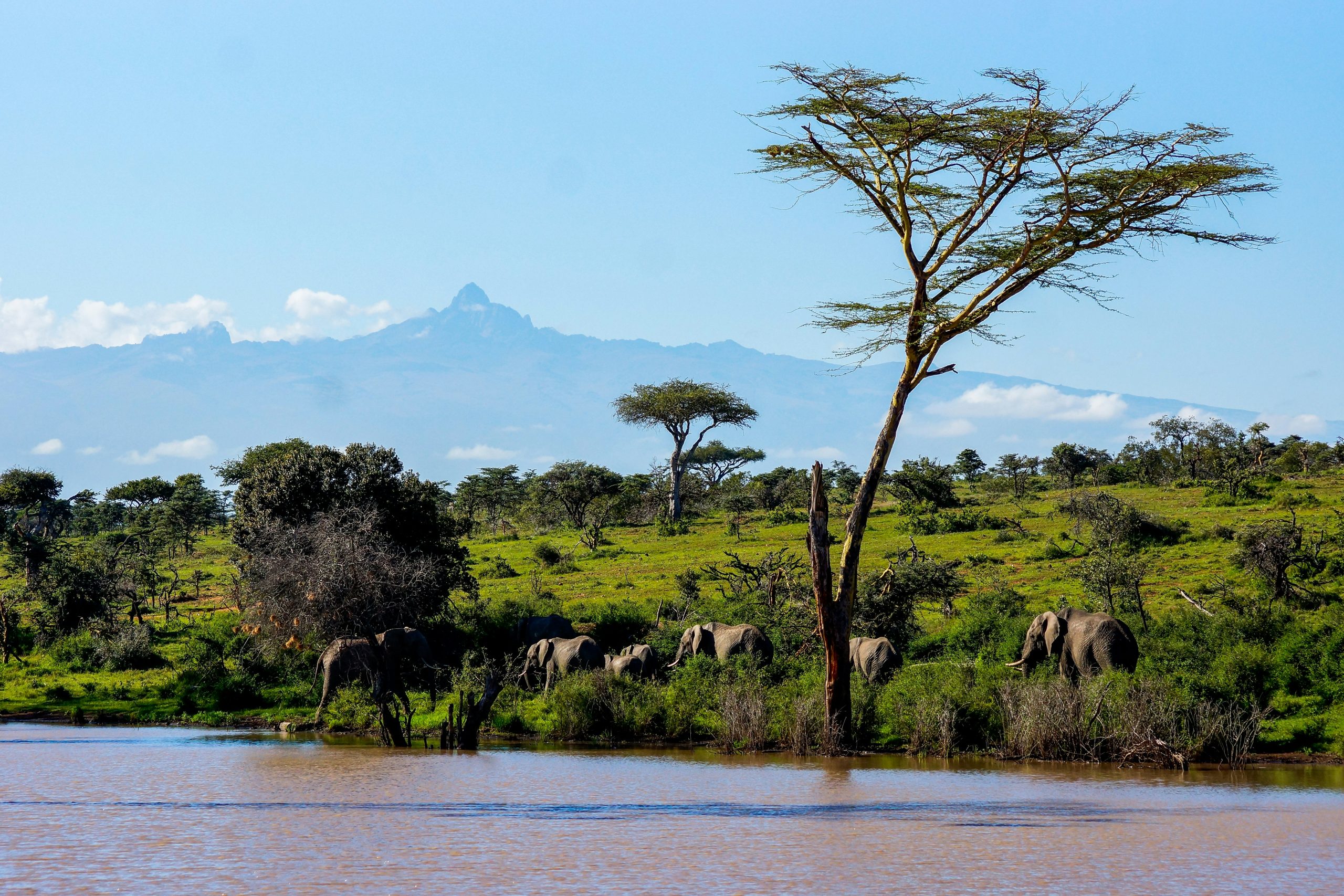
Climbing Mount Kenya: The Complete Guide to Point Lenana, Routes and Preparation
Kilimanjaro may be Africa’s highest mountain, but many seasoned trekkers say that Mount Kenya is its most beautiful. Straddling the equator in the heart of Kenya, Africa’s second-highest mountain is a dramatic massif of jagged rock spires, glaciers, glittering tarns, giant plants and deep valleys. Fewer people climb it than Kilimanjaro, so the trails are quieter, and its trekking summit, Point Lenana, can be reached in as little as four or five days.
This complete guide covers everything you need to know about climbing Mount Kenya, including its peaks, the main routes, the best time to go, altitude, costs, what to pack and how to combine your trek with a Kenya safari.
Mount Kenya at a Glance
- Highest peak: Batian, 5,199 metres, followed closely by Nelion at 5,188 metres. Both require technical rock climbing.
- Trekking summit: Point Lenana, 4,985 metres, reachable without technical skills.
- Location: Central Kenya, just south of the equator, around 150 kilometres north of Nairobi.
- Protected area: Mount Kenya National Park and the surrounding forest reserve, managed by the Kenya Wildlife Service and the Kenya Forest Service, and listed as a UNESCO World Heritage Site.
- Typical trek length: Four to seven days.
A Sacred Mountain
Mount Kenya is an extinct volcano formed millions of years ago, and its central peaks are the eroded remains of an ancient volcanic plug. The country itself is named after the mountain. For the Kikuyu people, who live on its fertile southern and western slopes, the mountain, called Kirinyaga, is sacred, traditionally seen as the home of the god Ngai. Other communities around the mountain, including the Meru and Embu, also hold it in deep respect. Many traditional homes were built with their doors facing the mountain.
Point Lenana vs Batian and Nelion
For most visitors, the goal is Point Lenana, the third-highest peak. Reaching it involves a long, steep walk, usually starting before dawn, but no ropes or technical skills are needed. The view from the summit at sunrise, across the glaciers and towards Kilimanjaro on a clear day, is spectacular.
Batian and Nelion are a different challenge altogether. Reaching them requires multi-pitch rock climbing (and ice or mixed climbing in some conditions), proper equipment and an experienced mountain guide. These climbs are for experienced climbers only, and the best rock conditions depend on the season: the south-east faces are typically climbed in the northern-hemisphere summer months, and the north faces in the opposite season.
The Main Trekking Routes
Sirimon Route. Approaching from the north-west, near the town of Nanyuki, Sirimon is one of the most popular routes. It has a gradual ascent that helps with acclimatisation, beautiful moorland scenery and good chances of seeing wildlife on the lower slopes. Many itineraries ascend via Sirimon and descend by Chogoria for the best of both routes.
Chogoria Route. Widely regarded as the most scenic route on the mountain, Chogoria approaches from the east through dense forest and bamboo, then passes the spectacular Gorges Valley, Lake Michaelson and the Gem Lakes, with waterfalls, cliffs and tarns. It is longer and more remote but well worth the extra time.
Naro Moru Route. The shortest and most direct route, Naro Moru starts on the western side and is known for the “vertical bog”, a steep and often muddy section of moorland. It is quick, but its fast ascent gives less time to acclimatise, so it is better as a descent route or for trekkers with altitude experience.
Other routes. The quieter Burguret and Timau routes offer more remote experiences for those wanting solitude, though they are less commonly used. A popular extension on any trek is the Summit Circuit, a trail that circles the central peaks, passing tarns and high valleys with constantly changing views.
Sample Itinerary: Sirimon Up, Chogoria Down (5 Days)
- Day 1: Drive from Nairobi or Nanyuki to the Sirimon Gate and walk through forest to the first camp.
- Day 2: Hike through heath and moorland, with views of the peaks, to Shipton’s Camp area via the Mackinder Valley.
- Day 3: Acclimatisation day or walk around the high valleys, then rest before an early start.
- Day 4: Pre-dawn summit push to Point Lenana for sunrise, then descend on the Chogoria side past the Gem Lakes and Lake Michaelson.
- Day 5: Descend through the forest to Chogoria and transfer back to Nanyuki or Nairobi.
Adding an extra day for acclimatisation or a section of the Summit Circuit makes the trek more comfortable and enjoyable.
Landscapes, Plants and Wildlife
Mount Kenya’s vegetation changes dramatically with altitude. The lower slopes are covered in montane forest and bamboo, home to elephants, buffalo, black-and-white colobus monkeys, Sykes’ monkeys and many forest birds. Above the forest lies heath and moorland, where the mountain’s famous giant plants grow: giant groundsels, which can reach several metres tall, and giant lobelias with tall flower spikes. Higher still, the alpine zone gives way to bare rock, scree, glaciers and tarns.
Rock hyraxes are common around the high camps, and you may see the Mount Kenya mole rat and colourful sunbirds feeding on the lobelias. Leopards, hyenas and elands live on the mountain too, though they are rarely seen. The mountain’s glaciers, like those on Kilimanjaro, have been shrinking significantly in recent decades.
Best Time to Climb Mount Kenya
The best times to climb Mount Kenya are during the two dry seasons:
- January to early March: often the clearest and warmest weather, with excellent views.
- Late June to early October: dry and stable conditions, though nights are cold.
The long rains (roughly April to May) and short rains (around November) bring heavy rain, mud, cloud and snow higher up, making trekking harder and views less reliable. Even in the dry season, mornings tend to be clear while clouds often build in the afternoon, so most trekking days start early.
Altitude and Fitness
Point Lenana is nearly 5,000 metres high, and because the routes gain height quickly, altitude sickness is a real risk on Mount Kenya, arguably more so than on longer Kilimanjaro itineraries. Choosing a route and itinerary with gradual ascent and an acclimatisation day greatly improves both safety and enjoyment. Walk slowly, drink plenty of water, eat well and tell your guide about any symptoms such as severe headaches, nausea, confusion or breathlessness at rest. If symptoms worsen, descending is the most effective treatment. Talk to your doctor before your trip about altitude and any medication.
You should be in good physical condition, comfortable walking for five to eight hours a day on rough, steep terrain. Training with regular hikes, ideally with elevation gain and a loaded daypack, will help.
Accommodation on the Mountain
Treks on Mount Kenya use a combination of mountain huts and camping. Basic huts and bunkhouses are found along the main routes, while many operators provide tents, mess tents and cooking equipment carried by porters. Facilities are simple, so expect shared toilets and cold nights. Before and after the climb, comfortable lodges and hotels in Nanyuki, Naro Moru and Chogoria provide a good base.
How Much Does It Cost to Climb Mount Kenya?
Mount Kenya is generally more affordable than Kilimanjaro, mainly because park fees and trek lengths are lower. The total cost depends on the route, the number of days, group size and the level of service. Typical costs include Kenya Wildlife Service park and camping fees, guides, porters and a cook, food, equipment, transfers and accommodation before and after the trek. As with any mountain, choose a reputable operator that uses qualified guides, treats its porters fairly and has emergency procedures in place. For safari budgets, see our guide to East Africa safari costs.
What to Pack
- Waterproof, broken-in hiking boots and gaiters for muddy sections.
- Layered clothing: base layers, fleece, insulated jacket, and waterproof jacket and trousers.
- Warm hat, gloves, sun hat and sunglasses.
- A warm sleeping bag rated well below freezing.
- Headlamp, trekking poles, water bottles and purification tablets.
- Sunscreen, lip balm, snacks and a personal first-aid kit.
Getting There
The trailheads are a three- to five-hour drive from Nairobi, depending on the route. Nanyuki, on the north-western side, is the main base for the Sirimon and Naro Moru routes and has an airstrip with scheduled flights from Nairobi. Chogoria, on the eastern side, is reached via Embu or Meru. Make sure you have your entry documents in order; see our guide to the Kenya eTA for tourists.
Combining Mount Kenya With a Safari
Mount Kenya sits close to some of Kenya’s best wildlife areas, making it easy to add a safari:
- Laikipia and Ol Pejeta: just west of the mountain, Laikipia’s conservancies offer excellent wildlife, rhino conservation and walking safaris; see our Kenya rhino conservation safari through the Aberdares and Laikipia.
- Samburu: a few hours north, Samburu National Reserve offers dry-country wildlife such as Grevy’s zebras and reticulated giraffes.
- The Rift Valley and Maasai Mara: continue west to Lake Nakuru, Lake Naivasha and the Maasai Mara.
- Kilimanjaro: ambitious trekkers sometimes climb Mount Kenya first as acclimatisation before tackling Mount Kilimanjaro in Tanzania.
For more on choosing a Kenya trip, read our guide to how to choose a Kenya safari package, and for another high-mountain adventure, see our guide to the Rwenzori Mountains.
Frequently Asked Questions
Is Mount Kenya harder than Kilimanjaro? Point Lenana is lower than Uhuru Peak, but the routes on Mount Kenya can be steeper, muddier and faster to gain altitude. Many trekkers find the two comparable in difficulty, while Mount Kenya’s scenery is often considered more varied.
Do I need a guide? Yes. Using a licensed guide is strongly recommended and expected for safety, navigation and park regulations.
Can beginners climb Point Lenana? Yes, if they are fit, choose a route with good acclimatisation and follow their guide’s advice. No technical skills are needed.
How many days do I need? Four days is the minimum for Point Lenana, but five or six days is better for acclimatisation and enjoyment.
Will I see wildlife on the climb? You may see monkeys, buffalo and possibly elephants in the forest zone, and rock hyraxes at the higher camps.
Plan Your Mount Kenya Trek
With its jagged peaks, glacial lakes and giant plants, Mount Kenya offers one of Africa’s most rewarding mountain adventures, without the crowds of Kilimanjaro. Kuku Safaris works with experienced local mountain guides and can arrange your trek, transfers and accommodation, and combine your climb with a safari in Laikipia, Samburu or the Maasai Mara. Get in touch to start planning your climb.