
Arusha National Park Safari Guide: Mount Meru, Momella Lakes and Walking Safaris
Most travellers pass through Arusha on their way to the Serengeti and the Ngorongoro Crater, and many never realise that one of Tanzania’s most varied national parks lies less than an hour from town. Arusha National Park is small, but it packs in a remarkable range of landscapes: the forested slopes of Mount Meru, the volcanic bowl of Ngurdoto Crater, the shallow, colourful Momella Lakes, montane forest full of monkeys and open glades where giraffes and buffalo graze. It is also one of the few parks in northern Tanzania where you can explore on foot and by canoe.
This complete guide covers what to see and do in Arusha National Park, climbing Mount Meru, the best time to visit, how to get there and how to fit the park into a northern Tanzania safari.
Arusha National Park at a Glance
- Location: North-eastern Tanzania, around 25 to 40 kilometres from Arusha town, between Mount Meru and Mount Kilimanjaro.
- Size: Roughly 550 square kilometres, much of it on the slopes of Mount Meru.
- Known for: Mount Meru (4,566 metres), Ngurdoto Crater, the Momella Lakes, black-and-white colobus monkeys, giraffes, flamingos, walking and canoe safaris.
- Managed by: Tanzania National Parks (TANAPA).
Why Visit Arusha National Park?
- Convenience: it is the closest national park to Arusha and Kilimanjaro International Airport, perfect for a first or last day of safari.
- Variety: forest, crater, lakes, grassland and mountain in a single day.
- Activities beyond game drives: walking safaris with armed rangers, canoeing and the climb up Mount Meru.
- Views: on clear days, both Mount Meru and Kilimanjaro dominate the skyline.
- Quiet: the park receives far fewer visitors than the big northern circuit parks.
Top Areas and Attractions
Ngurdoto Crater. Sometimes called a “mini Ngorongoro”, Ngurdoto Crater is a forested volcanic crater around three kilometres across. Visitors are not allowed to descend into it, which keeps the crater floor undisturbed, but viewpoints along the rim look down onto a swampy floor where buffalo, warthogs and sometimes elephants graze. The forest around the rim is a good place to see black-and-white colobus and blue monkeys.
The Momella Lakes. A series of shallow alkaline lakes in the north-east of the park, the Momella Lakes vary in colour from green to blue because of the algae and minerals in their waters. Each lake has a slightly different chemistry, which attracts different birds. Lesser flamingos often gather on the lakes, along with pelicans, ducks, herons and other water birds, and hippos live in some of the lakes.
The Serengeti Ndogo. Meaning “little Serengeti” in Swahili, this small open grassland near the park’s entrance is home to zebras, buffalo and warthogs.
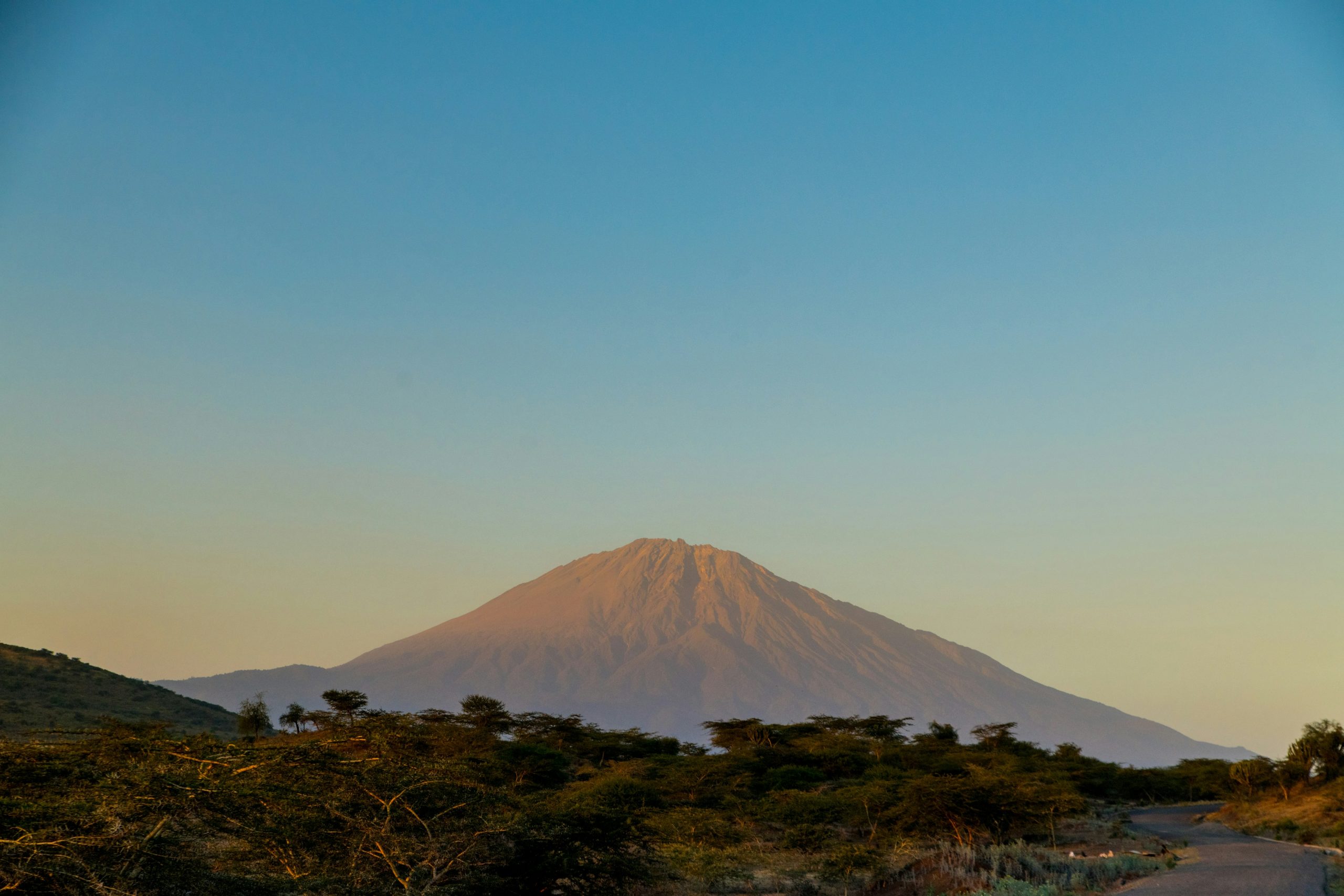
Mount Meru and the Meru Crater. Tanzania’s second-highest mountain dominates the western side of the park. Its eastern slopes are covered in montane forest, and its summit crater features a sheer inner wall and an ash cone, the result of past volcanic activity. Even if you do not climb, the forest on the lower slopes is beautiful to explore.
Tululusia Waterfall. A short walk through the forest on the lower slopes of Mount Meru leads to this pretty waterfall, and the walk often passes giraffes and buffalo along the way.
Wildlife in Arusha National Park
Arusha National Park does not offer the big predator action of the Serengeti, but it has plenty of wildlife and some specialities that are hard to see elsewhere on the northern circuit.
- Black-and-white colobus monkeys: the park is one of the best places in northern Tanzania to see them, leaping through the forest canopy with their long white tails.
- Giraffes: the park has a good population of Masai giraffes, often seen in the open glades.
- Buffalo, zebra and antelopes: including waterbuck, bushbuck, red and grey duikers, and dik-diks.
- Hippos: found in the Momella Lakes.
- Elephants: present, particularly in the forest, but not often seen.
- Predators: leopards and spotted hyenas live in the park but are elusive. There are no resident lions, which is one reason walking safaris are possible.
- Birds: around 400 bird species have been recorded, including flamingos, Hartlaub’s turaco, narina trogon, silvery-cheeked hornbills and many forest and water birds.
Things to Do in Arusha National Park
Game drives. A half-day or full-day game drive takes in Ngurdoto Crater, the Momella Lakes and the forest and glades between them.
Walking safaris. Guided walks with an armed park ranger let you explore on foot, getting close to giraffes, zebras and buffalo and noticing the smaller details of the bush, such as tracks, plants and insects. Walks on the lower slopes of Mount Meru, including to Tululusia Waterfall, are particularly rewarding.
Canoeing on the Momella Lakes. Paddling a canoe on Small Momella Lake is a peaceful way to see water birds, hippos at a safe distance and animals coming to drink on the shore, with Mount Meru and Kilimanjaro as a backdrop on clear days.
Birdwatching. With forest, lake and grassland habitats close together, the park is excellent for birding in a short time.
Picnics with a view. Designated picnic sites, including spots overlooking the lakes and the crater, make good lunch stops.
Climbing Mount Meru
At 4,566 metres, Mount Meru is the fifth-highest mountain in Africa and one of the most rewarding climbs in East Africa. The standard route, from Momella Gate, usually takes three or four days. It begins with a walk through grassland and forest, accompanied by an armed ranger because of the wildlife, past giraffes and buffalo and the famous fig tree arch. The trail climbs to Miriakamba Hut and then Saddle Hut, with an optional side trip to Little Meru. The summit push starts around midnight and follows a narrow ridge along the rim of the crater to Socialist Peak, with dramatic views into the crater and across to Kilimanjaro as the sun rises.
The climb is non-technical but challenging, with some steep and exposed sections near the summit. Accommodation is in mountain huts. Mount Meru is often climbed as acclimatisation before climbing Mount Kilimanjaro, and many trekkers consider it one of the most beautiful mountains in Africa in its own right. As with any high-altitude trek, walk slowly, drink plenty of water and follow your guide’s advice about altitude.
Best Time to Visit Arusha National Park
The park can be visited all year round. The dry season, from June to October, offers the best game viewing and the clearest views of Mount Meru and Kilimanjaro, while January and February are also good. These are also the best months to climb Mount Meru. The long rains, from March to May, bring heavier rain and muddier trails, and the mountain is often hidden in cloud, though the forest is lush and there are few visitors. The short rains, around November, bring brief showers and migrant birds. See our guide to the best time to visit East Africa for more.
How to Get There
Arusha National Park is roughly a 40-minute to one-hour drive from Arusha town and about an hour from Kilimanjaro International Airport. Most visitors travel by safari vehicle with a guide, making it easy to visit on a day trip. Make sure you have your visa sorted before travelling; our guide to the Uganda and Tanzania eVisa application explains the process.
Where to Stay
There are a few lodges and campsites inside or right on the edge of the park, some with views of Mount Meru or the Momella Lakes. Many visitors stay in Arusha town or in the lodges and coffee estates around Usa River, between Arusha and the airport, which range from comfortable mid-range hotels to boutique lodges in lush gardens.
How Much Does a Visit Cost?
Your costs will include TANAPA park entry fees, a vehicle and guide, and fees for activities such as walking safaris, canoeing or the Mount Meru climb, which include ranger, guide and hut fees. Because the park is close to Arusha, a day trip can be one of the more affordable safari experiences in northern Tanzania. For help budgeting a wider trip, see our guide to East Africa safari costs and our advice on how to choose a Tanzania safari package.
Fitting Arusha National Park Into Your Safari
- First day after arrival: a gentle introduction to safari before heading to the bigger parks, without a long drive on day one.
- Last day before departure: a half-day game drive or canoe trip that fits around an evening flight from Kilimanjaro International Airport.
- With the northern circuit: combine Arusha National Park with Tarangire, Lake Manyara, the Ngorongoro Crater and the Serengeti; our Serengeti migration calendar helps you time your visit.
- With Kilimanjaro: climb Mount Meru as acclimatisation before Kilimanjaro, or relax with a game drive after your climb.
- With culture: visit Maasai communities or the coffee farms around Arusha; see our guide to Maasai culture and village visits.
- With the coast: end your trip on the beaches of Zanzibar; see our guide to combining Zanzibar and safari.
Tips for Visiting
- Bring a warm layer: mornings and evenings on the slopes of Mount Meru can be cool.
- Wear sturdy walking shoes if you plan to do a walking safari.
- Go early for the best chance of clear mountain views before clouds build.
- Bring binoculars for colobus monkeys and birds in the canopy.
- Check health requirements before you travel; see our guide to East Africa vaccinations and malaria.
Tanzania Travel Guides and Itineraries
- Tanzania, Africa’s leading safari destination: 2026–2027 travel guide
- The ultimate best of Tanzania attractions
- 10-day Tanzania birding safari: Mkomazi, Arusha, Manyara and Tarangire
- 9-day Usambara Mountains, Lushoto and Mkomazi safari
- 12-day Kenya, Tanzania and Uganda grand safari
- 28-day game parks, gorillas and Zanzibar safari
Ready to plan your safari? Read our step-by-step guide on how to book a safari with Kuku Safaris.
Frequently Asked Questions
Is Arusha National Park worth visiting? Yes, especially if you have a spare day at the start or end of your trip. Its variety of landscapes, colobus monkeys, walking safaris and canoeing make it a refreshing contrast to the larger parks.
Are there lions in Arusha National Park? No, there are no resident lions. Leopards and hyenas live there but are rarely seen.
Can I do Arusha National Park as a day trip? Yes. A day trip from Arusha or Moshi is easy and is one of the most popular ways to visit.
How long does it take to climb Mount Meru? Usually three or four days, with nights in mountain huts.
Is the park good for families? Yes. Short drives, canoeing, monkeys and giraffes make it a family favourite; see our guide to family safaris in East Africa.
Plan Your Visit
Arusha National Park is proof that great safari experiences do not always require long drives or huge parks. Whether you canoe on the Momella Lakes, walk among giraffes, peer into Ngurdoto Crater or climb to the summit of Mount Meru, it makes a memorable addition to any northern Tanzania itinerary. Kuku Safaris can include the park in your safari, arrange a Mount Meru climb with experienced guides and combine it all with the Serengeti, Ngorongoro, Kilimanjaro or Zanzibar. Get in touch to start planning.