
Jozani Forest Zanzibar Guide: Red Colobus Monkeys, Mangroves and Nature
Most visitors come to Zanzibar for its white beaches, turquoise water and the historic alleys of Stone Town. But in the centre of the island lies a very different world: a shady forest of tall trees, palms and ferns, fringed by mangroves, where some of Africa’s rarest monkeys leap through the branches. Jozani Forest, part of Jozani Chwaka Bay National Park, is the only national park on Zanzibar and the best place in the world to see the endemic Zanzibar red colobus. A visit makes a perfect half-day break from the beach and adds a wildlife highlight to any Zanzibar holiday.
This complete guide covers the red colobus and other wildlife, the forest and mangrove trails, conservation efforts, the best time to visit and how to combine Jozani with other experiences on the island.
Jozani at a Glance
- Location: South-central Unguja (Zanzibar Island), around 35 kilometres south-east of Stone Town.
- Status: Zanzibar’s only national park, established in 2004, covering around 50 square kilometres of forest, mangroves and coastal habitat around Chwaka Bay.
- Known for: The endemic Zanzibar red colobus, mangrove boardwalks and groundwater forest.
- Visit length: Usually around two hours, often combined with a spice tour or a beach day.
The Zanzibar Red Colobus
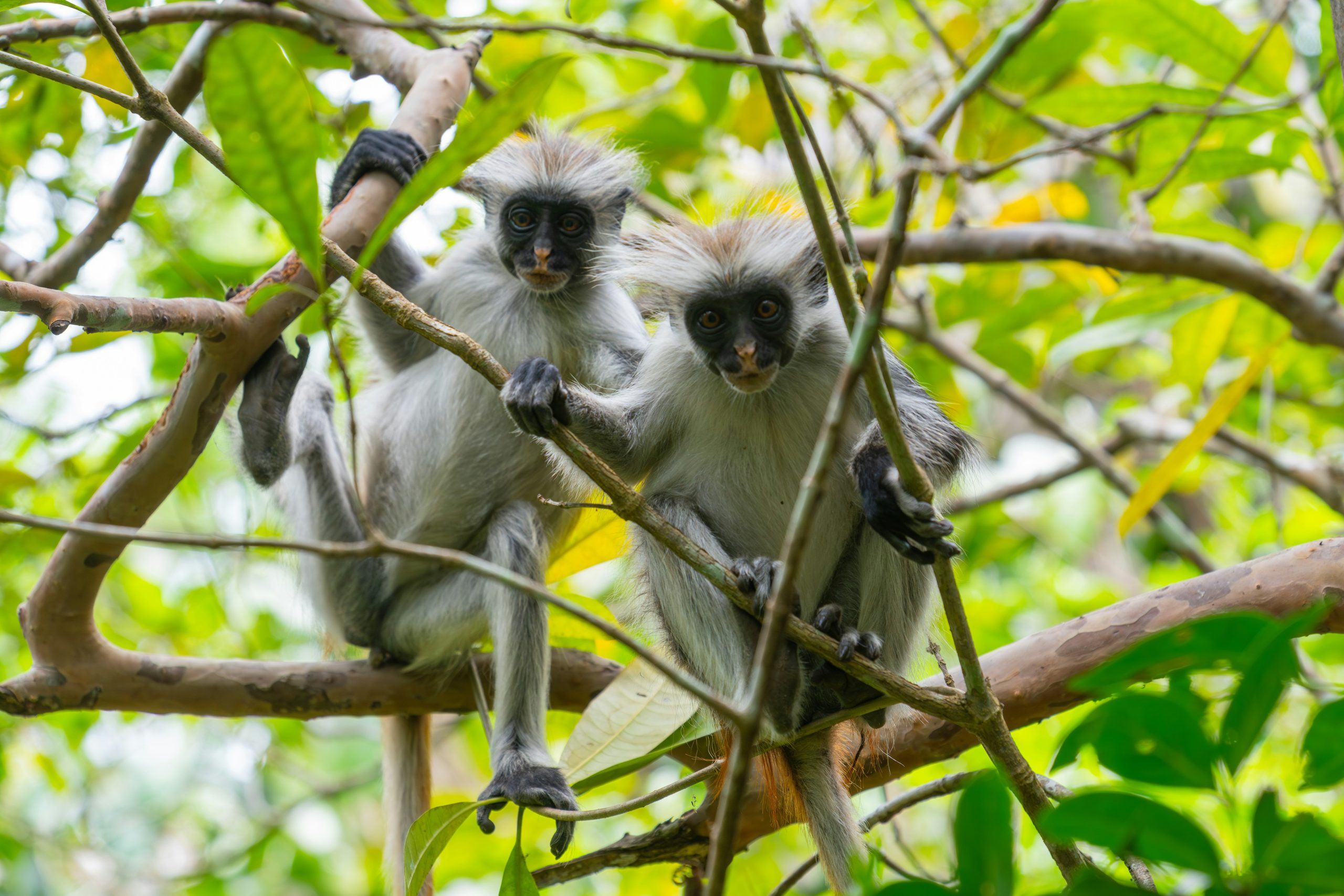
The star of Jozani is the Zanzibar red colobus, also known as Kirk’s red colobus after Sir John Kirk, a nineteenth-century British consul and naturalist in Zanzibar. Found only on Zanzibar, it is one of Africa’s rarest primates and is classified as endangered. These striking monkeys have a black and red coat, a pale face and a cheeky crest of white hair, and they live in social groups that are often seen feeding, grooming and playing in the trees.
Some groups near the park entrance are habituated to people and can be watched at close range, providing fantastic photo opportunities. Red colobus eat leaves, seeds, flowers and unripe fruit, and their specialised stomachs allow them to digest leaves that other animals cannot. Local people once called them “poison monkeys”, believing their strong smell harmed crops and trees, but attitudes have changed as tourism has shown their value to the community.
Visitors should keep a distance of a few metres, never feed or touch the monkeys and avoid flash photography. Like all primates, red colobus are vulnerable to human diseases.
Other Wildlife in Jozani
- Sykes’ monkeys: a local subspecies of blue monkey with a white throat.
- Aders’ duiker: a small, rare forest antelope, very elusive.
- Bushbabies and tree hyraxes: mostly active at night.
- Birds: more than 40 species, including the Fischer’s turaco, African paradise flycatcher, crowned hornbill and various sunbirds.
- Butterflies, reptiles and crabs: abundant in the forest and mangroves.
Jozani was also once home to the Zanzibar leopard, a distinctive island form of leopard. It is widely believed to be extinct, though occasional unconfirmed reports continue to circulate.
The Forest Trail
A guided nature trail leads through Jozani’s groundwater forest, a type of forest that grows on land where the water table is close to the surface. Tall mahogany and fig trees, wild date palms and ferns create a cool, shady environment. Guides point out medicinal plants, strangler figs, termite mounds and other features, and explain how the forest supports local communities. The trail is mostly flat and easy.
The Mangrove Boardwalk
A short drive or walk from the forest, a wooden boardwalk winds through the mangroves of Chwaka Bay. Mangroves are trees adapted to salty, tidal water, and they play a vital role in protecting the coast from erosion, providing nurseries for fish and storing carbon. From the boardwalk, you can see their tangled roots, crabs scuttling across the mud and fish in the shallow water. Guides explain the different types of mangroves and why they matter.
Conservation and Community
Jozani’s forests have been under pressure from farming, charcoal production and population growth. Since the national park was established, conservation programmes have worked with local communities to reduce these pressures and share the benefits of tourism. A portion of entry fees supports community development projects in surrounding villages, such as schools, health care and water, which helps build local support for protecting the forest and its monkeys. By visiting, you contribute directly to these efforts.
Best Time to Visit
Jozani can be visited all year. The drier months, from June to October and December to February, are the most comfortable. During the long rains, from March to May, trails can be wet, but the forest is lush and quiet. Visiting early in the morning or late in the afternoon is best, as the monkeys are more active and it is cooler. See our guide to the best time to visit East Africa.
How to Get to Jozani
Jozani lies on the main road between Stone Town and the south-eastern beaches, such as Paje, Jambiani and Michamvi, around 45 minutes to an hour from Stone Town. Many visitors stop at Jozani on the way to or from the east coast. Organised tours, private drivers and taxis can easily include a visit.
Combining Jozani With Other Zanzibar Experiences
- Spice tour: visit a spice farm to see cloves, nutmeg, cinnamon, vanilla and pepper growing.
- Stone Town: explore the UNESCO-listed old town’s alleys, markets, carved doors and history.
- Beaches: continue to the east or south coast for swimming, kitesurfing and relaxing.
- Dolphins and snorkelling: boat trips from the south coast offer snorkelling and dolphin watching.
- Other islands: extend your trip to Pemba or Mafia Island.
For a full bush-and-beach trip, read our guide to combining Zanzibar and safari and see our 12-day Tanzania safari and Zanzibar beach holiday. Safari add-ons that pair well with Zanzibar include Saadani, Nyerere and the northern circuit.
Tips for Visiting
- Wear comfortable walking shoes and light, breathable clothing.
- Bring insect repellent, water and a camera.
- Keep your distance from the monkeys and never feed them.
- Hire an official park guide at the entrance, as guided visits are required.
- Check health advice before travelling; see our guide to East Africa vaccinations and malaria.
Frequently Asked Questions
Are red colobus monkeys only found in Zanzibar? The Zanzibar red colobus is endemic to Zanzibar. Other species of red colobus live on mainland Africa, including in Uganda’s Kibale Forest.
How long does a Jozani visit take? Around two hours, including the forest trail and mangrove boardwalk.
Is Jozani suitable for children? Yes. The trails are easy, and children love watching the monkeys; see our guide to family safaris.
Is Jozani worth visiting? Absolutely. It offers a rare wildlife experience on an island better known for beaches, and your visit supports conservation and local communities.
Plan Your Zanzibar Trip
Jozani Forest offers a memorable encounter with one of Africa’s rarest monkeys, just a short drive from Zanzibar’s beaches and Stone Town. Kuku Safaris can include Jozani in your Zanzibar itinerary alongside spice tours, Stone Town walks and a Tanzania safari. To learn more about the island’s heritage, see the UNESCO listing for Stone Town of Zanzibar, read our advice on how to choose a Tanzania safari package, and get in touch to start planning.