
Animals of Uganda: 30 Amazing Species to See on Safari
Uganda may be smaller than many of Africa’s famous safari destinations, but its wildlife is astonishingly diverse. Sitting where the East African savannah meets the West African rainforest, and stretching from the shores of Lake Victoria to glaciated mountains, Uganda is home to more than 340 mammal species and over 1,000 bird species. It is one of the few places on Earth where you can trek mountain gorillas in the morning and watch lions on the savannah a day later.
Here are 30 of the most remarkable animals of Uganda, with where to see them and tips for spotting them on safari.
Primates
1. Mountain gorilla. Uganda is home to around half of the world’s mountain gorillas, found in Bwindi Impenetrable and Mgahinga Gorilla national parks. These gentle giants live in family groups led by a silverback and can be visited on guided treks. Where: Bwindi, Mgahinga. Read our mountain gorilla facts.
2. Chimpanzee. Our closest living relatives are found in several forests across western Uganda, with Kibale Forest offering some of the most reliable tracking in Africa. Where: Kibale, Budongo, Kyambura Gorge, Kalinzu. See where to see chimpanzees in Uganda.
3. Golden monkey. An endangered monkey with a golden-orange coat, living in the bamboo forests of the Virunga volcanoes. Where: Mgahinga. See our golden monkey trekking guide.
4. Black-and-white colobus. Elegant leaf-eating monkeys with flowing white tails and capes, often seen leaping between trees. Where: Kibale, Bigodi, Budongo, Queen Elizabeth, Mount Elgon.
5. Red colobus. A rarer colobus with a reddish cap, a favourite prey of chimpanzees in Kibale. Where: Kibale.
6. L’Hoest’s monkey. A shy forest monkey with a distinctive white beard, often seen on the forest floor. Where: Kibale, Bwindi.
7. Olive baboon. Large, sociable and often seen along roads and in savannah parks. Where: Murchison Falls, Queen Elizabeth, Lake Mburo.
Big Cats and Predators
8. Lion. Uganda’s lions are found in several savannah parks, and the lions of Ishasha are famous for climbing fig trees. Where: Queen Elizabeth, Murchison Falls, Kidepo Valley. See our guide to the tree-climbing lions of Ishasha.
9. Leopard. Elusive and beautiful, leopards are most often seen on night drives or early in the morning. Where: Queen Elizabeth, Murchison Falls, Lake Mburo, Kidepo.
10. Cheetah. In Uganda, cheetahs are found almost exclusively in remote Kidepo Valley. Where: Kidepo Valley. See our Kidepo guide.
11. Spotted hyena. Powerful scavengers and hunters, often heard whooping at night. Where: Queen Elizabeth, Murchison Falls, Kidepo, Lake Mburo.
12. Side-striped jackal and serval. Smaller predators sometimes seen on game drives, especially at dawn and dusk. Where: Murchison Falls, Queen Elizabeth, Kidepo.
Large Mammals
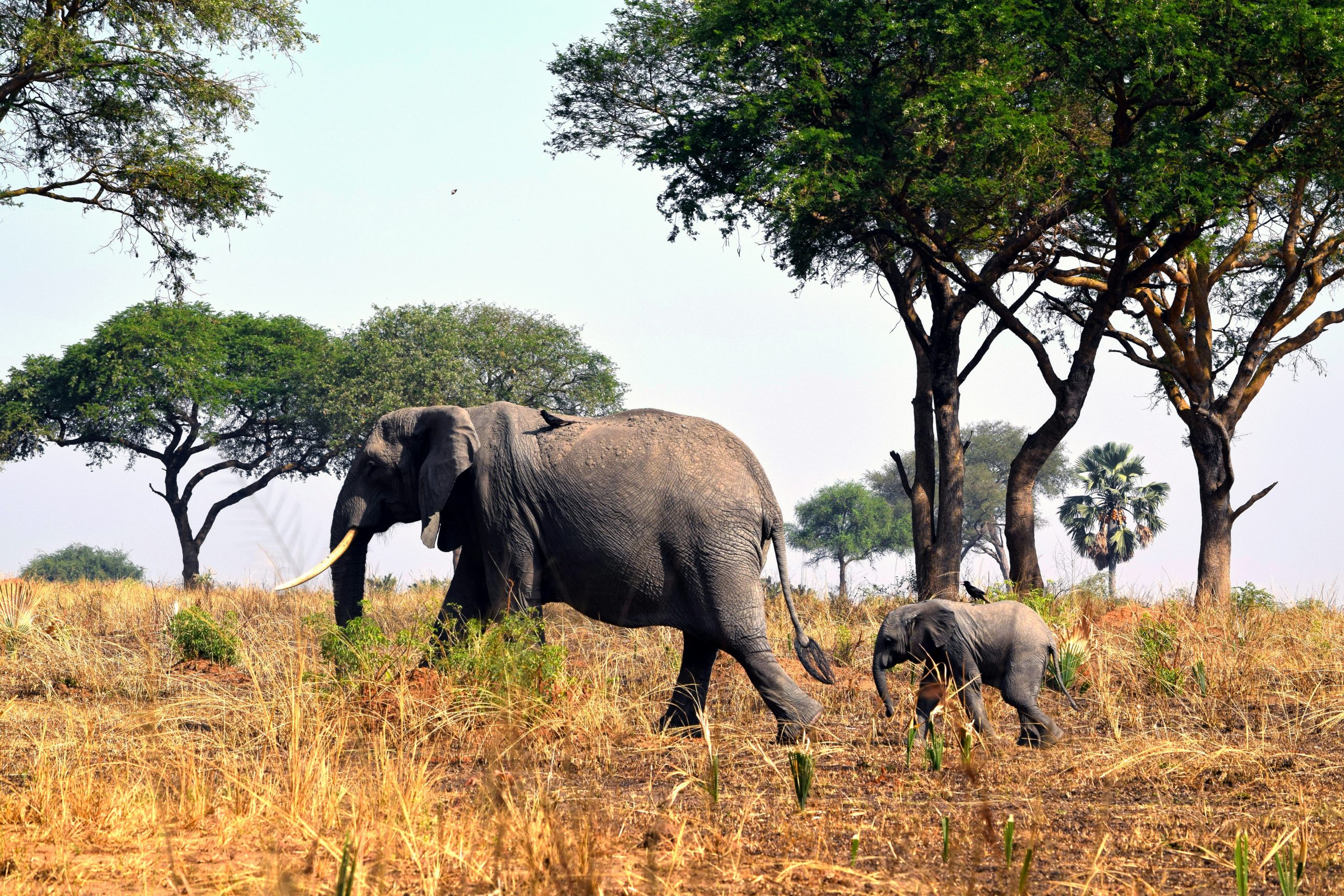
13. African elephant. Uganda’s elephant numbers have recovered strongly in recent decades. Savannah elephants are common in the larger parks, while forest elephants live in Kibale and Bwindi. Where: Queen Elizabeth, Murchison Falls, Kidepo.
14. African buffalo. Often seen in large herds, buffalo are one of the Big Five. Where: Queen Elizabeth, Murchison Falls, Kidepo, Lake Mburo.
15. Hippopotamus. Uganda has some of the largest concentrations of hippos in Africa, especially along the Kazinga Channel and the Nile. Where: Queen Elizabeth, Murchison Falls, Lake Mburo. See our Kazinga Channel boat cruise guide.
16. Southern white rhino. Rhinos were wiped out in Uganda but are being bred at Ziwa Rhino Sanctuary, where you can track them on foot. Where: Ziwa. See our Ziwa guide.
17. Rothschild’s giraffe. One of the most threatened giraffe subspecies, recognisable by its white lower legs. Where: Murchison Falls, Kidepo, Lake Mburo.
18. Plains zebra. Found in Lake Mburo and Kidepo Valley. Where: Lake Mburo, Kidepo.
19. Giant forest hog. The world’s largest wild pig, sometimes seen in Queen Elizabeth. Where: Queen Elizabeth, Bwindi.
Antelopes
20. Uganda kob. The national antelope, featured on Uganda’s coat of arms. Large herds graze the savannahs. Where: Queen Elizabeth, Murchison Falls.
21. Eland. Africa’s largest antelope. Where: Lake Mburo, Kidepo.
22. Topi. A handsome antelope with a glossy coat and dark patches. Where: Queen Elizabeth (Ishasha), Lake Mburo.
23. Jackson’s hartebeest. A long-faced antelope of the northern savannahs. Where: Murchison Falls, Kidepo.
24. Impala and waterbuck. Impalas are found in Lake Mburo, while waterbuck are common near water in many parks. Where: Lake Mburo, Queen Elizabeth, Murchison Falls.
25. Sitatunga. A shy, swamp-dwelling antelope with splayed hooves for walking on marshy ground. Where: Lake Mburo, Bigodi Wetland.
Birds and Reptiles
26. Shoebill. A prehistoric-looking bird standing over a metre tall, Uganda’s most sought-after bird. Where: Mabamba Swamp, Murchison Falls delta, Lake Mburo. See our shoebill guide.
27. Grey crowned crane. Uganda’s national bird, featured on its flag. Where: Queen Elizabeth, Lake Mburo, wetlands across the country.
28. Great blue turaco. A spectacular, turkey-sized forest bird. Where: Kibale, Bigodi, Budongo.
29. African fish eagle. Recognisable by its white head and haunting call. Where: lakes and rivers across Uganda.
30. Nile crocodile. Huge crocodiles bask along the Nile below Murchison Falls and on the Kazinga Channel. Where: Murchison Falls, Queen Elizabeth.
Can You See the Big Five in Uganda?
Yes. Lions, leopards, elephants and buffalo are found in Uganda’s main savannah parks, and rhinos can be tracked at Ziwa Rhino Sanctuary on the way to Murchison Falls. A well-planned itinerary can include all five, along with gorillas and chimpanzees, which many visitors consider even more special. Read our guide to the Uganda Big Five safari.
Where to See the Most Wildlife
- Queen Elizabeth National Park: the greatest variety, from lions and elephants to hippos and chimpanzees.
- Murchison Falls National Park: giraffes, elephants, lions and the Nile’s hippos and crocodiles.
- Kidepo Valley: cheetahs, ostriches and species found nowhere else in Uganda.
- Bwindi and Mgahinga: mountain gorillas and golden monkeys.
- Kibale: chimpanzees and 12 other primate species.
- Lake Mburo: zebras, elands, impalas and horseback safaris.
Read our guide to Uganda’s 10 national parks.
Tips for Spotting Wildlife
- Go out early in the morning and late in the afternoon, when animals are most active.
- Travel with an experienced guide who knows animal behaviour and where to look.
- Bring good binoculars for each traveller.
- Be patient and quiet at sightings.
- Combine game drives, boat cruises and walks to see different species.
- Visit during the dry seasons for easier game viewing.
Birdwatching in Uganda
With more than 1,000 recorded bird species, Uganda is one of the best birding destinations in Africa. Highlights include the shoebill, Albertine Rift endemics in Bwindi and the Rwenzoris, the great blue turaco, African green broadbill, Ross’s turaco and a huge variety of kingfishers, sunbirds and raptors. Read our guide to birdwatching in Uganda.
Wildlife Conservation in Uganda
Uganda’s wildlife has made a remarkable recovery since the 1980s, when poaching and conflict devastated animal populations. Elephant and buffalo numbers have risen, rhinos are being bred for reintroduction and the mountain gorilla population has grown. Challenges remain, including habitat loss, human-wildlife conflict and poaching, but tourism plays a key role in funding conservation and giving communities a stake in protecting wildlife. Read about how your gorilla permit supports conservation and visit the Uganda Wildlife Authority.
Why Uganda Has So Much Wildlife
Uganda’s extraordinary biodiversity is the result of its location and varied landscapes. The country sits where the dry savannahs of East Africa meet the moist rainforests of the Congo Basin, so species from both regions occur here. Its altitude ranges from around 600 metres along the Nile in the north to over 5,000 metres on the glaciated peaks of the Rwenzori Mountains, creating a wide range of habitats: lowland and montane rainforests, bamboo zones, savannah, woodland, wetlands, lakes and Afro-alpine moorland. The Albertine Rift, running along Uganda’s western border, is one of Africa’s most important biodiversity hotspots, with many species found nowhere else. All of this in a country smaller than many African nations makes Uganda one of the most rewarding wildlife destinations on the continent.
Lesser-Known Species Worth Looking For
- Bat-eared fox: a small fox with enormous ears, found in Kidepo Valley.
- Ostrich: in Uganda found only in Kidepo Valley.
- Oribi: a small, graceful antelope of the northern savannahs, common in Murchison Falls.
- Grey-cheeked mangabey: a forest monkey found in Kibale and Bigodi.
- Pottos and bushbabies: nocturnal primates seen on night walks in Kibale and elsewhere.
- Rwenzori turaco: a dazzling Albertine Rift endemic bird.
- African green broadbill: a rare bird found in Bwindi, sought after by birders.
- Jackson’s chameleon and other reptiles: fascinating smaller creatures found in highland forests.
Night Wildlife
Many of Uganda’s animals are most active at night. Guided night game drives in parks such as Lake Mburo and Queen Elizabeth, where permitted, offer chances to see leopards, hyenas, genets, civets, bushbabies and nightjars. Night forest walks in Kibale reveal pottos, bushbabies and fascinating insects and frogs. These activities add a whole new dimension to your safari and are well worth including.
Sample Wildlife Itinerary
To see the widest range of Uganda’s animals, a ten- to twelve-day safari might include Ziwa Rhino Sanctuary for rhinos, Murchison Falls for giraffes, elephants and the Nile’s hippos and crocodiles, Kibale for chimpanzees and monkeys, Queen Elizabeth for lions, the Kazinga Channel and tree-climbing lions, Bwindi for mountain gorillas and Lake Mburo for zebras, elands and impalas. Add Kidepo Valley by air for cheetahs and ostriches. See our 10-day gorilla trekking and Big Five safari and our 21-day ultimate Uganda tour.
Wildlife Photography Tips
Bring a zoom lens of at least 300mm for savannah wildlife and birds, and a fast lens for primates in dark forests. Shoot in the soft light of early morning and late afternoon, use a beanbag to steady your camera on the vehicle, and be patient: the best moments often come after waiting quietly at a sighting. Read our gorilla trekking photography tips.
Responsible Wildlife Viewing
Seeing Uganda’s animals in the wild is a privilege, and responsible behaviour helps protect them. Always follow your guide’s and rangers’ instructions. Keep a respectful distance and never try to attract an animal’s attention with noise or food. Stay in your vehicle on game drives unless told it is safe to get out. Respect park speed limits to avoid collisions with wildlife. Do not trek gorillas or chimpanzees if you are unwell, as they can catch human diseases. Never buy products made from wild animals, such as ivory, skins or bushmeat, which fuel poaching. Choose safari companies and lodges that support conservation and local communities, and take all litter with you.
Best Time to See Uganda’s Animals
The dry seasons, from June to September and December to February, are generally the best for game viewing, as animals gather near water and vegetation is thinner. Gorilla and chimpanzee tracking are possible year-round. The wet seasons bring newborn animals, lush scenery and outstanding birding, with migratory species present from around November to April. See our guides to the best time to visit Uganda and the Uganda green season.
Good to know: keeping a wildlife checklist is a fun way to record your sightings, especially for families and keen naturalists. Ask your guide to help you identify species, and you may be surprised by how many mammals, birds and reptiles you see over the course of a week in Uganda.
Above all, remember that wildlife sightings are never guaranteed: every game drive and trek is different, which is part of what makes a safari so exciting.
Frequently Asked Questions
What is Uganda’s national animal? The Uganda kob is the national antelope, and the grey crowned crane is the national bird.
Where can I see gorillas and lions on the same trip? Combine Bwindi with Queen Elizabeth National Park, which are connected via Ishasha.
Are there rhinos in Uganda’s national parks? Not currently; rhinos are found at Ziwa Rhino Sanctuary.
How many primate species live in Uganda? Uganda has around 20 primate species, with 13 in Kibale alone.
See Uganda’s Wildlife With Kuku Safaris
Our expert guides know where to find Uganda’s most remarkable animals and will design a safari around the species you most want to see. Read Uganda’s most fascinating wildlife experiences, visit the Uganda Tourism Board and see how to book with Kuku Safaris.