
Uganda’s 10 National Parks Compared: Which Should You Visit?
Uganda packs an extraordinary range of habitats into a country roughly the size of the United Kingdom. Its ten national parks protect misty rainforests where mountain gorillas roam, glaciated peaks on the equator, vast savannahs filled with elephants and lions, a waterfall where the Nile explodes through a narrow gorge, papyrus swamps, hot springs and remote wilderness on the border with South Sudan and Kenya. Each park has its own character, and choosing which to visit is one of the most exciting parts of planning a Uganda safari.
This guide compares all ten national parks in Uganda, with their highlights, wildlife, activities, access and the travellers they suit best, so you can build the perfect itinerary. The parks are managed by the Uganda Wildlife Authority, which also oversees wildlife reserves and sanctuaries across the country.
Uganda’s National Parks at a Glance
- Bwindi Impenetrable: mountain gorillas, rainforest, birds.
- Mgahinga Gorilla: gorillas, golden monkeys, volcano hikes.
- Kibale Forest: chimpanzees and 13 primate species.
- Queen Elizabeth: savannah, Kazinga Channel, tree-climbing lions.
- Murchison Falls: the falls, the Nile, giraffes, big game.
- Kidepo Valley: remote wilderness, cheetahs, dramatic scenery.
- Lake Mburo: zebras, elands, horseback and walking safaris.
- Rwenzori Mountains: glaciers, multi-day treks.
- Semuliki: lowland rainforest, hot springs, Congo Basin birds.
- Mount Elgon: extinct volcano, caves, waterfalls, hiking.
1. Bwindi Impenetrable National Park
Bwindi is Uganda’s most famous park and a UNESCO World Heritage Site. Its ancient, steep rainforest in the south-west shelters roughly half of the world’s mountain gorillas, with many habituated families that can be visited from four trekking sectors: Buhoma, Ruhija, Rushaga and Nkuringo. Bwindi is also a birding hotspot, with many Albertine Rift endemics. Highlights: gorilla trekking, the gorilla habituation experience, Batwa cultural experiences and forest walks. Best for: everyone who wants to see gorillas. Read our Bwindi gorilla trekking guide.
2. Mgahinga Gorilla National Park
Uganda’s smallest national park sits in the far south-west, on the slopes of three of the Virunga volcanoes: Muhavura, Gahinga and Sabyinyo. It forms part of a transboundary conservation area with Rwanda and the Democratic Republic of Congo. Mgahinga has one habituated gorilla family and is the best place in Uganda for golden monkey trekking. Highlights: gorilla trekking, golden monkeys, volcano summit hikes and the Batwa Trail. Best for: travellers combining gorillas with golden monkeys and hiking. Read our Mgahinga guide.
3. Kibale Forest National Park
Kibale, near Fort Portal in western Uganda, is known as the primate capital of the world. Its moist tropical forest is home to a large chimpanzee population and 12 other primate species, including red colobus, L’Hoest’s monkeys and grey-cheeked mangabeys. Nearby are the Bigodi Wetland Sanctuary and the beautiful Fort Portal crater lakes. Highlights: chimpanzee tracking, the chimpanzee habituation experience, birding and crater-lake walks. Best for: primate lovers and anyone wanting chimps on a western circuit. Read our guide to chimpanzee tracking in Kibale.
4. Queen Elizabeth National Park
Uganda’s most visited savannah park covers almost 2,000 square kilometres between Lake George and Lake Edward. It offers remarkable diversity: open savannah, the wildlife-rich Kazinga Channel, the forested Kyambura Gorge, the Maramagambo Forest and volcanic explosion craters. Wildlife includes elephants, buffalo, lions, leopards, hippos, Uganda kob and more than 600 bird species. Highlights: Kazinga Channel boat cruise, Kasenyi game drives, Ishasha’s tree-climbing lions and chimpanzees in Kyambura Gorge. Best for: classic game viewing on a western circuit. Read our Queen Elizabeth safari guide and our article on the tree-climbing lions of Ishasha.
5. Murchison Falls National Park
Uganda’s largest national park, covering around 3,840 square kilometres in the north-west, is named after the dramatic waterfall where the Victoria Nile squeezes through a gorge just seven metres wide. North of the river, rolling grasslands are home to Rothschild’s giraffes, elephants, buffalo, lions, Jackson’s hartebeest and Uganda kob. The Nile delta at Lake Albert is a good place to look for the shoebill. Highlights: boat trip to the foot of the falls, hike to the top of the falls, game drives, delta cruise and chimpanzee tracking in nearby Budongo Forest. Best for: big game, scenery and travellers starting from Kampala. Read our Murchison Falls safari guide.
6. Kidepo Valley National Park
Tucked into Uganda’s far north-east, near the borders with South Sudan and Kenya, Kidepo Valley is one of Africa’s most beautiful and remote wilderness areas. Its wide valleys, framed by rugged mountains, are home to large buffalo herds, elephants, lions, leopards, cheetahs, zebras, giraffes and species found nowhere else in Uganda, such as the ostrich and bat-eared fox. Few visitors make it here, so you often have sightings to yourself. Highlights: game drives in the Narus Valley, walking safaris and visits to the Karamojong people. Best for: adventurous travellers and repeat visitors. Read our Kidepo Valley guide.
7. Lake Mburo National Park
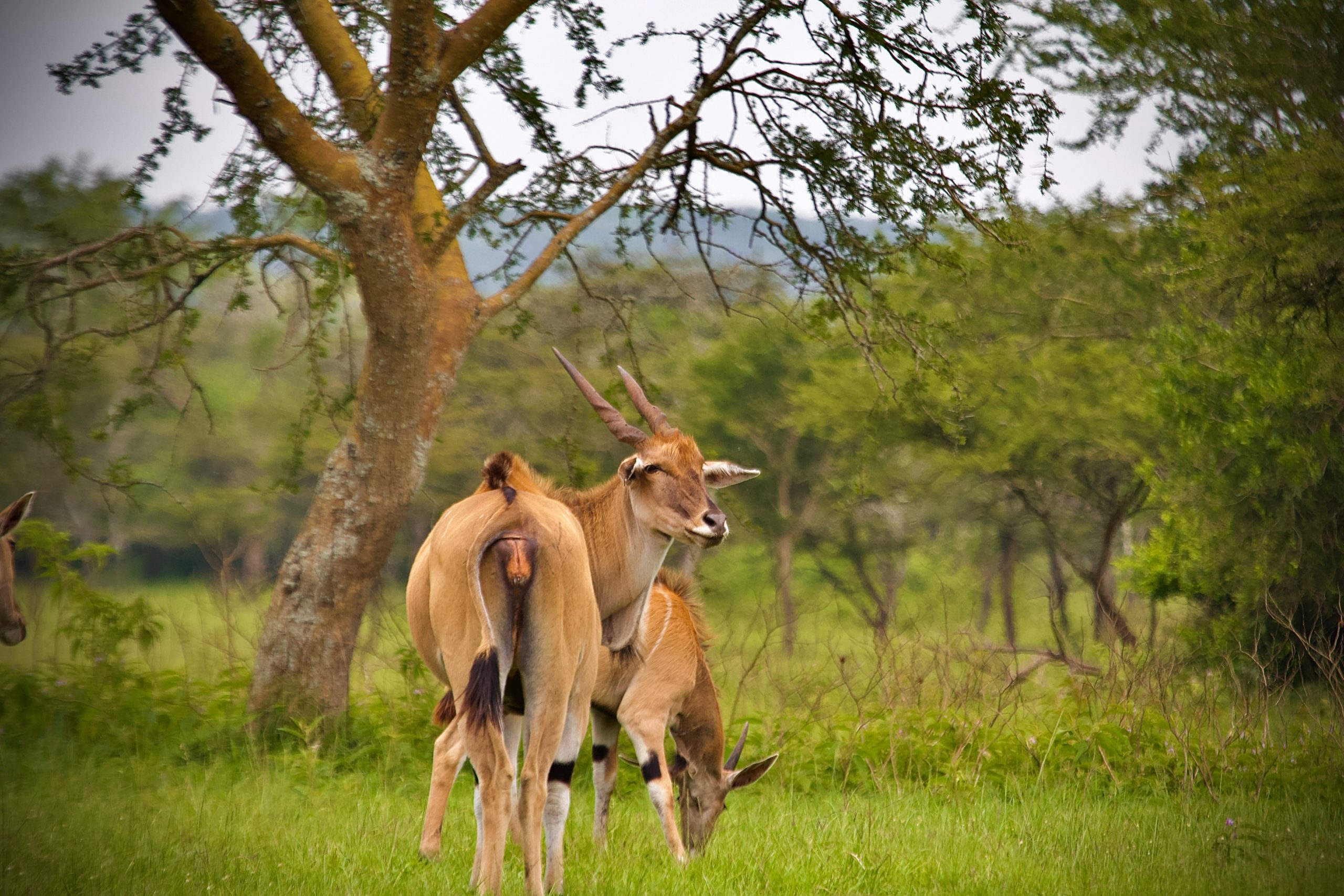
The closest savannah park to Kampala, about four hours’ drive away, Lake Mburo is a compact park of rolling hills, acacia woodland and lakes. It is the only park in western Uganda with impalas and the best place in the country to see elands, as well as zebras, topi, buffalo and giraffes. Because large predators are scarce, walking, cycling and horseback safaris are possible. Highlights: horseback safaris, boat trips on Lake Mburo, walking safaris and night game drives. Best for: a stopover on the way to Bwindi, short trips and active safaris. Read our Lake Mburo guide.
8. Rwenzori Mountains National Park
The legendary Mountains of the Moon rise on the border with the Democratic Republic of Congo and are a UNESCO World Heritage Site. Margherita Peak, at 5,109 metres, is the third-highest point in Africa and is capped by glaciers. The mountains are famous for their otherworldly vegetation zones, with giant lobelias and groundsels. Highlights: multi-day treks to the peaks, shorter day hikes in the foothills and cultural visits with the Bakonzo people. Best for: serious hikers and mountaineers. Read our Rwenzori hiking guide.
9. Semuliki National Park
Semuliki, in the far west near the DRC border, protects a lowland tropical rainforest that is an eastern extension of the great Congo Basin forest. It is a paradise for birders, with many species found nowhere else in East Africa, and is famous for the Sempaya hot springs, where boiling water bubbles up from the ground. The nearby Toro-Semliki Wildlife Reserve adds savannah wildlife and chimpanzees. Highlights: Sempaya hot springs, birding, forest walks and Batwa cultural visits. Best for: birders and travellers seeking something off the beaten track. Read our Semuliki guide.
10. Mount Elgon National Park
In eastern Uganda, on the border with Kenya, Mount Elgon is an extinct volcano with one of the largest volcanic bases in the world. Its slopes are covered in forest, bamboo and moorland, and its summit, Wagagai Peak, sits on the rim of a huge caldera. The park is known for caves, waterfalls and excellent hiking. Nearby Sipi Falls is one of Uganda’s most beautiful waterfalls and a centre for coffee tours. Highlights: multi-day treks to the caldera, Sipi Falls hikes, caves and coffee farm visits. Best for: hikers and travellers exploring eastern Uganda. Read our guides to Mount Elgon and Sipi Falls.
Which Parks Should You Visit?
- First-time visitors, 7–10 days: Kibale, Queen Elizabeth and Bwindi, with Lake Mburo or Murchison Falls if time allows.
- Short gorilla trips: Bwindi or Mgahinga, flying in from Entebbe.
- Big game and the Big Five: Murchison Falls with Ziwa Rhino Sanctuary, plus Queen Elizabeth and Kidepo.
- Birders: Bwindi, Kibale, Semuliki, Queen Elizabeth and Murchison Falls.
- Hikers: Rwenzori Mountains, Mount Elgon and Mgahinga’s volcanoes.
- Remote wilderness: Kidepo Valley.
Beyond the National Parks
Uganda’s protected areas also include wildlife reserves, forest reserves and sanctuaries well worth visiting: Ziwa Rhino Sanctuary for rhino tracking, Budongo and Kalinzu forests for chimpanzees, the Mabamba Swamp for the shoebill and the Toro-Semliki Wildlife Reserve. Lakes such as Bunyonyi and Mutanda and the source of the Nile at Jinja add relaxation and adventure. Read our guides to Ziwa Rhino Sanctuary, where to see the shoebill and top safari attractions in Uganda.
Park Fees and Permits
Each national park charges a daily entry fee, with different rates for foreign non-residents, foreign residents and East African citizens. Activities such as gorilla trekking, chimpanzee tracking, boat cruises and guided walks have separate fees. A standard gorilla trekking permit currently costs USD 800 for foreign non-residents and includes park entry for that day. Check current tariffs with the Uganda Wildlife Authority, and read our guides to gorilla permit prices and Uganda safari costs.
Best Time to Visit Uganda’s Parks
The dry seasons from June to September and December to February are best for game viewing and trekking. The rainy seasons bring lush landscapes, excellent birding and fewer visitors. Hikers in the Rwenzori and on Mount Elgon should aim for the drier months. See our guide to the best time to visit Uganda.
How to Combine the Parks: Classic Routes
The western circuit. The most popular route links Kibale, Queen Elizabeth and Bwindi, often starting or ending at Lake Mburo. These parks lie relatively close together along the Albertine Rift, so drives between them are manageable, and the route combines chimpanzees, savannah wildlife and gorillas. Adding Murchison Falls at the start creates a complete loop of western Uganda. See our 10-day best of Uganda safari.
The southern gorilla route. Bwindi’s southern sectors and Mgahinga are close to each other and to the Rwandan border, making it easy to combine gorilla trekking, golden monkey trekking and lake stays at Mutanda and Bunyonyi.
The northern wilderness route. Murchison Falls and Kidepo Valley can be combined for an adventurous safari through Uganda’s north, ideally with a flight to or from Kidepo to save time. See our 12-day Kidepo and Karamoja safari.
The eastern route. Jinja, Sipi Falls and Mount Elgon make a great short trip from Kampala focused on adventure, waterfalls and hiking, and can be added to the start or end of a safari.
The grand tour. With three weeks, you can visit most of Uganda’s parks from north to south. See our 21-day ultimate Uganda tour.
Getting Between the Parks
Most travellers explore Uganda’s parks by road in a private 4×4 with a driver-guide, which offers flexibility and the chance to enjoy the countryside. Scheduled and charter flights serve airstrips near Bwindi, Queen Elizabeth, Murchison Falls and Kidepo, saving long drives. Self-driving is possible for confident drivers. Read our guides to fly-in safaris and self-drive safaris.
Conservation in Uganda’s Parks
Uganda’s parks have a remarkable conservation story. Wildlife populations suffered heavily during the conflicts of the 1970s and 1980s, but decades of protection have brought strong recoveries: elephant and giraffe numbers have increased, rhinos are being bred at Ziwa for reintroduction, and the mountain gorilla population has grown thanks to careful conservation and tourism. Park fees and permits fund ranger patrols, research and community projects, and a share of park revenue is shared with communities living around the parks. Visiting Uganda’s national parks directly supports this work. Read our article on how your gorilla permit supports conservation.
How Long Should You Spend in Each Park?
As a guide, allow two to three nights in Bwindi for gorilla trekking and rest, one to two nights in Mgahinga, two nights in Kibale and the Fort Portal area, two to three nights in Queen Elizabeth including Ishasha, two to three nights in Murchison Falls, three nights in Kidepo to justify the journey, one to two nights in Lake Mburo, one to two nights in Semuliki and Mount Elgon for day activities, and five or more days for a Rwenzori trek to the peaks. Rushing between parks means more time on the road and less time enjoying the wildlife, so it is usually better to visit fewer parks properly than many parks briefly.
Frequently Asked Questions
How many national parks are in Uganda? Uganda has ten national parks, along with numerous wildlife reserves and sanctuaries.
Which is the largest national park in Uganda? Murchison Falls National Park is the largest.
Which is the smallest? Mgahinga Gorilla National Park.
Which park is best for the Big Five? Murchison Falls and Queen Elizabeth have four of the Big Five; rhinos are found at Ziwa Rhino Sanctuary.
Can I visit several parks in one trip? Yes. A 10-day itinerary can comfortably include four or five parks; see our 10-day Uganda safari itinerary.
Plan Your Uganda Safari
Kuku Safaris can help you choose the right parks for your interests, time and budget, and build a tailor-made itinerary. Read our guide to choosing a Uganda safari package, visit the Uganda Tourism Board, and see how to book with Kuku Safaris.