
Uganda vs Tanzania Safari: How to Choose the Right One
Tanzania and Uganda sit side by side on the map of East Africa, sharing the waters of Lake Victoria, yet they offer strikingly different safaris. Tanzania is the land of superlatives: the endless plains of the Serengeti, the wildlife-packed Ngorongoro Crater, Africa’s highest mountain in Kilimanjaro and the white-sand beaches of Zanzibar. Uganda is the primate capital of Africa, with mountain gorillas, chimpanzees and a lush, varied landscape of forests, crater lakes, mountains and rivers. Choosing between them depends on your priorities, your budget and the kind of adventure you want.
This guide compares Uganda and Tanzania honestly, from wildlife and scenery to costs, crowds, logistics and the best time to visit, and explains how to combine both countries in one unforgettable journey.
Quick Comparison
- Classic big-game safari: Tanzania wins, thanks to the Serengeti, Ngorongoro and Tarangire.
- Gorillas and chimpanzees: Uganda wins, with Bwindi, Mgahinga and Kibale.
- The Great Migration: Tanzania hosts the herds for most of the year.
- Beach extension: Tanzania, with Zanzibar, Pemba and Mafia islands.
- Mountain climbing: Tanzania for Kilimanjaro; Uganda for the Rwenzori Mountains.
- Fewer crowds: Uganda, although Tanzania’s southern parks are also quiet.
- Birding: both are excellent; Uganda has the edge for variety in a small area.
Wildlife: Big Game vs Great Apes
Tanzania has some of the greatest concentrations of wildlife on Earth. The Serengeti hosts vast herds of wildebeest and zebra along with high densities of lions, cheetahs, leopards and hyenas. The Ngorongoro Crater, a collapsed volcano with a floor teeming with animals, is one of the best places in Africa to see black rhinos. Tarangire is famous for its elephants and baobab trees, and Lake Manyara for its tree-climbing lions and flamingos. In the south, Nyerere (formerly Selous) and Ruaha offer wild, uncrowded safaris with boat trips and walking safaris.
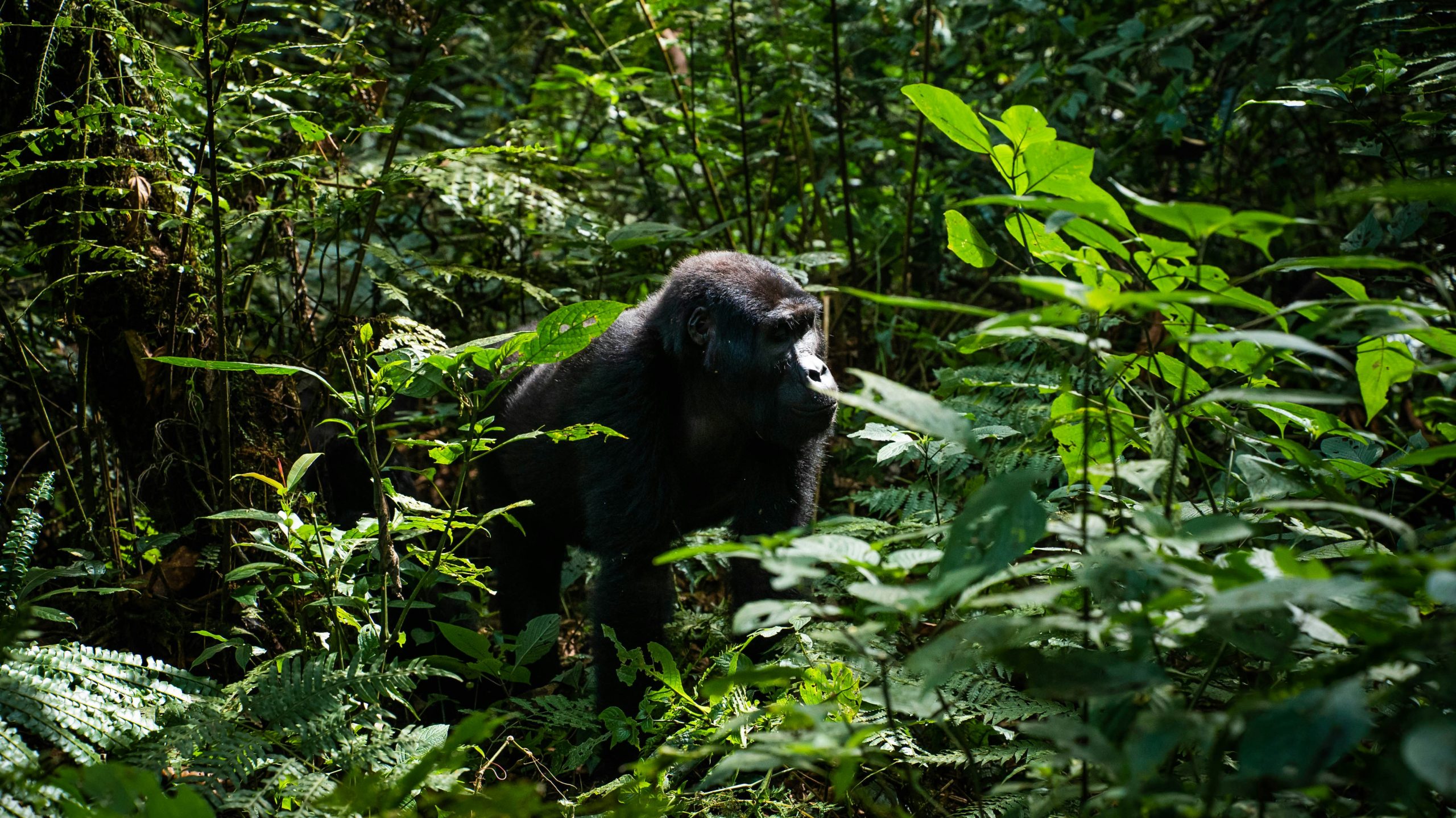
Uganda stands out for primates. Bwindi Impenetrable and Mgahinga are home to around half of the world’s mountain gorillas, while Kibale Forest offers some of the most reliable chimpanzee tracking in Africa. Uganda’s savannah parks add elephants, buffalo, lions, leopards, giraffes and hippos, with highlights such as the tree-climbing lions of Ishasha, the Kazinga Channel boat cruise and Murchison Falls. Southern white rhinos can be tracked on foot at Ziwa Rhino Sanctuary. Tanzania also has chimpanzees, in the remote Gombe and Mahale national parks, but reaching them requires more time and expense.
Read our guides to the Ngorongoro Crater, Gombe Stream chimpanzees and chimpanzee tracking in Kibale.
The Great Migration
The Great Migration spends most of the year in Tanzania. From around December to March, the herds gather on the southern Serengeti and Ngorongoro Conservation Area for the calving season, when hundreds of thousands of calves are born and predators are highly active. From around April to June they move north and west, with river crossings in the Western Corridor, and from roughly July to October they reach the northern Serengeti and Kenya’s Maasai Mara. Uganda has no comparable migration. See our Serengeti migration calendar and our calving season safari.
Gorilla Trekking
Tanzania has no mountain gorillas. If gorillas are on your wish list, Uganda is the natural choice. A standard Uganda gorilla permit costs USD 800 for foreign non-residents, compared with USD 1,500 in Rwanda, and Uganda is the only country offering the gorilla habituation experience. Read our guide to gorilla trekking in Uganda.
Scenery and Landscapes
Tanzania’s scenery is defined by space: the open plains of the Serengeti, the dramatic walls of the Ngorongoro Crater, the baobab-studded landscapes of Tarangire and the snow-capped dome of Kilimanjaro. Uganda’s landscapes are lush and intimate: misty rainforests, terraced hillsides, volcanic crater lakes, the glaciated Rwenzori Mountains and the mighty Nile. Both are beautiful, but they feel completely different.
Crowds
Tanzania’s northern circuit, particularly the central Serengeti and the Ngorongoro Crater, can be busy in peak season, with many vehicles at popular sightings. Choosing remote camps, travelling in the shoulder seasons or visiting the southern parks helps you avoid the crowds. Uganda receives fewer visitors overall, and many of its parks feel quiet even in high season. Gorilla trekking is limited to eight people per family per day.
Costs
Tanzania’s national park fees, concession fees and crater fees are among the highest in Africa, which makes Tanzanian safaris relatively expensive, especially at the luxury level. Uganda’s park fees are lower, but gorilla permits represent a significant single cost. Overall, a savannah safari in Uganda is often more affordable than one in northern Tanzania, while a gorilla-focused safari in Uganda is still cheaper than in Rwanda. Read our guides to Serengeti safari costs, Uganda safari costs and East Africa safari costs.
Accommodation
Tanzania offers an enormous range of safari accommodation, from mobile tented camps that follow the migration to some of Africa’s most exclusive lodges on the rim of the Ngorongoro Crater. Uganda’s choice is smaller, but its best lodges, in Bwindi, Kibale, Queen Elizabeth and Murchison Falls, are now world-class. See our guides to the best luxury lodges in Bwindi and luxury lodges in Queen Elizabeth.
Beyond Safari: Beaches and Mountains
Tanzania is ideal if you want a beach finish. Zanzibar offers white sand, turquoise water and the historic streets of Stone Town, while Pemba and Mafia islands offer quieter escapes and excellent diving. Tanzania is also home to Mount Kilimanjaro, Africa’s highest peak, which can be climbed without technical skills. Uganda offers adventure of a different kind: white-water rafting on the Nile in Jinja, hiking in the Rwenzori Mountains and to Sipi Falls, and canoeing on Lake Bunyonyi. Many travellers combine a Uganda safari with a flight to Zanzibar for the beach. See our guides to Zanzibar and safari, climbing Kilimanjaro and the Rwenzori Mountains.
Best Time to Visit
Tanzania: June to October is the main dry season and excellent for game viewing across the north. January to February is ideal for the calving season in the southern Serengeti. The long rains of April and May bring lower prices and some camp closures. Uganda: June to September and December to February are the driest months and best for trekking and game viewing, but gorilla trekking runs all year. See our guide to the best time to visit Uganda.
Getting There and Around
Most northern Tanzania safaris begin at Kilimanjaro International Airport near Arusha, while southern safaris and Zanzibar are reached via Dar es Salaam. Light aircraft link the main parks. Uganda’s gateway is Entebbe International Airport, and safaris usually travel by road with a private guide, with optional domestic flights to Bwindi, Kidepo and Murchison. Direct regional flights connect Entebbe with Kilimanjaro, Dar es Salaam and Zanzibar, sometimes via Nairobi. Read our guide to fly-in safaris in Uganda.
Visas
Both Uganda and Tanzania issue e-visas, which should be obtained before travel. Note that the East Africa Tourist Visa covers Uganda, Kenya and Rwanda, but not Tanzania, so you will need a separate Tanzanian visa if combining the two. Many travellers also need proof of yellow fever vaccination. Read our guide to the Uganda and Tanzania e-visa application and East Africa vaccinations.
Who Should Choose Tanzania?
- Travellers who want the classic plains safari with big cats and huge herds.
- Anyone keen to witness the Great Migration or calving season.
- Couples and families who want an easy safari-and-beach holiday.
- Adventurers aiming to climb Kilimanjaro.
Who Should Choose Uganda?
- Travellers whose priority is gorillas and chimpanzees.
- Those who prefer quieter parks and a more off-the-beaten-path experience.
- Active travellers who enjoy trekking, rafting and hiking.
- Birders and nature lovers who value diversity of habitats.
Combining Uganda and Tanzania
For the ultimate East African journey, combine both. Start in Uganda with gorilla trekking in Bwindi and chimpanzees in Kibale, then fly to Kilimanjaro for the Serengeti and Ngorongoro, before finishing on the beaches of Zanzibar. A trip like this takes around two weeks and offers primates, the greatest plains wildlife on Earth and tropical beaches. Explore our gorillas, game parks and Zanzibar safari and our 14-day four-country grand safari.
Sample Itineraries: One Week in Each Country
A week in Tanzania. A classic seven-day northern circuit might start in Arusha, then visit Tarangire National Park for elephants and baobabs, continue to the Ngorongoro highlands for a full day on the crater floor, and finish with three or four days in the Serengeti, with the location chosen according to the migration. Travellers short on time can fly between parks, while those on a budget often travel by road in a pop-up-roof safari vehicle. Read our guide to choosing a Tanzania safari package and our guide to Tarangire National Park.
A week in Uganda. A seven-day western circuit typically begins in Entebbe, then heads to Kibale for chimpanzee tracking and the Fort Portal crater lakes, continues to Queen Elizabeth National Park for game drives and a Kazinga Channel cruise, passes through Ishasha in search of tree-climbing lions and ends in Bwindi for gorilla trekking before a flight back to Entebbe. See our 7-day Uganda itinerary.
Culture and Communities
Tanzania offers memorable cultural encounters with the Maasai in the Ngorongoro highlands and with the Hadzabe hunter-gatherers and Datoga pastoralists around Lake Eyasi, as well as the Swahili heritage of Zanzibar’s Stone Town. Uganda’s cultural highlights include the Batwa experience near Bwindi and Mgahinga, the Buganda kingdom’s historic sites around Kampala, the Karamojong of the north-east and community-run projects such as the Bigodi Wetland Sanctuary. Both countries reward travellers who take time to meet local people. See our Lake Eyasi cultural safari and our guide to cultural tourism in Uganda.
Families and Children
Tanzania’s northern circuit is very family-friendly, with abundant wildlife visible from the vehicle and an easy beach extension on Zanzibar. Uganda is excellent for families with older children: game drives, boat cruises and community visits suit all ages, but the minimum age for gorilla trekking is 15 and for chimpanzee tracking generally 12. Families with younger children can still enjoy Uganda’s savannah parks and lakes, while older teens often rate gorilla trekking as the highlight of their lives. Read our family safari guide.
Our Verdict
Choose Tanzania for vast plains, the Great Migration, Kilimanjaro and a beach finish. Choose Uganda for gorillas, chimpanzees, adventure and lush, uncrowded landscapes. If you have two weeks, combine them: few journeys on Earth can match an hour with mountain gorillas followed by days on the Serengeti and a final swim in the Indian Ocean.
Photography in Each Country
Photographers love both countries for different reasons. Tanzania’s open plains offer endless opportunities for big cat action, wide landscapes and dramatic skies, and a telephoto lens of 400mm or more is useful for predators and birds. Uganda’s forests challenge photographers with low light and dense vegetation, so a fast lens and good high-ISO performance are essential for gorillas and chimpanzees, while its savannah parks, crater lakes and waterfalls provide superb landscapes. In both countries, early mornings and late afternoons give the best light. Many photographers find that combining the two countries gives them the most varied portfolio from a single trip. Read our wildlife photography safari.
Whichever you choose, travelling with an experienced local guide makes all the difference, from positioning the vehicle for the best light to knowing when the gorillas are likely to settle in a clearing.
Frequently Asked Questions
Is Tanzania or Uganda better for a first safari? Tanzania is ideal for a first safari focused on big game. Uganda is perfect if gorillas are your priority.
Can I see gorillas in Tanzania? No. Mountain gorillas live in Uganda, Rwanda and the Democratic Republic of Congo.
Is Uganda cheaper than Tanzania? Uganda’s park fees are lower, so savannah safaris are often more affordable, but gorilla permits add a significant cost.
Are there tree-climbing lions in both countries? Yes. Ishasha in Queen Elizabeth National Park, Uganda, and Lake Manyara in Tanzania are both known for them.
How long do I need? Allow at least seven days for either country, and around two weeks to combine both.
Start Planning
Kuku Safaris has guides and partners in both Uganda and Tanzania and can design a seamless safari in either country, or both. For official information, see Tanzania National Parks and the Uganda Wildlife Authority. Read our guide to Kenya vs Tanzania and our Uganda vs Kenya comparison, then see how to book with Kuku Safaris.